

Kenya Airways gets Sh45.4 billion as government plans Sh122 billion debt restructuring

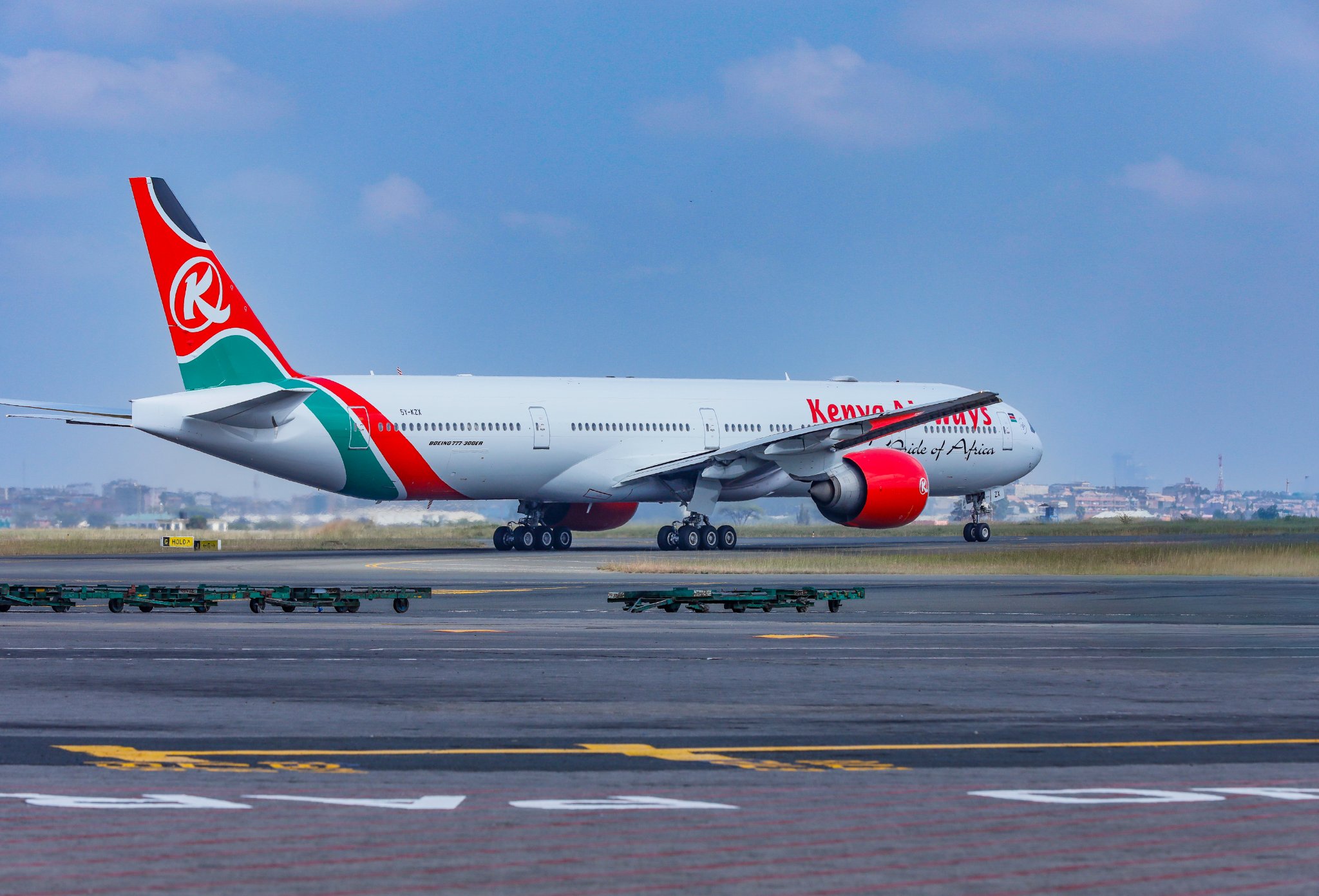
Kenya Airways is set to receive $350 million (Sh45.4 billion) in additional government financing after the Cabinet approved new shareholder loans to help the national carrier meet its financial obligations.
The decision comes as Kenya Airways (KQ) struggles to contain mounting losses, restore grounded aircraft and secure a strategic investor who could provide capital for a longer-term recovery.
The financing package also includes a separate proposal to convert Sh122 billion in existing Treasury loans and accrued interest into an “equity-qualifying tradable instrument”. Although the government has approved both measures, the Cabinet statement does not detail the structure of the proposed instrument or explain how it would affect the airline’s ownership and future repayment obligations.
The new loans will be disbursed in stages under the National Treasury, which holds a 48.9% stake in Kenya Airways. They are scheduled for repayment over 10 years, although the government could convert them into shares in the listed company. Implementation remains subject to the necessary corporate, shareholder and regulatory approvals.

The two measures address different aspects of KQ’s financial position. The Sh45.4 billion package would provide new financing, while the proposed restructuring concerns existing government claims against the airline. Together, they could materially alter its balance sheet, but the announcement does not establish that the full amount has been disbursed or that the debt conversion has been completed.
Why the government is providing fresh funding
Kenya Airways’ financial results explain the urgency behind the Cabinet’s decision. The airline reported a net loss of Sh17.16 billion in 2025, reversing a Sh5.43 billion profit in 2024. Revenue declined 14% to Sh161.47 billion as available seat capacity fell 18%, limiting the airline’s ability to generate income from passenger and cargo operations.
The deterioration continued in the first half of 2026. KQ reported a net loss of approximately Sh16.1 billion for the six months to June, compared with Sh12.2 billion in the corresponding period a year earlier. Revenue nevertheless rose 9% to Sh81.3 billion, according to the airline’s reported interim results, indicating that stronger sales were insufficient to offset the increase in operating expenses.
The contrast between revenue growth and widening losses is central to understanding the funding request. Kenya Airways can benefit from passenger demand and still struggle financially if aircraft remain grounded, fuel prices rise and maintenance expenses, leases and borrowing costs absorb the additional income. The new government loans could help meet immediate obligations, but the airline will need to address those cost pressures to reduce its reliance on further support.
The Treasury’s exposure also provides context for the decision. Government loans to KQ stood at Sh131.48 billion at the end of December 2025, up from Sh108.3 billion a year earlier, according to the figures in the original report. The proposed Sh122 billion restructuring therefore needs to be understood alongside the existing debt position, although the two amounts should not be added together without confirming whether the claims overlap.
The Cabinet says Kenya Airways contributes more than $1.3 billion annually to Kenya’s gross domestic product through tourism, trade and regional connectivity. Its international network links Nairobi to passenger markets and supports the movement of cargo, including time-sensitive exports. That economic contribution provides the government’s stated rationale for intervention, although the wider economic benefits should be distinguished from the direct fiscal cost of supporting the airline.
Aircraft shortages and rising costs deepen KQ’s losses
The shortage of operational aircraft has been a major constraint on Kenya Airways’ recovery. Three Boeing 787-8 Dreamliners were grounded, removing a substantial portion of its wide-body fleet from service and restricting capacity on long-haul routes. The airline’s 2025 annual report also recorded an 8.5% decline in cargo tonnage to 64,780 tonnes.
The disruption has affected the airline’s ability to serve routes and take advantage of available demand. Earlier reporting by TechTrendsKE documented how aircraft shortages forced changes to route operations and frequencies, while management targeted a return to full fleet capacity by the end of 2026. That target makes aircraft restoration an important measure of whether the latest financial support is translating into operational improvements.
Returning grounded aircraft to service, however, requires more than access to cash. Global supply-chain constraints, engine availability and delays in spare-parts deliveries have complicated maintenance schedules. These problems can leave aircraft unavailable even when passenger demand would support additional flights, restricting revenue while some ownership and financing expenses continue.
Kenya Airways’ costs reflect that imbalance. Fleet ownership costs rose to Sh27.14 billion in 2025 from Sh20.43 billion a year earlier, while finance costs reached approximately Sh12.4 billion. At the end of the year, borrowings stood at Sh151.3 billion against cash and bank balances of Sh5.3 billion, leaving net borrowings of almost Sh146 billion.
Fuel prices added further pressure in the first half of 2026. Reports attributed a sharp increase in fuel expenditure to the Middle East conflict, which also disrupted spare-parts deliveries and maintenance services. The precise fuel-cost increase depends on the measure used, so the airline’s reported operating-cost figures should be distinguished from percentage increases cited in external reporting.
The combined effect is a difficult operating equation: reduced aircraft availability limits the revenue KQ can earn, while fuel, maintenance, lease and financing expenses constrain the money available to restore capacity. Additional financing may ease the immediate pressure, but the commercial benefit will depend on how quickly aircraft return to service and whether the resulting revenue covers the cost of operating them.
How the proposed debt restructuring could change ownership
The proposed conversion of Sh122 billion in Treasury loans and accrued interest into an equity-qualifying tradable instrument could be one of the most consequential parts of the Cabinet decision. It offers a possible route to restructuring the airline’s balance sheet without treating the entire amount as a fresh cash injection.
Under a conventional debt-to-equity conversion, a creditor exchanges a debt claim for shares in a company. The company can reduce its outstanding debt, while the creditor receives an ownership interest. Depending on the terms, the transaction may also reduce future interest obligations and improve the company’s reported capital position.
The Cabinet’s description of an “equity-qualifying tradable instrument”, however, does not establish that the government will receive ordinary shares immediately. Its accounting treatment, maturity, conversion rights, voting rights and trading arrangements have not been explained in the announcement. Those details will determine whether the restructuring materially reduces KQ’s financial obligations and how it affects existing shareholders.
The additional Sh45.4 billion in shareholder loans raises a related ownership question. Kenya Airways is listed on the Nairobi Securities Exchange, and the government currently holds a 48.9% stake, according to the reported figures. If the new loans are converted into shares, the state’s percentage ownership could increase and the holdings of other shareholders could be diluted, depending on the conversion price and the number of shares issued.
KLM, which holds a reported 7.76% stake, is among the existing shareholders whose relative ownership could be affected by such a transaction. The precise outcome cannot be calculated until the conversion terms are disclosed, and the Cabinet’s approval should not be treated as confirmation that a change in ownership has already occurred.
The restructuring could also influence the airline’s efforts to attract outside capital. Prospective investors will need to assess the liabilities they would inherit, the government’s position as a major shareholder and the extent to which a new capital structure would support future operations. A clearer balance sheet could improve the prospects for investment, although the value of that improvement depends on the instrument’s final terms.
Strategic investor search remains unresolved
The latest government financing arrives as Kenya Airways continues to seek an external partner for its turnaround. Earlier TechTrendsKE reporting in August and September documented discussions with prospective investors and a process that had not yet reached a publicly confirmed conclusion.
The options reported have included loans, direct equity investment and a proposal involving aircraft contributed in exchange for an ownership stake. Each would address a different part of the airline’s needs. A loan would provide financing but create a repayment obligation, while an equity investment would bring capital in exchange for ownership. An aircraft-for-equity arrangement could add productive capacity without requiring the airline to fund the entire asset acquisition through cash borrowing.
The investor process has also involved work on the information required to assess the airline’s position. A September report said the investor memorandum had been completed and that appointment of a transaction adviser remained a key step. The material reviewed for this article does not establish that a strategic investor has since been selected or that a binding agreement has been signed.
The Cabinet’s new financing could give KQ additional room to meet its obligations while the process continues. It may also affect negotiations by changing the government’s debt claims and potential ownership position. However, there is no confirmed evidence that the Sh45.4 billion package is tied to a particular investor or that the financing depends on completion of a specific transaction.
A strategic aviation partner could potentially offer more than capital, depending on the agreement. Fleet planning, maintenance arrangements, commercial partnerships and access to additional markets could all contribute to a recovery. The benefits would need to be assessed against the price of the investment, the shares offered and any operational commitments required from the partner.
Leadership continuity is another consideration as the airline manages negotiations, debt restructuring and fleet restoration. TechTrendsKE reported changes in KQ’s acting chief executive arrangements in September. Those changes provide relevant governance context, although the available reporting does not establish that the leadership transition caused delays in the investor process or directly influenced the Cabinet’s decision.
What Kenya Airways must deliver to recover
The effectiveness of the new financing will ultimately depend on whether Kenya Airways can improve its financial and operational performance. Disbursement of the loans would address an immediate funding requirement, but a sustainable turnaround will require the airline to generate sufficient operating cash to cover expenses, meet obligations and invest in the fleet without repeated emergency support.
Aircraft availability is one measurable indicator. Management’s target of restoring full fleet capacity by the end of 2026 provides a benchmark for subsequent reporting. The return of grounded Dreamliners, the restoration of affected routes and changes in available seat capacity will help establish whether maintenance and supply-chain constraints are easing.
Financial performance will be equally important. KQ needs to show that revenue growth can outpace increases in fuel, maintenance, fleet and financing costs. Its first-half 2026 results demonstrate that higher revenue alone is insufficient when expenses rise more quickly. Future results should therefore be assessed through operating costs, cash flow, debt obligations and net losses, rather than passenger demand in isolation.
The terms of the proposed Sh122 billion instrument will also determine whether the balance-sheet restructuring provides lasting relief. Investors and shareholders will need clarity on the treatment of existing Treasury claims, any future interest or repayment obligations, and the extent of dilution that could follow if loans are converted into shares. The same disclosures will help establish how much financial risk remains with the government.
Kenya Airways has also been investing in its commercial capabilities. A September TechTrendsKE report covered its use of FlyNava Technologies’ Jupiter 5.0 platform for airline pricing and revenue-management decisions. Such systems may help the airline analyse fares and manage revenue, but their contribution should be judged by measurable commercial results rather than treated as a substitute for adequate fleet capacity or a sustainable capital structure.
The Cabinet’s approval provides Kenya Airways with a new source of potential financial support while the airline pursues a broader restructuring. Whether it marks meaningful progress towards recovery will depend on the final terms of the debt conversion, the outcome of the strategic-investor search and the airline’s ability to restore capacity while controlling costs. Until those outcomes become clearer, the decision represents an important intervention in KQ’s finances rather than proof that its turnaround has been secured.
Real ESG impact doesn’t happen in panels alone, it happens in the rooms where financiers, operators, and policymakers actually align. Our GreenShift Forum 2026 cuts the noise, bringing together the people rewiring Africa’s sustainability and energy frameworks for one focused day in Nairobi. Secure your seat.
Go to TECHTRENDSKE.co.ke for more tech and business news from the African continent and across the world.
Follow us on WhatsApp, Telegram, Twitter, and Facebook, or subscribe to our weekly newsletter to ensure you don’t miss out on any future updates. Send tips to info@techtrendsmedia.co.ke


