Kenya’s AI data centre race is becoming a question of power, connectivity and execution

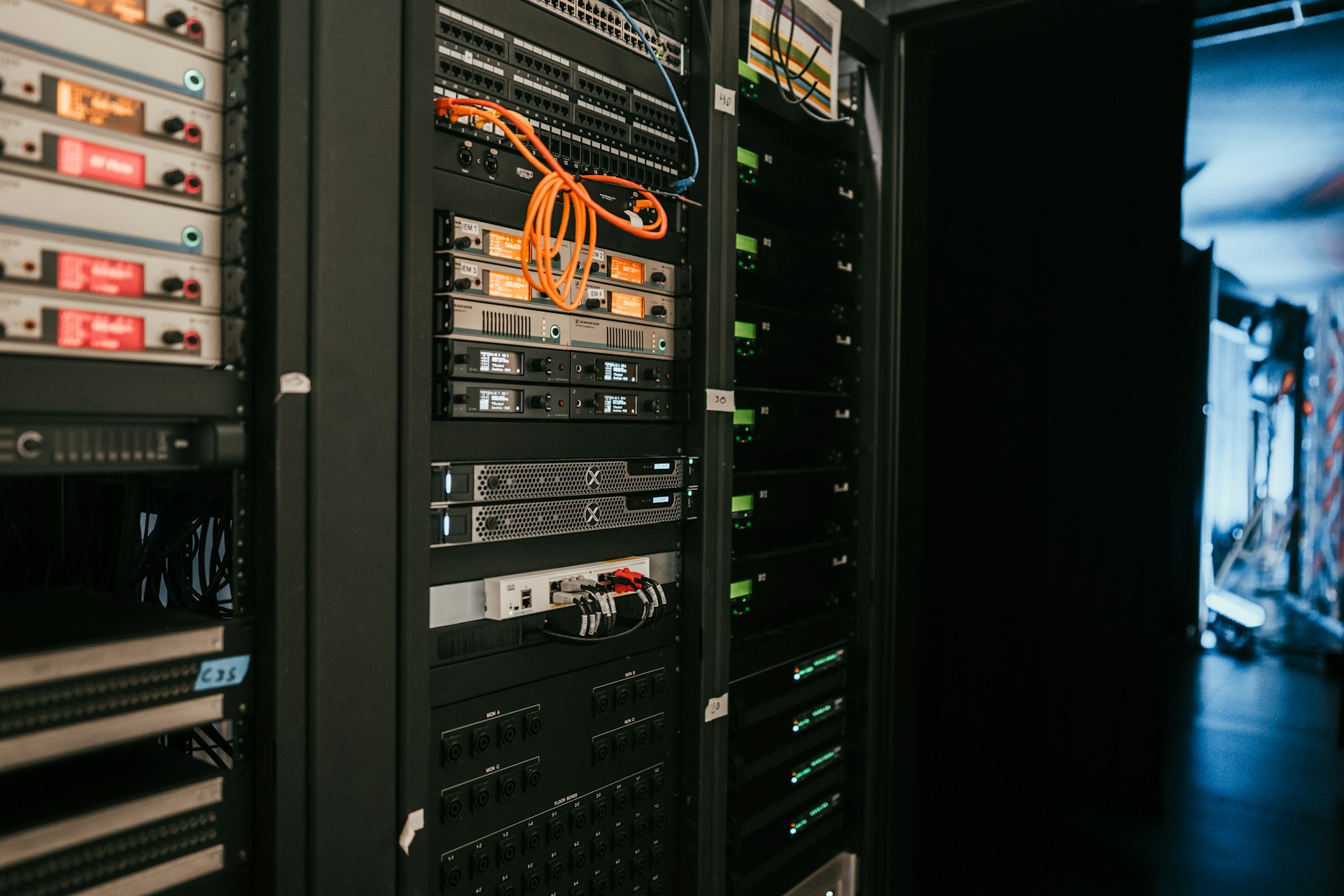
Kenya’s ambition to attract larger artificial intelligence workloads is increasingly being reflected in the infrastructure being planned around the country. A proposed $1.5 billion AI data centre by Greek energy company AMACO Energy Group is one of the most ambitious projects announced so far, with a design that combines computing infrastructure, dedicated electricity generation and cooling.
The proposed facility, known as Hercules, is expected to use gas turbines supplied by GE Vernova and an offshore power-barge arrangement fuelled by liquefied natural gas. AMACO has described a system that could generate electricity for the data centre independently of the national grid, although the project’s final location, financing structure, capacity, construction schedule and customer commitments have not been publicly established.
The proposal is arriving as Kenya’s broader digital infrastructure market expands. New data centre capacity is being developed in Nairobi, while planned submarine cable infrastructure along the coast could create additional connectivity options for industrial zones, cloud providers and future computing facilities.
The opportunity is therefore larger than one proposed data centre. Kenya is beginning to assemble the ingredients required for more substantial digital infrastructure, although the gap between announced projects and operational capacity remains important.


New coastal cable plans add to Kenya’s infrastructure pipeline
A planned coastal submarine cable system called LuLu provides fresh context for the potential role of Mombasa and the wider Kenyan coast in future digital infrastructure development.
Announced at the ITW Africa digital infrastructure and connectivity event in Nairobi, LuLu is designed to connect five landing points along Kenya’s approximately 500-kilometre Indian Ocean coastline. The proposed route would link Mombasa, Vipingo Special Economic Zone, Kilifi, Malindi and Lamu.

The system is being presented as a combination of submarine and terrestrial infrastructure. Alongside the cable running on the seabed, a parallel protected terrestrial route is intended to provide an additional path for traffic. That architecture is relevant to data centre operators and enterprise customers because connectivity resilience depends on more than access to a single landing station.
LuLu’s planned landing at Vipingo SEZ is particularly significant. The project’s developers identify potential users including hyperscale data centres, cloud service provider nodes, fintech and payment-processing platforms, cybersecurity operations centres and industrial systems using connected devices.
The system is expected to be ready for service in the second quarter of 2028, subject to contract execution. Its proposed design includes 144 fibre pairs, DWDM technology and a stated capacity of up to 60Tbps per fibre pair. However, important delivery details remain outstanding. The information released so far does not identify a system supplier, construction start date, route-survey schedule or completed contracts.
LuLu should therefore be treated as a planned connectivity project rather than operational infrastructure. Its relevance to Kenya’s data centre market lies in the infrastructure it could eventually provide, particularly if the proposed coastal landing points attract industrial, cloud and digital-service investment.
Connectivity alone will not determine where AI capacity is built
Mombasa already benefits from its position within Kenya’s international submarine cable network. Systems landing on the coast provide routes into global internet infrastructure, while terrestrial fibre carries traffic towards Nairobi and other markets.
That gives coastal locations a potential advantage for facilities serving international customers. Direct access to multiple cable systems can support lower-latency connectivity, network diversity and access to regional markets. A new coastal system such as LuLu could add another layer of resilience and extend high-capacity connectivity beyond the established Mombasa landing environment.
However, cable access is only one part of the data centre equation. AI facilities require reliable electricity, high-density cooling, redundant networks, physical security, specialist operations and customers with workloads capable of supporting the cost of the infrastructure.
This distinction is important for AMACO’s proposed Hercules facility. Its potential coastal location may offer connectivity and industrial-development advantages, but those advantages do not establish that the project is commercially or technically ready to proceed.
The power architecture is central to the Hercules proposal
The most distinctive element of AMACO’s plan is its proposed approach to electricity.
AI data centres can place substantial demands on power systems because graphics processing units and other accelerated-computing hardware consume significant electricity while producing high levels of heat. As rack densities increase, operators must plan power delivery and cooling as closely linked systems.
Hercules is designed around that relationship. The proposal would integrate the AI data centre with an offshore power platform using LNG-fired gas turbines. GE Vernova’s involvement relates to the proposed turbine technology, but the partnership does not by itself establish that equipment has been ordered, financing has closed or construction is ready to begin.
A dedicated generation system could offer the operator greater control over power availability and reduce reliance on the timing or capacity of a grid connection. It could also allow the project to be designed around a predictable computing load.
The arrangement would still require detailed engineering and regulatory scrutiny. The project would need to demonstrate how LNG would be supplied, how the facility would handle backup power, whether it would maintain a grid connection, how electricity would be transmitted from the offshore system, and how the cooling system would operate under different load conditions.
The environmental implications would also need to be addressed. LNG generation produces carbon emissions, while methane leakage and nitrogen oxide emissions can affect its overall environmental profile. An offshore system would additionally raise questions around marine construction, fuel transport, emergency response, cooling discharge and environmental impact assessment.
The proposed energy design may be technically interesting, but its value cannot be assessed through the turbine partnership alone. The project’s performance would depend on its final configuration, efficiency, operating costs and regulatory approvals.
Kenya’s existing data centre projects provide a useful benchmark
AMACO’s proposed investment can be placed in context by looking at the data centre projects already developing in Kenya.
Airtel’s Nxtra data centre at Tatu City is planned as a 44MW facility, delivered in two 22MW phases. The project is being designed for cloud, enterprise and AI-related workloads, with GPU-ready infrastructure, a dedicated 135MVA substation, on-site solar generation and redundant fibre connectivity. Its expected completion date has been revised to July 2027.
Digital Realty’s NBO2 facility, operated by iColo, has also expanded Nairobi’s data centre ecosystem. Its significance is tied to the existing interconnection environment, which brings together cloud providers, carriers, enterprises, financial institutions and internet service providers.
These projects illustrate why capacity figures matter. A stated megawatt rating, a defined site, a construction schedule and an operating facility provide a clearer basis for assessing a data centre than a headline investment value alone.
AMACO has announced a proposed investment of $1.5 billion, equivalent to approximately Sh194 billion at the exchange rate cited in the original announcement. But the project’s publicly available information does not yet specify its IT load, total power capacity, number of racks, GPU configuration, phased delivery model or expected power usage effectiveness.
Those figures would help establish how much computing infrastructure the investment could actually deliver.
The commercial question is who will use the capacity
Large data centre projects depend on more than technical design. They require sustained demand from customers willing to pay for computing, hosting, cloud, storage and connectivity services.
Potential customers for AI-oriented facilities could include cloud providers, telecommunications companies, banks, fintech firms, government agencies, research institutions, multinational enterprises and AI developers. Yet a project of Hercules’ proposed scale would need more than general market interest. It would need anchor customers, contracted workloads or a credible route to filling the facility over time.
AMACO has not publicly identified confirmed anchor tenants or disclosed signed customer commitments for the proposed Mombasa facility. It has also not publicly detailed the financing arrangements, financial close, construction contractor or final delivery timetable.
That does not invalidate the proposal. It places it at an earlier point in the infrastructure development cycle than an operating or fully financed data centre.
The same distinction applies to LuLu. The planned cable could improve coastal connectivity and make locations such as Vipingo more attractive to digital infrastructure investors, but its eventual impact will depend on contracts, construction, landing infrastructure, network integration and service availability.
Announced capacity is different from delivered capacity
The emerging pipeline shows that Kenya’s digital infrastructure market is broadening beyond conventional enterprise hosting. The country has international submarine cable access, established data centre operators, growing cloud and fintech activity, and new proposals that combine power generation, connectivity and industrial development.
The next question is whether these projects can move from announcements to delivery.
For AMACO, the key milestones will include confirmation of the site, project financing, environmental and regulatory approvals, final power and cooling specifications, customer commitments and a construction timetable. For LuLu, the relevant indicators will include supplier appointment, route surveys, contract execution, construction commencement and the eventual readiness of its landing points.
The proposed Hercules facility is therefore best understood as a major addition to Kenya’s AI infrastructure pipeline rather than an operating data centre. Its proposed power architecture makes it distinctive, while the development of new coastal connectivity shows that the surrounding infrastructure market is also evolving.
Kenya may be positioning itself to host larger AI and cloud workloads, but the strength of that position will ultimately depend on infrastructure that is financed, built, connected and used.
Real ESG impact doesn’t happen in panels alone, it happens in the rooms where financiers, operators, and policymakers actually align. Our GreenShift Forum 2026 cuts the noise, bringing together the people rewiring Africa’s sustainability and energy frameworks for one focused day in Nairobi. Secure your seat.
Go to TECHTRENDSKE.co.ke for more tech and business news from the African continent and across the world.
Follow us on WhatsApp, Telegram, Twitter, and Facebook, or subscribe to our weekly newsletter to ensure you don’t miss out on any future updates. Send tips to editorial@techtrendsmedia.co.ke


