
Stripe and Advent abandon $53 billion PayPal bid after valuation standoff

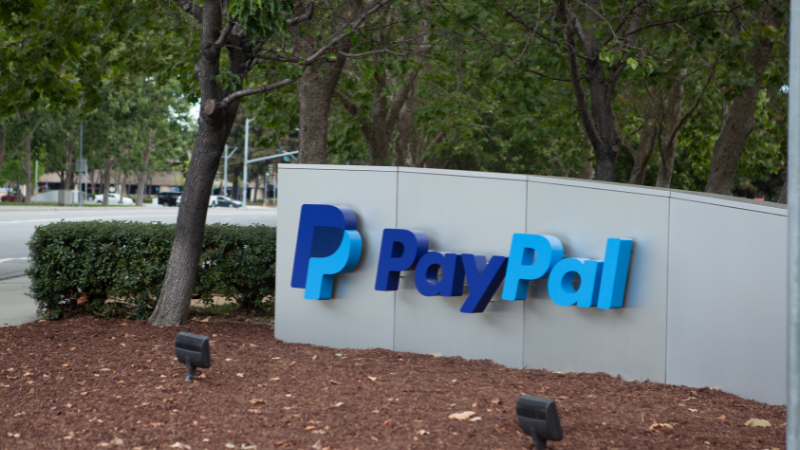
The PayPal takeover bid from Stripe and Advent International has collapsed, ending negotiations over a proposed transaction worth more than $53 billion and leaving PayPal to make the case for its value as an independent company.
The consortium had offered $60.50 per share, backed by roughly $50 billion in committed bank financing, but PayPal’s board considered the price inadequate. After weeks of discussions over a higher valuation, Stripe and Advent have now walked away, sending PayPal shares sharply lower.
The immediate market reaction tells us what had been supporting part of PayPal’s valuation. Its shares fell about 12% after reports of the withdrawal, giving back much of the premium that had accumulated while investors expected a transaction. The proposed $60.50 price was already close to where the stock had been trading, and PayPal had closed at $61.47 shortly before the consortium ended its pursuit, meaning the original offer no longer represented an obvious premium to shareholders.
The collapse, however, is more interesting than the headline decline suggests. PayPal has spent much of 2026 trying to convince investors that its enormous payments network still has room to produce better growth and margins, while Stripe and Advent had to decide how much of that future improvement they were willing to pay for upfront. The two sides appear to have reached the point where PayPal’s expectations and the economics of the proposed acquisition could no longer be reconciled.
Why Stripe and Advent Walked Away From PayPal
The transaction was unusual from the beginning. Stripe and private equity firm Advent International proposed paying $60.50 for each PayPal share, valuing the company at more than $53 billion, with about $50 billion in financing commitments reportedly assembled from banks. If completed, it would have been the largest fintech acquisition on record.
That financing structure matters because the price of PayPal could not be considered separately from the cost of buying it. Every additional dollar paid per share would increase the amount of capital required or reduce the room available for debt repayment and future investment. In a transaction of this scale, a higher offer does not simply make the target more expensive; it changes the return profile for the buyers.
PayPal’s board therefore had a straightforward negotiating position: if management could demonstrate that the company was worth materially more than $60.50, accepting the first offer would transfer too much of the recovery potential to the new owners. Reports indicated that PayPal wanted a valuation closer to $70 per share. The consortium, faced with a higher purchase price alongside financing and regulatory considerations, ultimately decided that continuing the pursuit did not make economic sense.
There is also an important point about the stock itself. When the bid emerged in July, $60.50 represented a 28% premium to PayPal’s previous closing price, according to Axios. But by late July, PayPal’s stronger-than-expected results had pushed the shares to $58.32, leaving only a small gap between the market price and the proposed offer. By August 27, the shares had closed above the $60.50 bid.
That made a higher offer more difficult to avoid if Stripe and Advent wanted to secure shareholder support. It also meant PayPal’s improving operating performance was working against the buyers at the negotiating table.
The Valuation Gap Was Bigger Than $60.50
PayPal’s vulnerability to takeover interest did not appear overnight. In February, TechTrendsKE reported that the company had suffered a 46% decline in its shares over the preceding 12 months, leaving it with a market value of about $40.9 billion and prompting defensive preparations against possible activist or takeover pressure.
That history explains why the $53 billion offer was attractive enough to get serious attention. It represented a substantial increase over the depressed valuation investors had assigned to PayPal earlier in the year. But it also explains why the board could argue that the market had undervalued the company and that a buyer should pay for the recovery it expected management to deliver.
The timing then became important. PayPal’s second-quarter results gave that argument more substance. Revenue reached $8.68 billion, up about 5% from a year earlier, while total payment volume increased 9% to $486.4 billion. Adjusted earnings per share came in at $1.38, ahead of expectations, and the company raised its full-year adjusted earnings forecast to $5.38 per share from $5.31 previously.
PayPal is also targeting at least $1.5 billion in cost savings as part of Lores’ restructuring, with about $400 million of savings expected by the end of 2026. The company expects transformation charges as it modernises its technology and operations, but the underlying objective is clear: make a very large payments business more efficient while directing capital towards areas where it can generate stronger returns.
That makes the failed deal a particularly important test of PayPal’s board. By rejecting $60.50, directors effectively retained the upside from the turnaround for existing shareholders. Now the company has to produce enough improvement to justify that decision.
What Stripe Was Really Buying
Stripe’s interest in PayPal went well beyond the familiar PayPal checkout button.
Stripe already operates deeply inside merchant payment infrastructure, and PayPal owns Braintree, creating areas where the two businesses overlap. But PayPal would also give Stripe something it has less directly: a huge consumer wallet ecosystem through PayPal and Venmo. When the bid was announced, Axios noted that Venmo’s consumer position was strategically new territory for Stripe, even though PayPal had struggled to monetise the platform fully.
The potential combination therefore brought together two different sides of digital payments. Stripe has built its reputation around infrastructure for businesses, developers and internet commerce, while PayPal has a huge installed base of consumers and merchants. Combining those assets could have created significant strategic value, but it also would have brought overlapping merchant operations, complex technology integration and substantial regulatory scrutiny.
The consortium would also have inherited PayPal’s broader ambitions. PayPal is pursuing PayPal World as a way to connect domestic payment systems to its international commerce network, while its banking application in the United States would give it greater control over deposits and lending if approved. PayPal is also building around stablecoins through PYUSD, adding another layer to an already complicated financial platform. TechTrendsKE’s earlier analysis of the bid highlighted those initiatives as part of the company’s broader value proposition.
That makes the acquisition case difficult to reduce to a simple question of whether PayPal is growing fast enough. A strategic buyer could assign value to assets and capabilities that public investors might value more conservatively, but the buyer still has to pay for them without destroying the financial returns that justified the transaction.
Why Africa Matters to PayPal’s Value
The African dimension is easy to miss in a Wall Street-focused account of the failed deal, but it matters to the longer-term PayPal story.
PayPal has been building partnerships that connect its international payment network to mobile money systems rather than trying to displace them. In Kenya, Safaricom integrated PayPal into the M-PESA App, allowing eligible customers to connect their accounts and move money between PayPal and M-PESA through a mobile interface. TechTrendsKE reported the rollout in July 2025, when the new app-based model replaced the older web-based transfer arrangement.
The strategy has since extended into Tanzania. Vodacom M-Pesa introduced PayPal access through its Super App in May 2026, giving eligible customers another direct route between international digital payments and local mobile money. For freelancers, software developers, creators and online merchants receiving income from overseas, these connections address a practical problem: getting international earnings into the payment system they already use locally.
PayPal has also pushed PYUSD into 70 markets, including African markets, allowing eligible users to buy, hold, send and receive the dollar-backed stablecoin and transfer it to external wallets. For a company competing in cross-border payments, that gives the stablecoin a potentially important role in reducing settlement friction and extending PayPal’s infrastructure beyond conventional card and bank rails.
These initiatives do not automatically make PayPal worth $70 per share. They do, however, show why a valuation based only on the company’s traditional checkout business would leave out some of the strategic options management is pursuing.
Enrique Lores Now Has to Prove the Board Right
With the acquisition talks over, the responsibility returns squarely to Enrique Lores.
Lores took over as PayPal’s president and CEO in March 2026 and has reorganised the business around a simpler structure, including checkout, consumer financial services and payments and crypto. The restructuring places Venmo within the consumer business while the company pursues cost reductions and technology modernisation.
The challenge is that PayPal’s scale has stopped being enough on its own. The company once reached a pandemic-era valuation of about $360 billion, but its current valuation is a fraction of that figure. At the same time, Apple Pay, Google Pay, Shop Pay and other payment platforms have made the checkout market more competitive, putting pressure on the part of PayPal’s business that once provided much of its identity and growth.
Lores therefore has to demonstrate that PayPal can grow transaction volumes while improving the economics of those transactions. The company needs to defend branded checkout, extract more value from Venmo, expand its merchant infrastructure, control costs and make newer bets such as PYUSD and agentic commerce commercially meaningful.
The second-quarter numbers give him a starting point, but not a completed turnaround. A 9% increase in total payment volume is encouraging, and the higher earnings outlook strengthens PayPal’s case, yet the company remains in a competitive market where investors will want sustained evidence that the improvement can continue.
What the Failed Deal Means for PayPal and Fintech M&A
The collapse leaves PayPal in a more complicated position than it occupied before the offer emerged.
On one hand, the company has demonstrated that strategic buyers see considerable value in its network, consumer reach and financial infrastructure. The reported bid put a hard number on that interest: more than $53 billion. That valuation becomes a reference point for any future buyer, even though there is no guarantee that another bidder will emerge at a higher price.
On the other hand, PayPal’s board now has to live with the decision to reject $60.50. If the stock remains below that level and the turnaround fails to produce the expected improvement, investors could question whether management passed up a premium that was difficult to replace. If earnings, payment volumes and higher-margin businesses continue to improve, the board’s decision could look considerably more defensible.
For Stripe, walking away also preserves capital and strategic flexibility. The company has agreed to acquire OpenRouter, an AI model gateway and routing platform, in a transaction reported by Axios to be worth more than $8 billion, while Stripe’s own newsroom confirms the acquisition agreement. Stripe has also been expanding into stablecoin payments, AI commerce and other financial infrastructure.
That does not mean OpenRouter caused Stripe to abandon PayPal. Reporting indicates the negotiations were conducted independently. It does, however, underline the range of competing opportunities facing Stripe as it decides where to deploy capital and management attention.
For the wider fintech market, the failed PayPal transaction offers a useful lesson about valuation. A company can possess enormous transaction volumes, a global consumer base and valuable infrastructure, yet still struggle to command the kind of premium associated with faster-growing technology businesses. At the same time, a strategic buyer can see assets worth more than the public market does, but only if the additional value can be converted into enough future cash flow to justify the acquisition price.
PayPal now has to make that case without a buyer standing behind it.
The company has spent much of 2026 arguing that its depressed valuation does not reflect what the business can become under Lores. Stripe and Advent were willing to put more than $53 billion behind their own assessment of that opportunity, but not enough to meet PayPal’s expectations. With the negotiations finished, the next valuation will be set by PayPal’s results.
That makes the collapse of the takeover bid less of an ending than a test. PayPal’s board turned down the price on the table; now the company has to show shareholders that the value it defended was real.
Real ESG impact doesn’t happen in panels alone, it happens in the rooms where financiers, operators, and policymakers actually align. Our GreenShift Forum 2026 cuts the noise, bringing together the people rewiring Africa’s sustainability and energy frameworks for one focused day in Nairobi. Secure your seat.
Go to TECHTRENDSKE.co.ke for more tech and business news from the African continent and across the world.
Follow us on WhatsApp, Telegram, Twitter, and Facebook, or subscribe to our weekly newsletter to ensure you don’t miss out on any future updates. Send tips to editorial@techtrendsmedia.co.ke