

Mandatory internet metering could make Kenya’s broadband more expensive and intrusive

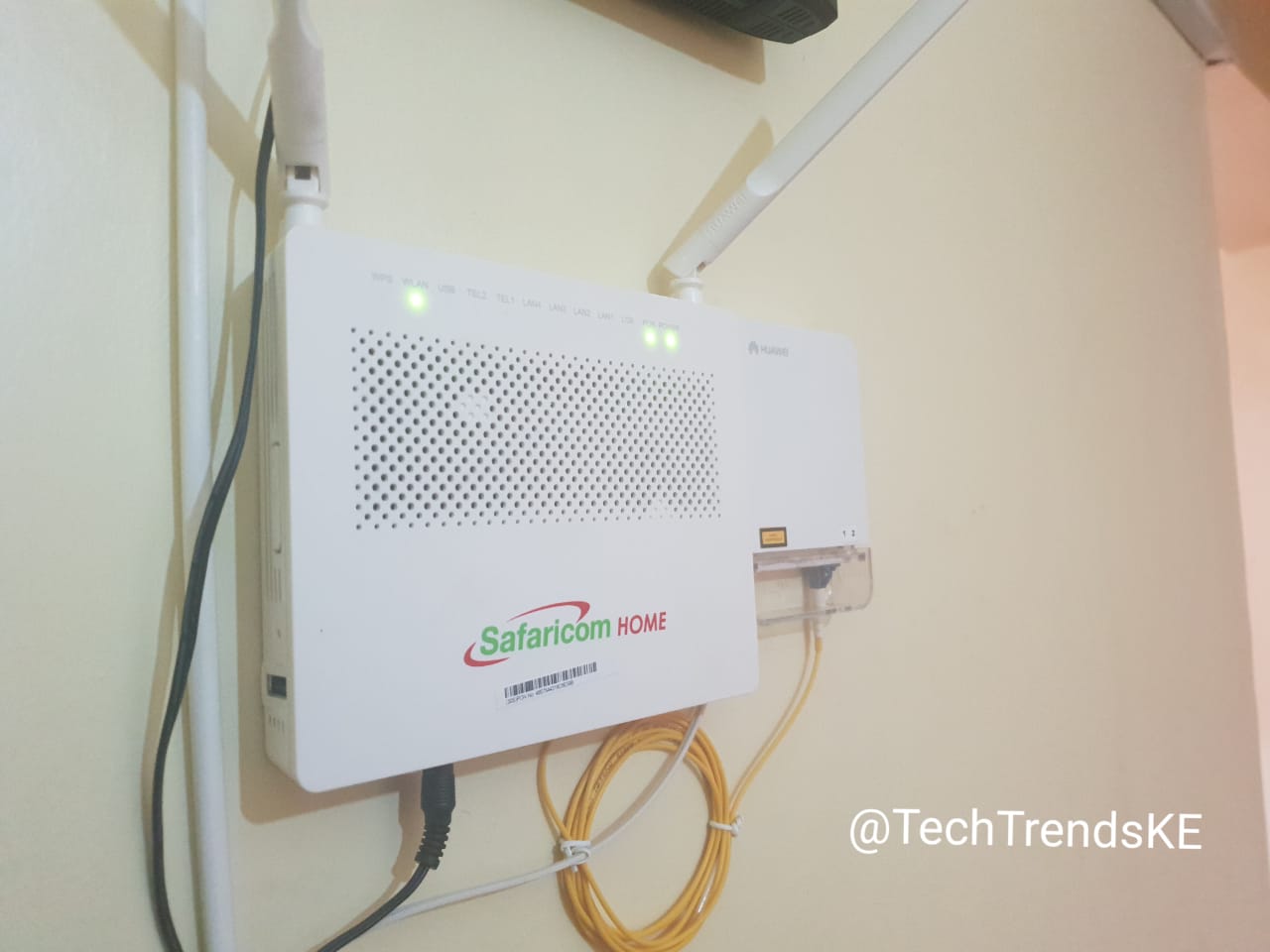
Kenya’s metered internet billing proposal is moving the broadband debate into territory that goes beyond how much households pay each month.
The Kenya Information and Communications (Amendment) Bill, 2025 could require internet service providers to assign subscribers unique internet meter numbers, record their data consumption and provide usage information to the State. Internet providers warn that implementing such a system could cost millions of shillings and put upward pressure on broadband prices, while privacy advocates have raised questions about the collection and storage of detailed records linked to individual subscribers.
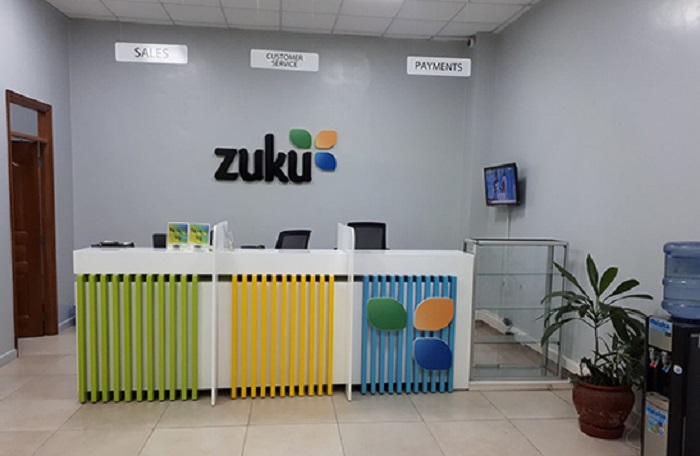
The proposal is already facing resistance from providers including Safaricom, Jamii Telkom, Zuku, Poa Internet and Liquid. Their submissions to Parliament add a technical and privacy dimension to legislation whose stated purpose is to make internet billing more transparent and protect consumers from unfair pricing.
The central question is becoming harder to separate into a simple argument about cheaper or more expensive internet: how much infrastructure, customer data and regulatory oversight should be required to measure something that fixed broadband providers already sell as a monthly service?
How the proposed internet meter would work
The Bill seeks to introduce a billing framework based on actual internet consumption. Under the proposal, providers would have to develop systems capable of recording customer usage, generating consumption records and producing invoices based on the amount of data used.
The concept resembles metering in electricity and water, where a customer’s bill is tied directly to measured consumption. Applied to fixed broadband, however, it would represent a major change from the way most Kenyan fibre packages are currently sold.
A household might now pay a fixed monthly amount for a connection advertised at 40Mbps, 60Mbps or 100Mbps. The subscription is generally tied to the speed of the connection rather than the number of gigabytes consumed during the month.
The Bill was sponsored by Aldai MP Marianne Jebet Kitany and is intended to amend the Kenya Information and Communications Act. Its stated objective includes protecting consumer interests under Article 46 of the Constitution. It has not become law, and Parliament can still amend or reject provisions as the legislative process continues.
The dispute has become more detailed as lawmakers hear from industry stakeholders. ISPs are now questioning not only the proposed pricing model but also the technical architecture and data requirements that would sit behind it.
Why ISPs say metering could raise broadband costs
The providers’ argument starts with the cost of implementation.
Jamii Telkom, which operates the Faiba brand, told Parliament that mandatory metering would require investment in Deep Packet Inspection infrastructure and sophisticated billing mediation systems capable of measuring internet traffic at a much finer level. The company argues that such expenditure would ultimately put pressure on consumer prices.
Poa Internet has also argued that fixed broadband differs fundamentally from mobile data, where customers already buy packages defined by a certain amount of data.
The distinction matters because a fixed fibre network is engineered around capacity, connectivity and the speeds promised to subscribers. A usage-based system would add another layer of measurement, record-keeping and billing to that arrangement.
That does not mean the cost of implementation would automatically translate into a specific increase in monthly subscriptions. The Bill does not prescribe a new tariff. The concern from ISPs is that a mandatory technical requirement would introduce expenses that providers do not currently need for conventional speed-based billing, creating an additional cost that could eventually be reflected in prices.
There is also a question of scale. Kenya’s fixed broadband market has grown to millions of connections, meaning a national metering framework would have to operate reliably across large numbers of households, businesses and institutions.
Speed-based broadband versus volume-based billing
The practical difference is easiest to understand from the customer’s perspective.
Under a speed-based plan, a subscriber pays for access at a specified maximum speed for a fixed monthly charge. The household can use the connection heavily without the bill changing simply because it consumed more data.
Volume-based billing works differently. The customer pays according to the quantity of data transferred, either through a defined allowance or charges linked to additional consumption.
Mobile users are familiar with this model. A 20GB bundle provides a finite amount of data, after which the customer can buy more, accept reduced speeds or wait until the next billing cycle, depending on the service.
Applying the same principle to home fibre could produce very different outcomes across households. A light user might consume relatively little and potentially benefit from paying according to actual usage. A family with several phones, televisions, computers and other connected devices could consume far more, particularly when streaming, gaming, downloading large files, attending online classes and using cloud services.
That makes unlimited and fixed-rate broadband an important part of the parliamentary discussion. Predictable monthly costs are useful to households and small businesses because they can use their connection without constantly calculating how much data remains.
The Bill’s current provisions do not fully resolve how existing unlimited packages would operate if consumption-based billing became compulsory. Parliament therefore faces a practical question over whether providers could continue offering unlimited services, operate both models side by side or redesign their packages around measured consumption.
The bigger question: how much customer data should be collected?
The internet meter proposal creates another issue that is less visible on a monthly bill: the amount of information generated about subscribers.
If every connection is assigned a unique meter number and usage is recorded against that identifier, providers and potentially regulators would have access to more detailed information about individual consumption patterns than is necessary under a conventional flat-rate package.
The exact nature of that information would depend on the final technical architecture. Measuring the quantity of data transferred is different from recording the content of communications, and the two should not be treated as interchangeable. But a system designed to maintain detailed subscriber-level usage records would still create a significant dataset that would require careful controls.
That is where Kenya’s existing data-protection framework becomes important.
The Data Protection Act, 2019 establishes principles around lawful and fair processing, purpose limitation and data minimisation. In practical terms, organisations are expected to collect information for defined purposes and avoid retaining personal data that is unnecessary for those purposes.
The question for the proposed internet-metering system is therefore straightforward: what information would actually be necessary to calculate a customer’s bill, and what additional information would be generated or retained simply because the infrastructure makes it possible?
That distinction matters because billing does not necessarily require the same level of data collection as network surveillance or traffic analysis.
Kenya’s privacy rules add another layer to the debate
Kenya already has an active privacy regulator in the Office of the Data Protection Commissioner (ODPC), and its work has moved beyond general guidance into investigations, determinations, compliance orders and compensation involving organisations accused of mishandling personal data.
That regulatory environment gives the internet-metering proposal a particularly important backdrop. Providers would not simply be building a new billing system; they would be creating and managing another category of personal data at considerable scale.
The concerns raised by Jamii Telkom centre on the possibility of centralising granular subscriber-level internet history and traffic-volume information. The company has argued that such a repository could conflict with data-minimisation principles and become an attractive target for cyberattacks.
The risk is not necessarily that every usage record would be exposed or misused. The more immediate regulatory question is whether the legislation should define strict rules around what is collected, how long it can be retained, who can access it, the circumstances under which it can be disclosed and how subscribers can challenge inaccurate records.
Those questions are consistent with broader issues that have already emerged in Kenya’s privacy landscape, including consent, the right to erasure, objection to processing and the need for organisations to explain clearly why personal information is being collected.
Recent privacy enforcement has also shown that data-protection obligations can have direct financial and operational consequences for businesses. That makes the proposed broadband system more than an engineering project. Its implementation would have to fit within a regulatory framework that is already placing greater emphasis on accountability and responsible handling of personal information.
Why the surveillance concern needs careful scrutiny
Rights groups have raised an additional concern about the possibility of State misuse.
The International Commission of Jurists has warned that linking individuals to traceable meter numbers and detailed internet usage records could create opportunities to monitor activists, journalists, dissenters and political opponents. Such concerns do not establish that the proposed system would be used for surveillance, but they highlight the importance of limiting access to the information and establishing a clear legal purpose for its collection.
Deep Packet Inspection adds another technical consideration. DPI can inspect network traffic characteristics and is used for legitimate purposes such as network management and cybersecurity. Depending on how it is configured and governed, however, the technology can also support interception and other forms of traffic analysis.
That makes safeguards especially important. If Parliament requires infrastructure capable of producing detailed traffic information, the legislation should make clear what the system is permitted to collect and what it cannot be used to do.
The same principle applies to retention. Information collected for billing should not automatically become a permanent record of a person’s internet activity. Clear retention periods and deletion requirements would help limit the consequences of a breach or unauthorised disclosure.
What metering could mean for unlimited fibre
The debate arrives at an awkward moment for Kenya’s broadband industry because providers are already competing heavily on the value of fixed internet.
Safaricom has raised speeds on several Home Fibre packages while maintaining existing standard prices. Zuku has discounted several residential packages while retaining higher speeds introduced earlier in 2026. Faiba has added lower-cost entry options, Airtel has expanded its residential fibre offering through Xstream Fibre, and Savanna Fibre has attracted attention with high-speed packages in selected areas.
That competition has made speed and monthly price important tools for attracting customers. A compulsory shift to consumption-based billing could change the economics of those offers.
For consumers, the biggest issue would be predictability. A household that currently pays a fixed amount each month knows roughly what its internet expense will be. Under a metered model, the same household could have a substantially different bill depending on how much data it consumes.
That may encourage more careful monitoring of internet use, but it could also discourage heavier use. A family might think twice about streaming in high resolution, downloading large software updates or using cloud backups if every additional gigabyte carries a cost.
For small businesses and remote workers, the implications could be even more significant because internet consumption is part of ordinary operating activity rather than occasional household entertainment.
Parliament now has to weigh the trade-offs
The case for greater billing transparency deserves consideration, particularly if consumers currently have limited information about how providers manage network capacity, usage policies or service limits. But mandatory metering introduces costs and creates a new data-governance challenge that Parliament will need to address alongside the consumer-protection objective.
Lawmakers could ultimately amend the proposal to allow different billing models rather than imposing one system across the fixed broadband market. Providers could also be required to give customers clearer information about usage without necessarily making volume-based billing compulsory.
That distinction could preserve consumer choice while addressing one of the Bill’s central concerns.
The privacy question deserves the same level of attention. If subscriber-level usage data is necessary for a particular regulatory or billing purpose, the law should define that purpose precisely. It should also establish who can access the information, how long it can be retained, what safeguards apply and what happens when the information is no longer required.
There is no simple comparison between Kenya’s fixed broadband market and countries where data caps or pay-as-you-go models are more common. Markets such as the United States and Canada have used data caps on some fixed broadband services, while countries with mature fibre networks, including Singapore, South Korea, France and Japan, have extensive fixed-price broadband offerings. Regulatory structures, network economics and consumer habits differ across those markets.
Kenya therefore has to make its own calculation. The issue before Parliament is not simply whether an internet meter can be built. It is whether the consumer benefit of measuring every subscriber’s consumption justifies the infrastructure costs, possible changes to broadband pricing and additional collection of personal usage data.
The answer will shape more than the way an internet bill is calculated. It could influence whether unlimited fibre remains a common product, how providers compete for broadband customers and how much information Kenyan households are required to generate simply to stay connected.
For a policy designed to strengthen consumer protection, those consequences deserve close scrutiny before the meter starts running.
Download the FREE Kaspersky Next Enterprise Security Guide here to explore the complete framework for simplifying security operations and building cyber resilience.
Go to TECHTRENDSKE.co.ke for more tech and business news from the African continent and across the world.
Follow us on WhatsApp, Telegram, Twitter, and Facebook, or subscribe to our weekly newsletter to ensure you don’t miss out on any future updates. Send tips to editorial@techtrendsmedia.co.ke


