

Zuku lowers home fibre prices as broadband competition intensifies

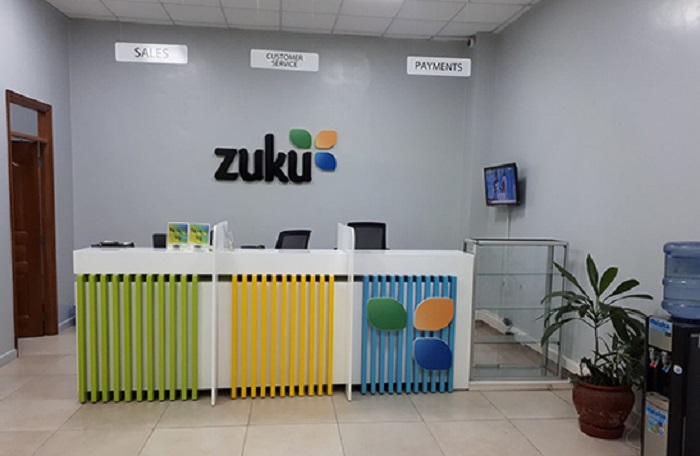
Kenya’s fixed broadband market has for years been defined by expansion. Internet service providers competed to reach more estates, apartment blocks and towns as demand for reliable home internet grew. That competition has entered a new phase.
Today, providers are competing just as aggressively on value. Higher speeds, promotional discounts and refreshed entry-level packages have become the preferred tools for attracting subscribers without permanently rewriting price books.
Zuku is the latest provider to lean into that strategy, rolling out discounted Home Fibre pricing that makes its residential packages more affordable while retaining the higher speeds introduced earlier this year. The move comes as competition intensifies across Kenya’s broadband market, with Safaricom, Airtel, Faiba and Savanna Fibre all reshaping their offerings over the past few months.
Zuku Home Fibre discounted prices
Zuku’s current promotional pricing is available across its residential fibre packages.
| Plan | Speed | Discounted Monthly Price |
|---|---|---|
| Shujaa | 30Mbps | KES 2,099 |
| Bingwa | 80Mbps | KES 2,799 |
| Stream | 100Mbps | KES 3,099 |
| Connect | 200Mbps | KES 6,999 |
The promotion lowers the cost of entry into Zuku’s fibre network while preserving the speed upgrades introduced earlier in 2026, when the company doubled bandwidth across several packages.
For households looking to stream, work remotely, attend online classes and connect multiple devices, the revised pricing strengthens Zuku’s position in the increasingly crowded mid-market segment.
A market that looks very different from a year ago
Zuku’s discounts are part of a much broader shift taking place across Kenya’s broadband sector.
Rather than competing primarily through nationwide expansion, providers are increasingly improving the value of existing plans.
Safaricom raised speeds across most Home Fibre packages earlier this year while maintaining its standard monthly pricing. Bronze increased from 15Mbps to 40Mbps, Silver doubled to 60Mbps, while Gold rose to 150Mbps.
Faiba expanded its Home lineup by introducing new entry-level packages priced at KES 3,000 for 35Mbps and KES 4,000 for 60Mbps, lowering the barrier for households considering fibre for the first time.
Airtel entered the residential fibre market with Xstream Fibre, complementing its growing fixed wireless business and giving customers another alternative alongside its 5G home internet products.
Savanna Fibre disrupted pricing expectations by launching residential plans starting at KES 2,000 for 100Mbps. Although its network remains limited to selected areas, its pricing quickly became a reference point for consumers comparing broadband value.
Taken together, these developments have created one of the most competitive home internet markets Kenya has seen in years.
How Zuku compares
Competition has become especially intense around entry-level and mid-tier fibre packages.
| Provider | Entry Plan | Speed | Monthly Price |
|---|---|---|---|
| Zuku | Shujaa | 30Mbps | KES 2,099 |
| Savanna Fibre | CHUI | 100Mbps | KES 2,000 |
| Airtel Xstream Fibre | Starter | 15Mbps | KES 1,999 |
| Safaricom Home Fibre | Bronze | 40Mbps | KES 2,999 |
| Faiba Home | Starter | 35Mbps | KES 3,000 |
On paper, Savanna still offers the highest advertised speed at the entry level, while Airtel remains the cheapest way to access fibre. Zuku’s latest discounts place it squarely between those offers, giving consumers another competitively priced option from an established provider with a wider network footprint.
The comparison also shows how dramatically Kenya’s broadband market has evolved. Entry-level fibre packages are delivering more bandwidth than they did a year ago, and customers have significantly more choice across every price segment.
The competition is no longer just about Mbps
Higher advertised speeds tell only part of the story.
As more households rely on fibre for work, entertainment, cloud services and online learning, buyers are paying closer attention to reliability, latency, installation timelines, customer support and network consistency during peak evening hours.
Many providers also manage network capacity through Fair Usage Policies, making it important for customers to look beyond headline speeds when comparing plans.
Coverage remains another deciding factor. While Safaricom, Zuku and Faiba have established footprints across many urban centres, newer entrants such as Savanna are still expanding into additional neighbourhoods. Availability often narrows the list of practical choices before pricing enters the conversation.
Why operators are raising speeds instead of slashing prices
The pattern emerging across Kenya’s broadband market reflects the economics of building and operating fibre networks.
Rolling out fibre requires continuous investment in infrastructure, maintenance, international bandwidth, customer support and network expansion. Permanently reducing subscription prices would place sustained pressure on revenues.
Increasing speeds allows operators to improve customer value while protecting recurring income. A household paying the same monthly fee for 80Mbps instead of 30Mbps perceives a meaningful upgrade even though the operator has not reduced the subscription price.
Promotional discounts, such as Zuku’s latest offer, provide another way to attract new customers without permanently resetting long-term pricing across the market.
What this means for consumers
For consumers, the current environment offers more choice than ever before.
Households can now compare providers based on price, speed, availability and overall service quality rather than settling for whichever network happens to serve their estate. Competition has expanded beyond infrastructure rollout into customer experience, installation, reliability and long-term value.
Zuku’s latest discounted pricing reinforces that trend. The company is strengthening its position in a market where every major provider is refreshing its broadband strategy in response to growing demand and more aggressive competition.
For anyone considering a new home internet connection or switching providers, the decision is no longer simply about finding the fastest package. The best choice depends on which provider offers the strongest combination of speed, reliability, coverage and value where you live.
That is ultimately the biggest change in Kenya’s broadband market. Providers are no longer competing only to connect more homes. They are competing to deliver more value to the households they already serve, and consumers are the biggest beneficiaries of that shift.
Download the free Kaspersky SMB Cybersecurity Guide here to learn how businesses can move beyond traditional antivirus and build a more resilient approach to cybersecurity.
Go to TECHTRENDSKE.co.ke for more tech and business news from the African continent and across the world.
Follow us on WhatsApp, Telegram, Twitter, and Facebook, or subscribe to our weekly newsletter to ensure you don’t miss out on any future updates. Send tips to editorial@techtrendsmedia.co.ke


