

How MansaX built Kenya's biggest Special Fund as the market doubled in size

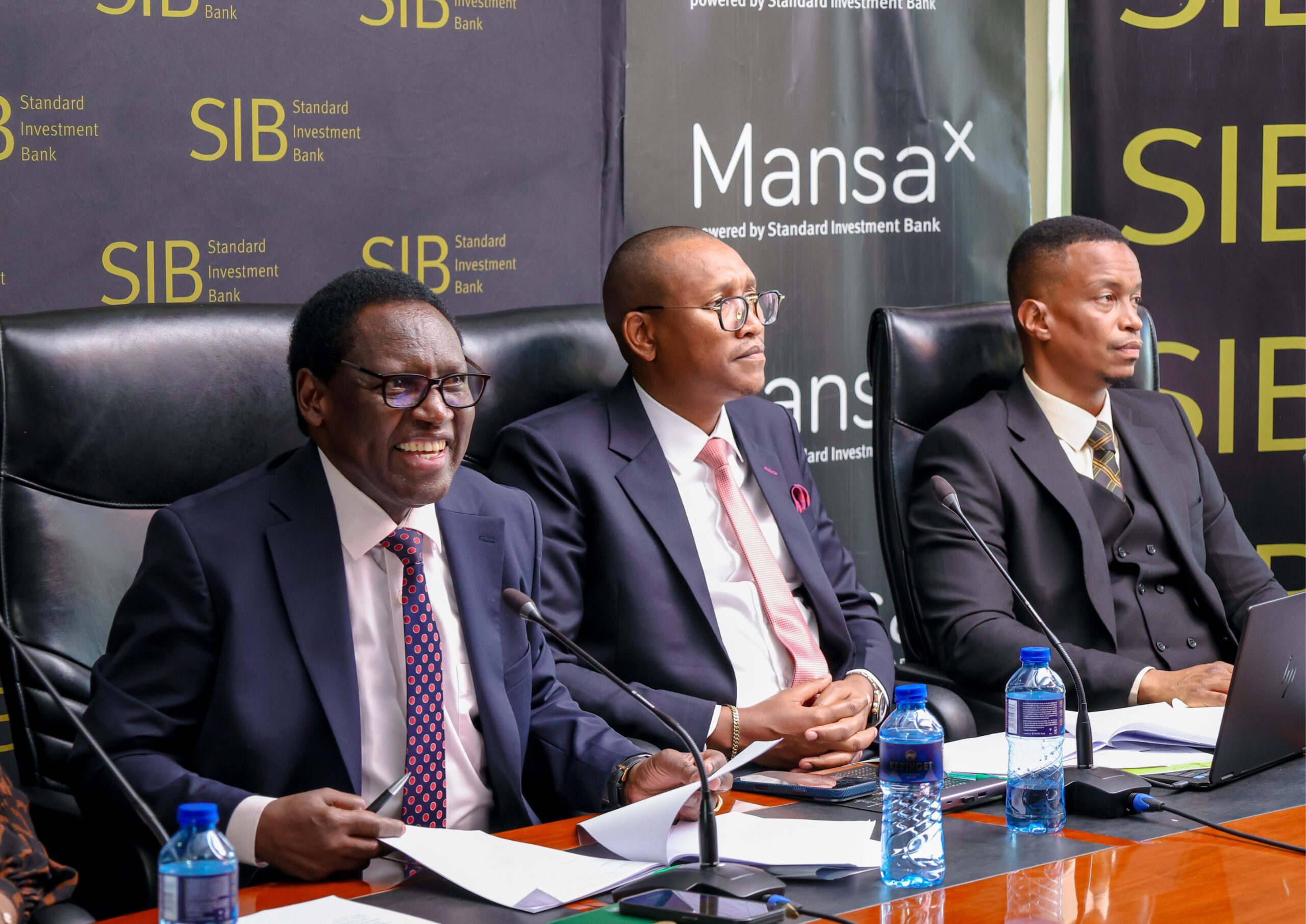
Kenya’s Special Funds market has become one of the country’s fastest-growing investment stories, with assets under management climbing 134.84% year-on-year to KSh203.56 billion in the first quarter of 2026.
One firm sits at the centre of that growth. MansaX, managed by Standard Investment Bank, now oversees more than US$1 billion across four funds and controls roughly 75% of the market, making it the defining player in a category that has expanded well beyond its niche beginnings.
That growth has also raised new questions. What exactly makes a Special Fund “special”? How has MansaX managed to post consistently positive quarterly returns? Are these funds simply hedge funds packaged for retail investors, or has Kenya created something distinct under its own regulatory framework?
Those questions formed the basis of a wide-ranging conversation with Nahashon Mungai, Executive Director of Global Markets at Standard Investment Bank, whose answers offer a detailed look at how the industry operates from the inside.


Kenya’s fastest-growing investment category
Special Funds are a relatively new addition to Kenya’s investment landscape, but they have expanded rapidly since the Capital Markets (Collective Investment Schemes) Regulations 2023 formally created the category.
Before those regulations, collective investment schemes largely fell into familiar buckets: equity funds, fixed-income funds and balanced funds. Those structures worked within fairly narrow investment universes, particularly in a market where new stock market listings had slowed considerably.
Mungai says Standard Investment Bank began searching for a broader investment model as early as 2017, when it wanted to give clients exposure beyond domestic stocks and bonds. The firm’s earlier experience with licensed online forex money management eventually evolved into what became MansaX’s multi-asset strategy.
The 2023 regulations later provided a dedicated legal framework for that approach rather than forcing it into existing categories. Under the regulations, Special Funds are defined less by the assets they own than by the investment strategy they disclose to the Capital Markets Authority and consistently follow.
How Special Funds changed the market
The regulations gave fund managers room to build strategies that combine equities, fixed income, commodities, precious metals and derivatives under a single investment mandate.
Mungai argues that flexibility is what separates Special Funds from traditional mutual funds. While hedge funds often use similar techniques, including long-short investing and derivatives, he describes Kenya’s Special Funds as a regulated retail alternative with stricter disclosure requirements and investor protections built into the CIS framework.
That distinction has helped create an entirely new segment of Kenya’s investment market rather than simply introducing another version of an existing fund.
Why MansaX has pulled ahead
The firm’s scale is difficult to ignore.
The flagship MansaX KES Fund holds about KSh132.18 billion, while the MansaX USD Fund manages KSh17.43 billion. The platform also includes MansaX Shariah USD, with roughly KSh3.01 billion, and MansaX Shariah KES, which manages about KSh527.87 million.
Together they have pushed the platform beyond the US$1 billion mark.
Mungai attributes much of that growth to an investment philosophy built around genuine diversification rather than simply owning many different stocks. The portfolio spreads exposure across asset classes and regions, with holdings that respond differently when markets move, instead of concentrating risk inside one market.
The distinction becomes clearer when looking at how the conventional and Shariah funds operate.
The KES and USD conventional funds follow essentially the same core investment strategy, with currency exposure hedged where necessary. The Shariah funds apply similar diversification principles but adjust their investment universe to comply with Islamic finance requirements.
The strategy behind the returns
MansaX’s defining characteristic is its long-short strategy.
Rather than buying assets expected to appreciate and waiting for prices to rise, the fund also takes positions that benefit when other assets lose value. According to Mungai, that combination allows the portfolio to maintain exposure to attractive sectors while reducing the damage caused by market declines.
He illustrates the approach using artificial intelligence companies. Instead of owning every AI stock, the fund may hold stronger companies while taking short positions against weaker names within the same sector, creating a hedged exposure rather than an outright directional bet.
That philosophy also explains why MansaX did not attempt to maximise returns during the current equity rally.
Mungai says a purely long-only strategy might have produced returns well above 30% in 2026 by riding the strongest stock market gains. Because the fund maintains hedges, however, its KES fund delivered a net return of 10.97% in the first half of 2026, while the USD fund returned 6.54% net over the same period.
For the firm, preserving capital matters more than capturing every rally.
Why the fund has never reported a negative quarter
One of MansaX’s most unusual claims is that its flagship fund has never recorded a negative quarter since inception.
The Q2 2026 factsheet reports an average annual net return of 18.37% for the KES fund, while quarterly returns have remained consistently positive.
Mungai offers an important qualification. The fund experiences losing days, sometimes many of them, but quarterly reporting reflects the cumulative outcome after continuous portfolio adjustments and hedging rather than the daily swings visible inside the portfolio.
He points to COVID-19 as the clearest example of how that process worked.
During that period, the investment team rotated aggressively into companies such as Zoom and Netflix, while also taking positions that benefited from weakness in other sectors, including oil markets. The period still produced what the firm considers its weakest annual returns, around the mid-teens, but it remained positive.
His broader argument is that markets turn constantly, so success depends less on predicting every move than on pivoting quickly when conditions change.
The benchmark problem
Perhaps the most revealing part of the discussion concerns benchmarking.
Mungai openly acknowledges that the firm has struggled internally with identifying the most appropriate yardstick for performance.
Treasury bills, Kenyan equity indices and the S&P 500 each capture only part of what the portfolio does. A global multi-asset long-short strategy does not fit neatly inside any single traditional benchmark.
He says the closest comparison is the Barclays Hedge Fund Index, particularly the multi-asset long-short segment, while also revealing that Kenya’s Special Funds industry is working on developing its own local benchmark to help investors compare funds operating under similar strategies.
That gap matters because performance is easier to interpret when investors share a common reference point.
Fees, accessibility and investor trade-offs
MansaX also attracts attention because of its pricing.
The KES fund charges a 5% management fee and a 10% performance fee above the hurdle rate.
Mungai argues those fees reflect the realities of running an institutional-grade global investment operation. The firm pays for specialised trading systems, experienced traders and international market access through counterparties in financial centres such as London and New York, costs he says cannot be compared directly with those of traditional mutual funds.
His position is that investors should judge the fund on net returns, since the published performance already reflects fees.
The minimum investment requirement has generated similar debate.
The KSh250,000 entry point, according to Mungai, was originally introduced because the firm lacked the operational capacity to handle a large retail investor base when the fund launched eight years ago. He now believes there is room to reduce that threshold, provided it remains above the KSh100,000 minimum permitted under the regulatory framework.
Governance, audits and regulatory oversight
Questions around transparency have become more prominent as the industry has grown, particularly after reports of a July 2026 engagement between Special Funds and the Capital Markets Authority.
Mungai describes that meeting as a routine post-inspection discussion rather than a regulatory crackdown on returns. He says return verification already passes through multiple layers, including auditors, custodians and the CMA itself.
The governance structure behind MansaX reflects that institutional setup.
The funds operate under Standard Investment Trust Funds, with Kingsland Court Trustees serving as trustee, I&M Bank acting as custodian, and Grant Thornton providing audit services.
The audit discussion also addresses another question that has followed the fund’s rapid growth: why a billion-dollar platform did not always use a large international audit firm.
Mungai says former auditor Chartafai LLP supported the business from its early years and handled the complexity of alternative fund auditing effectively. The eventual transition to Grant Thornton came after Chartafai’s term ended and regulatory requirements called for auditor rotation, rather than because investors demanded a change.
What MansaX’s portfolio says about its positioning
The Q2 2026 portfolio provides a practical illustration of the investment philosophy described throughout the interview.
The largest holdings include fixed-income instruments, interest-rate derivatives, the Nasdaq 100, Family Bank, Advanced Micro Devices, Microsoft, Caterpillar, ASML, cash equivalents and WTI Crude Oil Futures.
The geographic allocation remains concentrated in the Americas, with substantial exposure to Europe, smaller allocations across Africa, and more limited positions in the Middle East, Asia and Oceania.
Those allocations reinforce the firm’s emphasis on diversification across both geography and asset class rather than relying on domestic markets alone.
The bigger picture for Kenya’s investment market
The rise of Special Funds reflects more than one firm’s success. Kenya has built a regulated framework for alternative investment strategies that barely existed a decade ago, and the market has expanded quickly enough to attract serious attention from investors, regulators and competitors alike.
MansaX remains the category’s dominant player, but its own executives acknowledge that important pieces of market infrastructure are still evolving, particularly around benchmarking and broader retail access.
The industry’s next test will be whether those structures mature alongside the rapid growth already reflected in the numbers. With more than KSh203 billion already invested and a regulatory framework that continues to develop, Special Funds have established themselves as a permanent feature of Kenya’s investment landscape rather than a temporary experiment.
Download the FREE Kaspersky Next Enterprise Security Guide here to explore the complete framework for simplifying security operations and building cyber resilience.
Go to TECHTRENDSKE.co.ke for more tech and business news from the African continent and across the world.
Follow us on WhatsApp, Telegram, Twitter, and Facebook, or subscribe to our weekly newsletter to ensure you don’t miss out on any future updates. Send tips to editorial@techtrendsmedia.co.ke


