
Dollar funds surge as Kenya’s investment market diversifies beyond MMFs

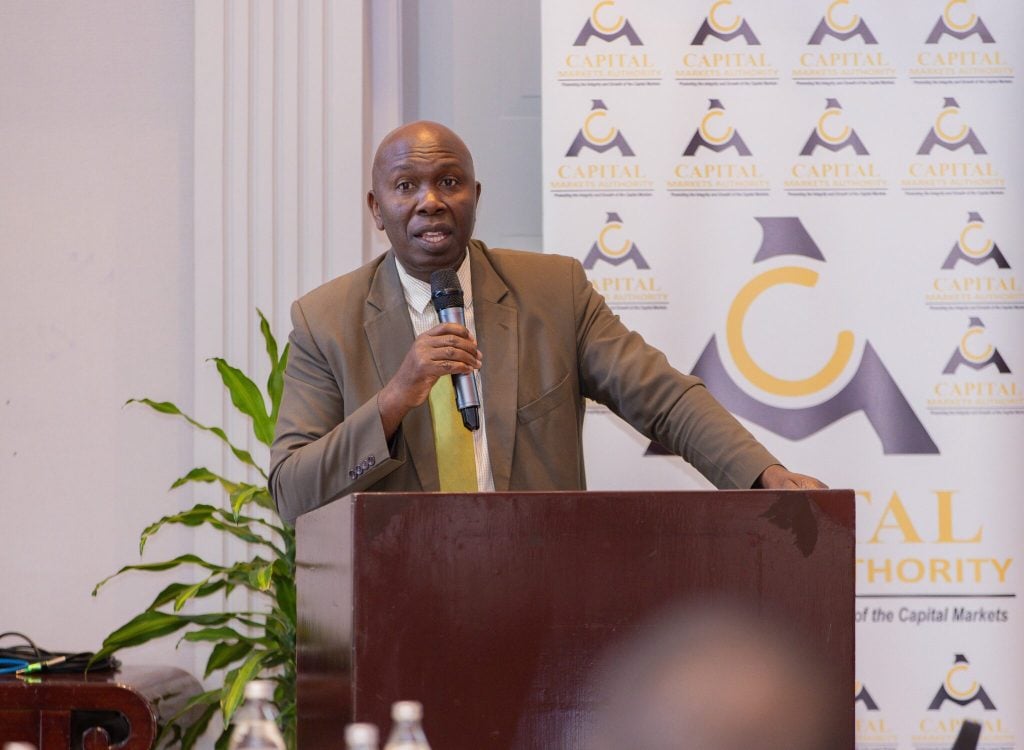
Kenya’s collective investment industry is approaching the KSh1 trillion mark as more investors put money into regulated funds, while the dominance of money market funds (MMFs) continues to decline.
The Capital Markets Authority’s Collective Investment Schemes (CIS) Quarterly Report for the period ended June 30, 2026 shows that assets under management across the industry reached about KSh948.7 billion by the end of the second quarter. Special Funds grew by 24 per cent during the quarter, followed by Fixed Income Funds at 15 per cent, while MMFs expanded by four per cent.
MMFs remain the largest category, with about KSh460 billion in assets, but their share of the CIS market has fallen sharply. The CMA said MMFs accounted for about 90 per cent of collective investment assets in March 2020, compared with about 49 per cent in June 2026.
The change is even clearer in the categories gaining ground. Special Funds increased their share from about five per cent in March 2020 to 27 per cent in June 2026, while Fixed Income Funds rose from two per cent to 24 per cent over the same period.

The figures point to an investment market that is growing beyond the MMF model that has dominated retail investing in Kenya for years. That does not mean MMFs are shrinking in absolute terms. Their assets have continued to grow, but other parts of the market are expanding faster and taking a larger share of the industry’s total assets.
The number of investors in collective investment schemes has also increased sharply. CMA data cited in the latest figures shows the investor base rising from about 2.5 million in June 2025 to approximately 4.1 million by June 2026, a 68 per cent increase year-on-year. The expansion suggests that the change in the CIS market is happening alongside a broader increase in participation.

Dollar funds emerge as a major part of the diversification
Foreign-currency funds are among the clearest signs of how the investment market is changing.
Assets held in foreign-currency-denominated funds rose from KSh95.9 billion in March to KSh110.5 billion in June 2026, representing a 15 per cent increase in three months. The June figure was also more than 16 times the KSh6.6 billion recorded in March 2023.
The market is overwhelmingly dollar-based. By June, Kenya had 47 foreign-currency funds, comprising 45 US dollar funds, one sterling fund and one South African rand fund.
The growth gives investors access to products whose underlying currency differs from the shilling, adding another form of diversification alongside the growing range of Fixed Income and Special Funds.
It also comes as Kenya’s monetary environment has moved away from the high-rate conditions of the previous two years. The Central Bank of Kenya lowered the Central Bank Rate to 8.75 per cent in February 2026 and has retained it at that level through its subsequent meetings. The 91-day Treasury bill rate was 8.769 per cent as of September 7, while the average savings rate stood at 3.53 per cent in July.
The lower-rate environment is relevant to the changing fund mix, although the CMA data does not establish that declining MMF returns alone caused investors to move into other products. Different funds carry different investment objectives, liquidity arrangements and risk exposures, making the shift more complicated than a simple search for higher returns.
Kenya’s investment market is becoming more digital
The expansion is also taking place alongside a broader change in how Kenyans access investment products.
Mobile money has already turned MMFs into a mass-market digital product. Safaricom’s Ziidi, for example, has grown into a major digital investment platform since its launch, giving millions of mobile-money users a way to put money into a regulated MMF without using a conventional investment account.
At the same time, the CMA has expanded the regulatory framework for digital investment distribution. In May, the regulator licensed Chumz operator Moneto Ventures and Pesa Bridge as Intermediary Service Platform Providers, allowing the platforms to connect retail investors with collective investment schemes.
The result is a market where the same digital infrastructure that helped introduce more Kenyans to MMFs can increasingly be used to access a broader range of investment products.
That distinction matters when looking at the declining MMF share. A growing digital MMF can continue adding investors and assets even as MMFs collectively account for a smaller proportion of the total CIS market.
Kenya’s investment market is therefore changing in two directions at once: participation is expanding, while the products absorbing that money are becoming more varied.
Special Funds reshape the market
The rapid growth of Special Funds deserves particular attention because the category now represents more than a quarter of CIS assets.
Mansa-X has emerged as a major contributor to that growth. Standard Investment Bank reported that its Mansa-X Special Funds had reached about KSh188 billion in assets by the end of June, equivalent to roughly one-fifth of the entire CIS market.
That concentration is important when interpreting the broader Special Funds numbers. The category’s 27 per cent share does not mean Kenyan investors have uniformly moved into dozens of different alternative products. A small number of large funds can materially influence the composition of the sector.
For investors, the label “Special Fund” also does not describe one uniform strategy. The products can have different asset exposures and risk characteristics, so comparing the category directly with an MMF on returns alone can obscure important differences in liquidity and investment risk.
What the shift means for Kenyan investors
The most significant change is not that MMFs have ceased to matter. They remain the largest component of Kenya’s collective investment market, with roughly half of all CIS assets.
What has changed is the size and composition of everything around them.
A market that was overwhelmingly concentrated in MMFs in 2020 now has substantial pools of money in Fixed Income Funds and Special Funds, alongside a rapidly expanding foreign-currency segment. At the same time, millions more people are participating in collective investment schemes and digital platforms are making regulated investment products easier to access.
For retail investors, that creates more choice but also makes product selection more important. A dollar-denominated fund, a fixed-income fund, a multi-asset Special Fund and an MMF can have very different liquidity, currency and market risks even when all are offered through a familiar digital investment platform.
Kenya’s KSh948.7 billion CIS market is therefore approaching a symbolic KSh1 trillion milestone at the same time that its structure is changing. MMFs still anchor the industry, but their former dominance is giving way to a broader investment market in which fixed income, special strategies and dollar-denominated products occupy a much larger role.
Real ESG impact doesn’t happen in panels alone, it happens in the rooms where financiers, operators, and policymakers actually align. Our GreenShift Forum 2026 cuts the noise, bringing together the people rewiring Africa’s sustainability and energy frameworks for one focused day in Nairobi. Secure your seat.
Go to TECHTRENDSKE.co.ke for more tech and business news from the African continent and across the world.
Follow us on WhatsApp, Telegram, Twitter, and Facebook, or subscribe to our weekly newsletter to ensure you don’t miss out on any future updates. Send tips to editorial@techtrendsmedia.co.ke


