
Kenya’s KSh5.3 trillion 2027/28 budget takes shape as Treasury accelerates the election-year timetable
A budget cycle built around the 2027 election

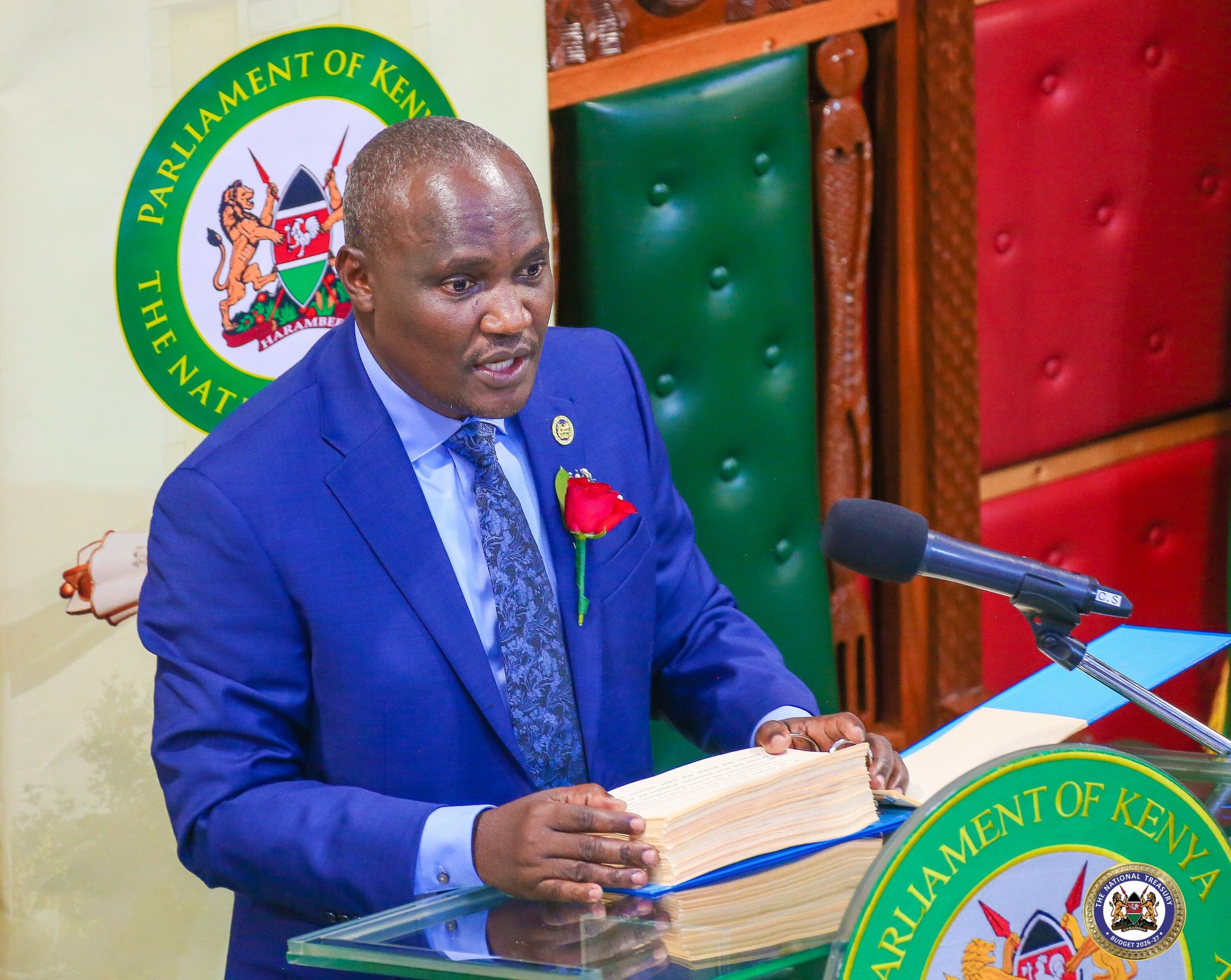
Kenya’s 2027/28 budget process has started months earlier than the public would normally begin paying attention to the next Finance Bill, with the National Treasury bringing forward the fiscal calendar so the government can complete the main tax and spending legislation before the August 10, 2027 General Election. The accelerated timetable begins with the budget preparation cycle launched at the Kenyatta International Convention Centre on July 22 and is designed to take the Finance Bill 2027 and Appropriation Bill through Parliament before election-related disruptions to legislative business.
Treasury’s schedule is unusually compressed. The Draft Budget Review and Outlook Paper is due for Cabinet consideration in August 2026, sector working groups and consultations follow in September and October, the Draft Budget Policy Statement is scheduled for November, and the FY2027/28 budget estimates and Finance Bill 2027 are both expected in Parliament by January 29, 2027. The National Treasury Cabinet Secretary is then scheduled to present the budget highlights on March 18, with both the Finance Bill and Appropriation Bill targeted for passage by March 31.
The reason is explicit in Treasury’s planning documents: 2027 is an election year, so the national fiscal budget process has to be fast-tracked to allow the government to maintain normal operations and complete the legislative process before Parliament’s calendar is overtaken by the election.
That timing matters because the Finance Bill is only one component of the exercise. Treasury is effectively trying to complete the core architecture of the next financial year before the country enters the final stretch of the election cycle.
Treasury is planning Kenya’s first KSh5 trillion-plus budget
The scale of the proposed budget makes the accelerated process more consequential. The draft Budget Review and Outlook Paper puts projected expenditure for FY2027/28 at KSh5.323 trillion, taking the national budget above the KSh5 trillion mark for the first time.
Of that amount, recurrent expenditure is projected at KSh3.887 trillion, while development expenditure is set at KSh958 billion. Treasury projects total revenue of KSh3.943 trillion, including KSh3.208 trillion in ordinary revenue.
The numbers leave a projected fiscal deficit of KSh1.321 trillion, equivalent to about 5.7 percent of GDP. Treasury expects to finance KSh1.085 trillion of that gap through domestic borrowing and another KSh235.9 billion externally.
The figures are projections at this stage, rather than the final approved budget. They will pass through the Budget Policy Statement, estimates and parliamentary scrutiny before the government arrives at the final expenditure and financing framework. Even so, they provide an early indication of the scale of the fiscal challenge Treasury will be managing during the 2027/28 budget cycle.
The borrowing question is becoming harder to ignore
The proposed financing plan also comes against a difficult recent record. The draft 2026 Budget Review and Outlook Paper shows that Treasury borrowed KSh983.7 billion during FY2025/26, while KSh776 billion was spent on development, leaving KSh207.7 billion of the borrowing to finance recurrent expenditure, according to the figures accompanying the BROP.
That means about 21.1 percent of the borrowing was used for recurrent expenditure, while 78.9 percent went towards development. The distinction matters because Kenya’s public finance framework requires national government borrowing, over the medium term, to be directed towards development expenditure rather than ordinary recurrent costs.
The figures therefore put greater scrutiny on the KSh1.085 trillion in domestic financing projected for FY2027/28. The issue is not simply how much Treasury intends to borrow, but how much of that financing can ultimately support the development programme when the government is already operating under pressure from debt-service costs, revenue performance and recurrent spending.
That question will follow the budget through every subsequent stage. If revenue falls short of projections or financing conditions tighten, Treasury will have to reconcile the size of the expenditure plan with the limits on additional borrowing and the cost of servicing existing debt.
Tax policy is starting before the Finance Bill is drafted
This is also why the early tax-policy consultation matters. On July 27, Treasury invited Kenyans, businesses, professional bodies and other stakeholders to submit proposals for amendments to tax laws for Finance Bill 2027, with comments due by August 31, 2026.
The consultation asks contributors to identify the specific tax provision they want changed and provide evidence or economic justification for the proposal. Stakeholders can also submit recommendations on East African Community customs measures, including tariff adjustments and duty remission arrangements.
The consultation should not be read as a list of new taxes that Treasury has already decided to introduce. At this stage, the government is collecting proposals that will inform the preparation of the legislation.
The significance lies in the timing. Stakeholders are being asked to make their case while policy options are still being assembled, months before the Finance Bill is due in Parliament.
That gives businesses and other interested parties an opportunity to put forward concerns about taxation, customs and incentives before the legislation reaches the parliamentary stage, when proposed changes become much more specific and the debate becomes centred on the provisions contained in the Bill.
PAYE reform is running on a separate track
The early Finance Bill process is taking place alongside another tax issue that has attracted considerable attention: the delayed reform of PAYE bands.
Treasury Cabinet Secretary John Mbadi has said the government intends to introduce Income Tax (Amendment) Bill II 2026 by the end of September to address PAYE reforms that were left out of the Finance Act 2026. The proposals previously discussed include changes affecting workers earning around KSh30,000 and KSh50,000 a month, although Mbadi has said Treasury is considering proposals from other stakeholders, including the banking sector, before settling on the final approach.
The distinction between the two processes is important. The PAYE changes belong to a separate 2026 amendment process, while the August tax-policy consultation is part of preparations for Finance Bill 2027.
For workers, however, the two developments form part of the same broader concern: how taxation will affect disposable income at a time when statutory deductions and the cost of living are already putting pressure on household finances.
Mbadi’s assurance that the PAYE proposal has not been abandoned came after the 2026/27 Budget Statement made no mention of the anticipated adjustment, prompting disappointment among taxpayers who had expected relief.
Public participation starts well before Parliament sees the Bill
The accelerated timetable also changes the way businesses and taxpayers should think about participation in the budget process.
The August 31 deadline for tax-policy proposals is only one of several opportunities. Treasury’s schedule provides for sector working groups in September and October, public hearings in October, further review of stakeholder submissions and the development of the Budget Policy Statement before the budget proposals eventually reach Parliament.
That means the policy conversation begins well before the Finance Bill becomes a parliamentary document. By the time the Bill reaches MPs in January, many of the underlying policy choices will already have passed through Treasury’s internal and stakeholder consultation processes.
The same principle is being applied to the government’s longer-term planning agenda. In the Vision 2060 public engagement process, Mbadi described the rollout as the beginning of a national conversation involving people and representatives from political, economic and social sectors, with public participation intended to inform the eventual vision.
That does not make Vision 2060 part of the 2027/28 budget process, but it provides useful context for the government’s current emphasis on gathering input before major policy frameworks are finalised.
The March deadline is the real pressure point
The most revealing part of the 2027/28 calendar may be its end point.
Treasury wants the Finance Bill and Appropriation Bill passed by March 31, 2027, after presenting the budget highlights on March 18. That leaves the government with a defined window to complete the main fiscal legislative process before the election timetable becomes dominant.
A pre-election fiscal reporting stage follows, with the Draft Pre-Election Report scheduled for April 30 and submission to Parliament planned for May 10.
The sequence shows how tightly the fiscal calendar has been constructed around the election. Treasury is attempting to get the main spending and taxation framework through Parliament first, then move into the pre-election reporting period.
For the 2027/28 budget, therefore, the important dates begin long before the familiar Budget Day. By the time Kenyans are watching the Finance Bill debate in Parliament, Treasury expects much of the underlying policy work to have been completed.
A bigger budget does not remove the financing problem
The KSh5.323 trillion projection is likely to attract the most attention, but the more important question is how much of that spending can be supported by sustainable revenue and financing.
Treasury is projecting KSh3.943 trillion in revenue against KSh5.323 trillion in expenditure, leaving a KSh1.321 trillion gap. At the same time, the government’s recent borrowing record shows the difficulty of keeping borrowed funds aligned with development spending when recurrent costs and debt obligations are consuming a large share of available fiscal space.
That makes the next several months important for more than the size of the eventual budget. The tax proposals submitted by August 31, the sector consultations that follow, the Budget Policy Statement, the January estimates and the Finance Bill will collectively reveal how Treasury intends to close the gap between its spending ambitions and its revenue capacity.
The 2027 election has brought the timetable forward. The fiscal numbers will determine how difficult that timetable is to execute.
Download the FREE Kaspersky Next Enterprise Security Guide here to explore the complete framework for simplifying security operations and building cyber resilience.
Go to TECHTRENDSKE.co.ke for more tech and business news from the African continent and across the world.
Follow us on WhatsApp, Telegram, Twitter, and Facebook, or subscribe to our weekly newsletter to ensure you don’t miss out on any future updates. Send tips to editorial@techtrendsmedia.co.ke