
Revenue climbs as Bharti Airtel Q1 FY27 results reinforce its Africa strategy

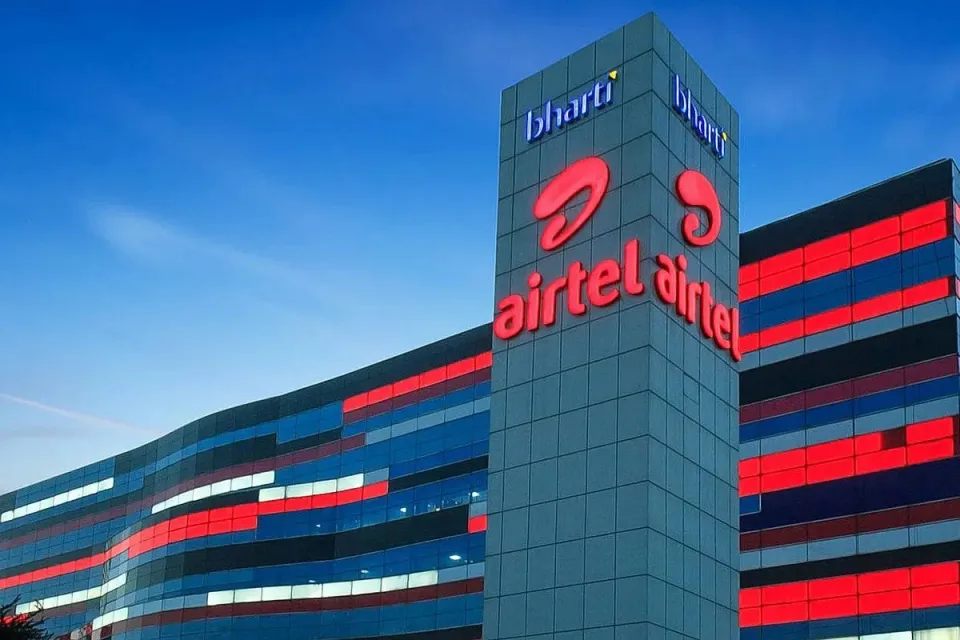
Bharti Airtel revenue climbed 18.4% in the first quarter of FY27 as the telecom group continued to draw momentum from both India and Africa, where higher customer spending, network expansion and deeper investments in digital infrastructure helped lift earnings. The quarter also marked a significant corporate milestone after Bharti Airtel completed an EPS-accretive share swap that raised its effective stake in Airtel Africa to more than 79%, giving the parent company greater exposure to one of its fastest-growing businesses.
For Africa, the latest results extend a story that has been unfolding over the past year. Airtel has been expanding fibre networks, investing in AI-ready data centres, rolling out new financial products and preparing satellite-based connectivity, while simplifying its ownership structure to capture more of the region’s future growth. Those investments are now being reflected alongside stronger financial performance.
Bharti Airtel reported consolidated revenue of ₹58,539 crore (approximately $6.7 billion) for the quarter ended June 30, 2026, while EBITDA rose to ₹33,599 crore with a margin of 57.4%. Net income before exceptional items increased to ₹8,057 crore, up from ₹5,948 crore a year earlier. During the quarter, the company added 14.9 million customers, taking its global subscriber base to nearly 681 million across 15 countries and reinforcing its position as the world’s second-largest mobile operator by subscribers.
One of the quarter’s defining developments was the completion of Bharti Airtel’s share-swap transaction with Indian Continent Investment Limited (ICIL), which increased its effective ownership of Airtel Africa from roughly 63% to more than 79%.

Beyond simplifying the group’s shareholding structure, the transaction is expected to be earnings per share (EPS) accretive, allowing Bharti Airtel to benefit more directly from Airtel Africa’s financial performance without increasing debt or using cash for the acquisition.
Executive Vice Chairman Gopal Vittal said the transaction reflects the company’s confidence in Africa’s long-term growth prospects and the opportunities emerging across connectivity, financial services and enterprise infrastructure.

That confidence is backed by results on the ground. Airtel Africa ended the quarter with 189 million customers after adding subscribers across its 14 operating markets, while revenue grew 21.1% year-on-year in constant currency and 5.7% sequentially.
The stronger financial performance comes as Airtel accelerates investment in infrastructure intended to support rising demand for broadband, cloud computing and artificial intelligence workloads.
In Kenya, construction continues on Nxtra by Airtel’s $150 million AI-ready data centre in Tatu City. The 44MW facility, scheduled for completion in July 2027, forms part of a broader $1 billion investment programme aimed at expanding Nxtra’s data centre capacity across India and Africa.
The group is also extending its connectivity footprint. During the quarter, Airtel deployed 1,579 new towers and 14,540 mobile broadband base stations. Over the past 12 months, it has added 7,631 towers and laid more than 45,171 kilometres of fibre, strengthening network capacity as data consumption continues to climb.
In Kenya, Airtel has also entered the fixed broadband market with fibre-to-the-home (FTTH) and fibre-to-the-business (FTTB) packages ranging from 15 Mbps to 100 Mbps, widening its presence beyond mobile connectivity.
The operator is also working with SpaceX on direct-to-cell satellite technology in Kenya and Uganda. Pilot deployments have been completed in Kenya and technical trials are underway in Uganda as the company seeks to extend mobile coverage to locations where conventional tower deployment remains difficult.
Financial services continue to be one of Airtel Africa’s fastest-growing businesses.
Airtel Money now serves 56.5 million active customers, processing more than $245 billion in annualised transaction value across the continent. In Kenya, the operator recently introduced Bizna Wallet, a digital wallet designed for small businesses, while expanding its Rudishiwa cashback programme to encourage greater use of digital payments.
The company is also continuing preparations for a standalone London listing of Airtel Money, which has previously been linked to a potential valuation of around $10 billion.
Alongside financial services, Airtel is investing more heavily in enterprise connectivity and cloud infrastructure. These businesses complement the company’s traditional mobile operations as organisations expand their digital infrastructure requirements.
While Africa continues to account for a growing share of the group’s expansion, India remained Bharti Airtel’s largest contributor to revenue.
India generated ₹41,214 crore during the quarter, up 9.7% year-on-year, supported by higher mobile spending, broadband growth and enterprise services.
Average revenue per user (ARPU) increased to ₹264 from ₹250 a year earlier as Airtel added a record one million postpaid customers during the quarter. Smartphone users now account for 80% of its mobile subscriber base, while average monthly data consumption reached 34.4GB per customer, up 36% from the previous year.
The company’s Homes business also maintained its momentum, growing revenue by 33.2% year-on-year after adding 473,000 broadband customers during the quarter, bringing the total customer base to 14.7 million.
Bharti Airtel’s balance sheet also strengthened during the quarter, giving the company more room to continue investing across its markets. Its consolidated net debt-to-EBITDA ratio improved to 1.17 from 1.70 a year earlier, reflecting stronger cash generation alongside disciplined capital allocation.
For investors, the latest results suggest Bharti Airtel is no longer relying solely on subscriber growth to drive performance. Higher customer spending, expanding digital services, broader enterprise offerings and long-term infrastructure investments are contributing more meaningfully to earnings.
For Africa, the quarter reinforces the continent’s growing importance within Bharti Airtel’s global business. From mobile money and fibre broadband to data centres and satellite connectivity, the company is committing more capital across multiple layers of digital infrastructure while increasing its ownership of Airtel Africa. The combination leaves Bharti Airtel better positioned to participate in the continent’s next stage of digital growth while capturing a larger share of the value those investments generate.
Go to TECHTRENDSKE.co.ke for more tech and business news from the African continent and across the world.
Follow us on WhatsApp, Telegram, Twitter, and Facebook, or subscribe to our weekly newsletter to ensure you don’t miss out on any future updates. Send tips to editorial@techtrendsmedia.co.ke


