

Koko's carbon credits remain unsold as PwC struggles to recover value from collapsed business

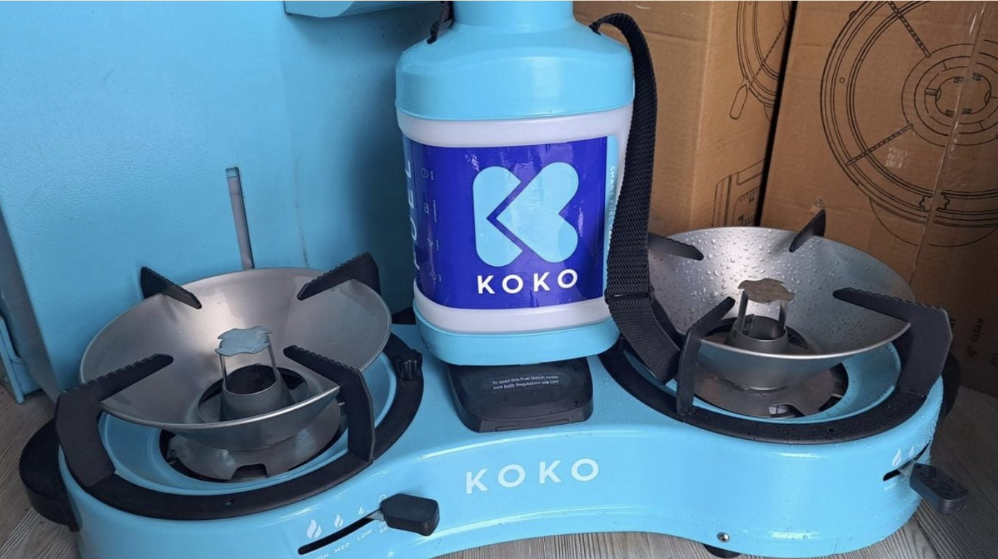
Koko Networks’ carbon credits have yet to attract an offer that its administrator considers worthwhile, adding to the financial difficulties facing creditors of the collapsed Kenyan clean-cooking company.
PricewaterhouseCoopers (PwC), which took over the administration of the business in February 2026, says it has held discussions with three potential buyers and five brokers but had not completed a sale by August 18.
In filings to the UK government, the administrator valued Koko’s carbon inventory at £274,992 (about KSh47.1 million). Several offers had been received through the marketing process, but PwC said they would not generate a meaningful return to the company’s estate, prompting it to continue seeking a better price.
The difficulty selling the credits compounds a recovery challenge involving reported debts of £127.2 million (KSh21.8 billion). Koko’s collapse followed a dispute over government approval to export carbon credits, which the company relied on to finance subsidised ethanol stoves and fuel supplied to low-income households in Kenya.


PwC struggles to secure an acceptable offer for Koko’s credits
PwC’s disclosures show that the administrator has been unable to turn Koko’s carbon inventory into a sale at a price it considers commercially worthwhile, despite approaching potential purchasers and intermediaries. The credits remain on the market as administrators attempt to realise value from the assets left behind after the company ceased operations.
Carbon credits are tradable certificates representing the reduction or removal of one tonne of carbon dioxide or an equivalent amount of another greenhouse gas. Companies buy them to support voluntary climate commitments or, where regulations permit, to meet obligations under applicable emissions-control schemes.
For Koko, the credits had a direct role in the operating economics of its clean-cooking business. Revenue from international carbon markets was intended to help cover the cost of providing affordable ethanol stoves and fuel to households that might otherwise struggle to pay the full commercial price.
The administrator’s valuation should not be mistaken for cash that is available to creditors. The amount ultimately realised will depend on the offers received, the credits’ eligibility for particular markets, the terms of any transaction and the costs associated with completing a sale. PwC’s assessment that the offers received would not produce a meaningful return suggests that the inventory’s estimated value has not translated into an acceptable purchase price.
Kenya’s carbon approval dispute undermined Koko’s business model
Koko Networks filed for administration in Kenya on February 1, 2026, after the government declined to issue a letter of approval allowing it to export carbon credits. According to the reported account of the dispute, the government argued that the company would have exhausted Kenya’s share of the market.
The refusal affected a central part of Koko’s financing model. The company had been selling credits in voluntary carbon markets while seeking access to higher-value compliance markets, where credits can be used only if they meet the relevant scheme’s requirements.
The reported price difference helps explain the commercial importance of that access. The original report put compliance-market credits at about $20 (KSh2,596) per tonne, roughly ten times the price Koko received in voluntary markets. Those figures illustrate the disparity described in the report, although prices vary by market and credit type, and not every voluntary credit automatically qualifies for use in a compliance scheme.
The regulatory dispute also raises questions about how Kenya manages carbon-credit exports while companies depend on international buyers to finance climate-related projects. Government authorisation can affect whether credits may be transferred or used for particular purposes, but the precise requirements depend on the applicable rules and the nature of the transaction.
Kenya has been strengthening its carbon-market oversight, including through the development of a National Carbon Registry. The broader policy context is relevant to Koko’s case because carbon-credit projects must operate within the country’s approval framework and any applicable international arrangements. However, the existence of that framework alone does not establish the complete legal basis for the decision in Koko’s case.
Koko had served more than 1.5 million households in Kenya before shutting down. Its collapse therefore extends beyond an insolvency proceeding, raising questions about the financial structure of clean-cooking programmes that rely on carbon revenue to subsidise products and fuel.
Koko’s debts dwarf the value of its remaining assets
The scale of Koko’s reported liabilities leaves little room for a modest carbon-credit sale to make a substantial difference to creditor recovery. Filings cited in earlier reporting put the company’s debts at £127.2 million (KSh21.8 billion), against £1.45 million (KSh248.8 million) in assets available to preferential creditors. The reported deficiency stood at £126.9 million (KSh21.8 billion).
The figures illustrate the imbalance between the obligations recorded in the insolvency proceedings and the assets identified for recovery. They should not, however, be read as a final calculation of what every creditor will receive, since recoveries depend on the assets legally available to each entity, creditor priorities, administration expenses and the outcome of outstanding sales.
The difficulty extends to physical equipment. PwC recovered information technology assets, including laptops and computer monitors, from former employees. After an external valuation, the remaining laptops were sold for net proceeds of £1,230.64 (about KSh210,947), although the administrator was still awaiting payment when the report was prepared.
That amount was substantially below the earlier estimated value of £8,419 (about KSh1.4 million) for the company’s computers and equipment. The figures concern different descriptions of the assets and should not be treated as a direct valuation comparison without checking the underlying schedules. They nevertheless show why estimated asset values cannot be assumed to represent cash already recovered.
Koko’s financial difficulties persisted despite an increase in reported revenue. Management accounts show the Kenyan business generated £44.7 million (KSh7.7 billion) in revenue in the year ended December 2025, up from £38.4 million (KSh6.6 billion) in 2024. The company was pursuing access to compliance markets as part of its effort to achieve profitability.
Revenue growth does not establish that a business can cover its operating costs or generate sufficient cash to meet its obligations. In Koko’s case, the reported figures need to be considered alongside its dependence on carbon-credit sales, the cost of subsidising clean-cooking products and the financing required to maintain its operations.
Following the collapse, Koko’s UK parent wrote off £35.5 million (about KSh6 billion) in loans owed by its Kenyan subsidiary after determining that the debt would not be repaid. The parent also marked down £1.32 million (about KSh226.2 million) in intangible assets linked to its intellectual-property portfolio.
The loan write-off records the parent’s decision that it did not expect repayment of the amount concerned. It does not mean that all other creditors have waived their claims or that the remaining assets have been distributed.
Intellectual property sale offers another route to recovery
PwC is pursuing a separate sale process for Koko’s intellectual property, including assets associated with its product design and technology. The process involves the liquidator of Saarus Innovations Pvt Limited, Koko Networks Private Limited, both in voluntary liquidation, and the administrator of Koko Networks Mauritius.
The administrator has said that, if the process results in a successful sale, a legal adviser will assess whether any portion of the net proceeds should be received by the company. That qualification matters because a transaction involving assets connected to several entities does not automatically mean the Kenyan operating business will receive the full proceeds.
Intellectual property may offer a different route to recovery from the sale of computers and other physical equipment. A buyer could potentially value the rights, designs, technology or other assets for continued commercial use, although the available disclosures do not establish which individual assets will be sold, what buyers are prepared to pay or how any proceeds would be allocated.
The asset-sale process began on July 17 as administrators sought to recover value from the collapsed business. The carbon-credit inventory remains a separate part of that effort, and its eventual sale price will depend on whether PwC can secure an acceptable offer under the conditions governing the credits.
For creditors, the immediate question is how much can be recovered from the remaining assets and which entities are entitled to the proceeds. For Kenya’s clean-cooking sector, Koko’s experience also highlights the financial exposure that can arise when subsidised household energy depends on carbon revenue and access to international markets.
Unless a buyer offers a price that meets the administrator’s assessment of acceptable value, Koko’s carbon credits will remain an unresolved part of the insolvency process. The inventory has an estimated value, but the disclosures available through August 18 show that a completed sale had yet to convert that valuation into money for the company’s estate.
Real ESG impact doesn’t happen in panels alone, it happens in the rooms where financiers, operators, and policymakers actually align. Our GreenShift Forum 2026 cuts the noise, bringing together the people rewiring Africa’s sustainability and energy frameworks for one focused day in Nairobi. Secure your seat.
Go to TECHTRENDSKE.co.ke for more tech and business news from the African continent and across the world.
Follow us on WhatsApp, Telegram, Twitter, and Facebook, or subscribe to our weekly newsletter to ensure you don’t miss out on any future updates. Send tips to info@techtrendsmedia.co.ke


