

South African startups challenge Uber and Bolt over driver pay, fares and safety

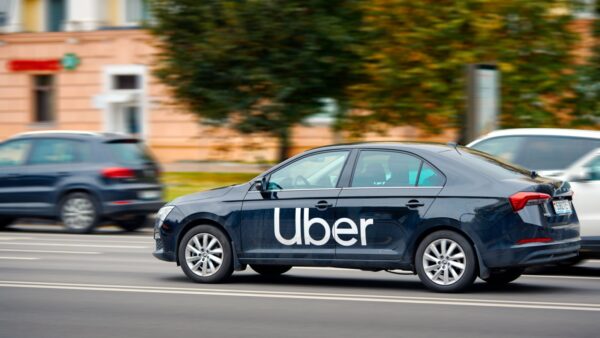
South Africa’s ride-hailing competition is opening a new front as locally developed platforms challenge Uber and Bolt over driver earnings, passenger safety and the cost of accessing vehicles.
OMN1, Bro Cabs and Wanatu are pursuing different business models, from lower commissions and driver subscriptions to company-owned fleets and additional safety controls.
Their approaches target problems that have followed app-based transport across African markets. Drivers need enough income to cover fuel, maintenance, insurance and vehicle finance, while passengers remain sensitive to fares. Platforms must balance those competing demands against the cost of running their technology, supporting customers and maintaining a reliable supply of vehicles.
The competition is also developing against a changing regulatory backdrop. Uber’s registration with South Africa’s National Public Transport Regulator remained unresolved in the latest reporting, while several competing platforms had secured certificates. The outstanding application raises questions about compliance, although it does not establish that a court has declared Uber’s entire South African operation illegal.


Local platforms target driver earnings and passenger safety
The challengers are not relying on a single formula to compete with established international services. Each is attempting to address a different part of the ride-hailing business, whether that means reducing the share of fares drivers surrender, changing how drivers pay to access bookings or taking greater responsibility for vehicles and passenger protection.
For drivers, the appeal of these models depends on what remains after operating costs. A commission reduction can improve the share of each fare they retain, but it does not automatically guarantee higher overall earnings. Drivers also need enough bookings, competitive fares and manageable vehicle expenses to make their work sustainable.
Passengers have their own priorities. Price, availability, vehicle condition and confidence in the driver all influence whether a service is worth using. A platform that improves driver economics but attracts too few riders may struggle to retain its drivers, while a cheaper service may find it difficult to sustain reliable operations if its revenue does not cover costs.
That leaves the newer platforms competing on more than the percentage charged per trip. They must persuade drivers that their services can generate dependable income and convince passengers that the experience is worth choosing over established alternatives.
OMN1 combines ride-hailing with a broader digital platform
OMN1 is positioning its Move service as part of a wider digital platform that combines ride-hailing with food delivery, messaging and creator monetisation. The company has been operating Move in parts of Johannesburg, including Midrand, Sandton, Rosebank and the central business district, with a wider South African launch announced for 5 November 2026.
Its main proposition to drivers is a revenue split under which drivers receive 85% of the customer payment while the platform retains a 15% commission. OMN1 has also said it will avoid tiered or performance-based rewards that can affect how drivers earn on other platforms.
The commission structure gives drivers a straightforward way to assess the platform against alternatives. However, the effective value of the arrangement will depend on whether drivers receive enough trip requests and whether the fares compensate them for fuel, maintenance, vehicle finance and time spent waiting between journeys.
OMN1’s broader app also includes a creator programme. The company has outlined eligibility from 3,000 followers, a payment rate of 20 cents per point and a monthly cap of R50,000. It has said it aims to recruit at least 1,000 creators and pay them at least R20,000 a month.
Those are company targets rather than independently verified results. The creator programme also serves a different commercial purpose from ride-hailing: it seeks to attract users and creators to the wider platform, potentially helping OMN1 build an audience beyond people who need a ride.
The wider strategy could help the company draw users into multiple services, but it also creates a more complicated execution challenge. Ride-hailing depends on local concentrations of drivers and passengers, while creator monetisation requires a sustainable way to fund payments and retain an active audience. The success of one service does not automatically establish demand for the others.
Bro Cabs replaces trip commissions with subscriptions
Bro Cabs takes a different approach by charging drivers a subscription rather than deducting a commission from each trip. The South African platform, founded by Percy Qamata, Msizi Mtolo, Cebile Magudulela and Luther Mfetane, has advertised subscription options of R30 per day, R150 per week or R600 per month.
The model changes how drivers calculate the cost of using the platform. Under a conventional commission system, the amount paid to the platform rises with the value of completed trips. A subscription gives drivers a more predictable platform expense, allowing them to retain the fare revenue after paying the fee, subject to any other applicable charges.
That predictability could appeal to drivers who complete enough trips to make a fixed payment worthwhile. However, the model also transfers some demand risk to drivers. A subscription remains payable even when bookings are slow, so drivers with low trip volumes may find a fixed fee less attractive than a commission deducted only when they earn.
Qamata reported that Bro Cabs had more than 1,000 drivers by July 2026. That figure indicates the company had begun building a driver network, although it does not establish how many were active, how frequently they received bookings or whether the platform had reached sustainable trip volumes.
For Bro Cabs, the commercial challenge is to generate sufficient passenger demand to keep drivers subscribed. A commission-free pitch may help recruit drivers, but it becomes valuable only when those drivers can use the platform to earn enough to cover their subscription and other operating expenses.
Wanatu builds its service around fleet ownership and safety
Wanatu has taken a more operationally intensive route. Rather than relying entirely on individual drivers bringing their own vehicles, the Pretoria-based service employs drivers and owns its fleet. Its safety model includes forward-facing and inward-facing cameras, a hand radio connecting drivers to a 24-hour control room, panic buttons and vehicle tracking through Fidelity Services.
Wanatu also allows users to view live in-car feeds for passengers such as children and older people. These features offer a different approach to passenger reassurance, particularly for journeys where the person booking the ride is not travelling with the passenger.
The model gives the company greater control over vehicle condition, equipment and some aspects of driver management. It also requires more capital and operational oversight than a marketplace that mainly connects independent drivers with passengers. Fleet ownership brings responsibility for vehicle acquisition, maintenance, utilisation and the cost of keeping cars available.
Wanatu’s early focus on Afrikaans-speaking customers is also being broadened through English-language marketing. Reaching a wider customer base could help it grow beyond its original audience, although broader reach will need to be matched by adequate fleet capacity and consistent demand.
The company has also secured South African e-hailing registration, according to reporting published in September 2026. That puts it among the platforms with certificates while Uber’s application remained unresolved. Registration is a relevant compliance distinction, though it does not by itself establish that Wanatu’s service is safer or more commercially competitive.
Price and driver economics will shape the competition
The challengers are entering a market where affordability remains important and drivers continue to face operating costs that can erode their earnings. Uber and Bolt already have established networks, giving them a base of passengers and drivers that newer services must work to replicate.
Bolt’s own reporting on South African trips has pointed to strong demand for its lowest-cost ride categories in Johannesburg, Cape Town and Durban. While company-reported figures should not be treated as an independent market-wide survey, they suggest that price remains a central part of the competitive environment.
This creates a difficult balance for new entrants. A platform can promise drivers a higher share of each fare, but it still needs enough passengers willing to pay those fares. Lower prices may attract customers, but can leave less revenue to support customer service, safety systems, technology and expansion.
Kenya offers a useful regional comparison, although its passenger preferences cannot be assumed to match those in South Africa. A TIFA Research survey of 733 Nairobi respondents reported that 59% opposed a proposed minimum fare for ride-hailing, illustrating how strongly some users resist interventions that could raise prices. The findings underscore a wider challenge for the industry: improving driver earnings cannot be considered separately from passenger affordability.
The business models also expose drivers to different risks. A commission-based service takes a share of completed fares, a subscription model charges for access regardless of trip volume, and a fleet operator carries more of the cost of providing vehicles. Each approach distributes costs and demand risk differently rather than eliminating them.
Moove’s planned Nigeria exit exposes the risks of platform dependence
The wider African market provides a cautionary example of what can happen when a mobility business relies heavily on another platform’s demand. Moove, the vehicle-financing company founded in Lagos in 2020, said it planned to conclude operations in Nigeria following Uber’s withdrawal from the market. Its statement provided limited detail about the reasons or the precise terms of its departure.
Moove’s original model financed vehicles for ride-hailing drivers, with repayments linked to income earned through platform work. That structure connected the ability of drivers to meet their obligations with the availability of bookings and the economics of the platforms generating those trips.
Uber’s departure therefore created a serious potential problem for a business built around ride-hailing income. It is reasonable to identify platform dependence as a risk, but the public statements available do not establish that Uber’s exit was the sole cause of Moove’s planned withdrawal. Nor does the Nigerian experience prove that Uber is preparing to leave South Africa.
The lesson for South Africa’s challengers is more specific: vehicle finance, driver income and platform demand are interconnected. A financing arrangement based on expected trip revenue can become vulnerable when bookings fall or a platform withdraws. A driver subscription can become difficult to justify when demand is weak, while a fleet operator can face underused vehicles and continuing fixed costs.
Platforms that can attract passengers through multiple channels, manage their expenses and retain enough flexibility to withstand changes in demand may be better placed to endure. However, diversification also requires capital, operational discipline and evidence that each additional service can sustain itself.
Regulation adds another variable for operators
South Africa’s e-hailing rules have made platform registration an important part of the operating environment. Reporting published in September 2026 indicated that the National Public Transport Regulator had issued certificates to Bolt, inDrive, Wanatu and Maxim, while Uber’s application remained unresolved. The available reporting did not establish a definitive reason for Uber’s delay.
The distinction matters because regulation affects the conditions under which platforms and their drivers operate. Yet regulatory status is only one part of the competitive picture. A registered platform still needs to attract passengers, provide adequate safety measures and offer drivers an economically viable way to work.
Kenya’s recent commission-cap litigation illustrates how difficult it can be for governments to regulate the financial relationship between platforms and drivers. The High Court blocked enforcement of the 18% commission ceiling while suspending its declaration of invalidity for 12 months, giving the government time to address the regulatory defects identified in the judgment. That ruling concerns Kenya, not South Africa, but it highlights the evidence and legal process required when authorities seek to control platform pricing.
For South African operators, the immediate issue is to meet the applicable registration and safety requirements while building a service that works for both drivers and passengers. Regulatory compliance can establish permission to operate, but it cannot create demand or resolve the underlying cost pressures of ride-hailing.
South Africa’s challengers must prove their models can last
OMN1, Bro Cabs and Wanatu are pursuing different routes into a market dominated by established platforms. OMN1 is combining ride-hailing with a broader digital service and a 15% commission. Bro Cabs is replacing trip-based commissions with subscriptions, while Wanatu is investing in company-owned vehicles, employed drivers and additional passenger-safety controls.
Each proposition addresses a real concern in the industry, but none removes the need for commercial discipline. OMN1 must show that its driver proposition can be supported by sufficient trip demand. Bro Cabs needs to make subscriptions worthwhile across different levels of driver activity. Wanatu must keep its fleet productive while covering the costs associated with ownership, maintenance and staffing.
The Nigerian experience adds a warning about the relationships supporting the industry. A platform’s withdrawal can affect businesses that depend on its demand, while a financing model built around drivers’ expected earnings can face pressure when those earnings become uncertain. South Africa’s challengers will need to build sufficient demand, operational resilience and financial flexibility if they are to establish a durable position alongside Uber and Bolt.
The competition will ultimately be decided by more than the commission percentage advertised to drivers or the number of features listed in an app. Platforms must demonstrate that passengers can find reliable rides at acceptable prices and that drivers can earn enough to keep providing them. The companies that manage both sides of that equation are best placed to turn an alternative business model into a lasting presence in South Africa’s ride-hailing market.
Real ESG impact doesn’t happen in panels alone, it happens in the rooms where financiers, operators, and policymakers actually align. Our GreenShift Forum 2026 cuts the noise, bringing together the people rewiring Africa’s sustainability and energy frameworks for one focused day in Nairobi. Secure your seat.
Go to TECHTRENDSKE.co.ke for more tech and business news from the African continent and across the world.
Follow us on WhatsApp, Telegram, Twitter, and Facebook, or subscribe to our weekly newsletter to ensure you don’t miss out on any future updates. Send tips to info@techtrendsmedia.co.ke


