
Bingo Bets Affordable EVs Can Win Over Kenya's Taxi Drivers

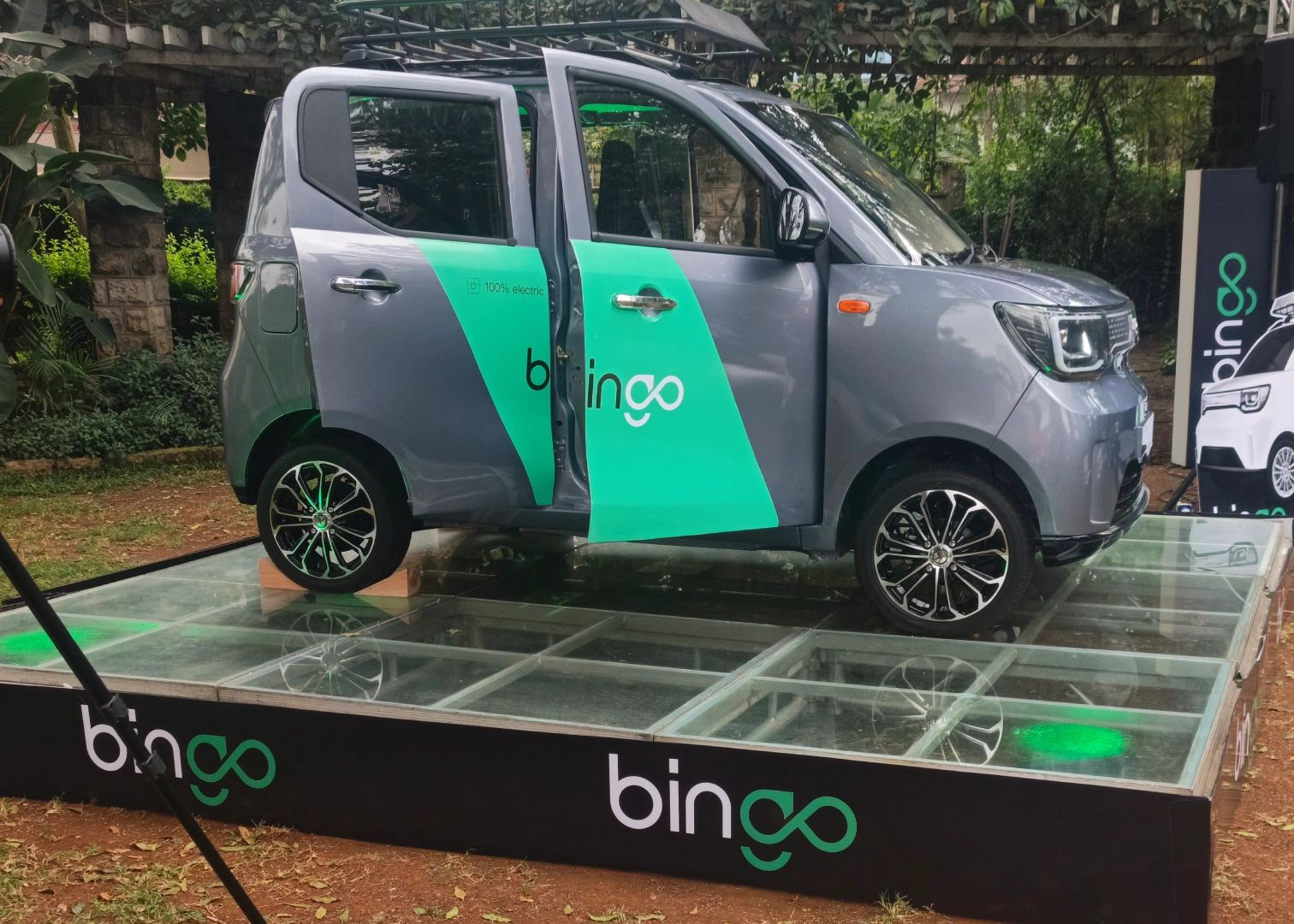
Kenya’s ride-hailing market has become an attractive destination for electric vehicle makers, particularly those promising lower operating costs. Bingo EV is the latest to enter the market, bringing its four-seater Bingo E2 to Kenya in September with a Sh1.8 million price tag, battery swapping and local assembly plans.
The launch comes at a pivotal moment for Kenya’s electric vehicle market. Earlier this year, the government unveiled the National Electric Mobility Policy, setting out a framework to accelerate EV adoption through investment, charging infrastructure, local manufacturing and fiscal incentives. The policy followed a period of remarkable growth that saw registered electric vehicles rise from 1,378 in 2022 to more than 39,000 by 2025, driven largely by motorcycles and commercial transport.
Even so, the market remains a work in progress. Industry players say Kenya fell short of its target of having electric vehicles account for five percent of new registrations by 2025, with adoption still concentrated among businesses rather than private motorists. According to the Electric Mobility Association of Kenya (EMAK), the strongest growth has come from electric motorcycles, taxis and last-mile delivery fleets because operators are able to recover higher upfront costs through lower fuel and maintenance expenses.
That market reality is exactly where Bingo EV Kenya sees its opportunity.

“We’re focused on ride-hail and online taxi businesses because we want the drivers to make money,” said Christian Scheder-Bieschin, co-founder and Chief Operating Officer of Bingo Technologies, noting that lower running costs make electric vehicles more economical than many of the ageing petrol-powered cars currently used on ride-hailing platforms.
The company expects to sell at least 100 vehicles before the end of the year. The first batch of 20 fully built units will arrive from China before production moves to the Associated Vehicle Assemblers (AVA) plant in Mombasa from January, allowing the company to benefit from Kenya’s incentives for locally assembled vehicles while reducing costs.
The Bingo E2 enters an emerging but competitive segment. It will compete with Beijing Henrey’s Xiaohu hatchback, priced between Sh2.5 million and Sh2.8 million, and Dongfeng’s ePureCitie, which retails between Sh4 million and Sh4.5 million depending on battery size and driving range. At Sh1.8 million, Bingo is positioning its vehicle as a more accessible option for commercial operators.
To make ownership easier, the company has secured a financing partnership with NCBA Bank Kenya and is in discussions with Watu Credit, M-KOPA and SBM Bank Kenya to widen financing options. Buyers will be able to purchase the vehicle outright, choose a lease-to-own arrangement or rent it over shorter periods. Under the lease model, drivers will pay a deposit of up to Sh125,000 followed by daily payments of about Sh1,800, with maintenance and insurance included.
The four-seater Bingo E2 has a top speed of 90 kilometres per hour and uses what the company describes as the world’s first dual-battery system for an electric passenger car. It combines a built-in 31kWh battery with four removable battery modules, delivering a total driving range of up to 440 kilometres. Around 310 kilometres comes from the fixed battery pack, while the removable batteries add another 130 kilometres.
Rather than selling those removable batteries with the vehicle, Bingo will retain ownership of them under a battery-swapping model designed to reduce the vehicle’s purchase price. Drivers who need additional range will be able to exchange depleted batteries for fully charged units at swap stations the company plans to establish in the parking areas of Naivas and Quickmart supermarkets. The company has not yet disclosed what battery swaps will cost.
The Bingo E2 also supports DC fast charging, taking the battery from 20% to 80% in less than an hour, while AC home charging reaches the same level in around six hours. It is compatible with Kenya’s public charging network and supports vehicle-to-vehicle charging between Bingo E2 models.
While Kenya’s electric vehicle market has yet to meet all of its adoption targets, the commercial case for electrification continues to strengthen. Ride-hailing drivers, delivery operators and fleet owners remain at the forefront because they see the financial benefit of lower operating costs every day. With government policy encouraging local manufacturing and new entrants expanding financing and charging options, Bingo EV Kenya is entering a market that is still taking shape but already showing where demand is strongest.
Download the free Kaspersky SMB Cybersecurity Guide here to learn how businesses can move beyond traditional antivirus and build a more resilient approach to cybersecurity.
Go to TECHTRENDSKE.co.ke for more tech and business news from the African continent and across the world.
Follow us on WhatsApp, Telegram, Twitter, and Facebook, or subscribe to our weekly newsletter to ensure you don’t miss out on any future updates. Send tips to editorial@techtrendsmedia.co.ke


