Safaricom's expanding ambitions put financial services, merchants and AI at the centre of its growth strategy

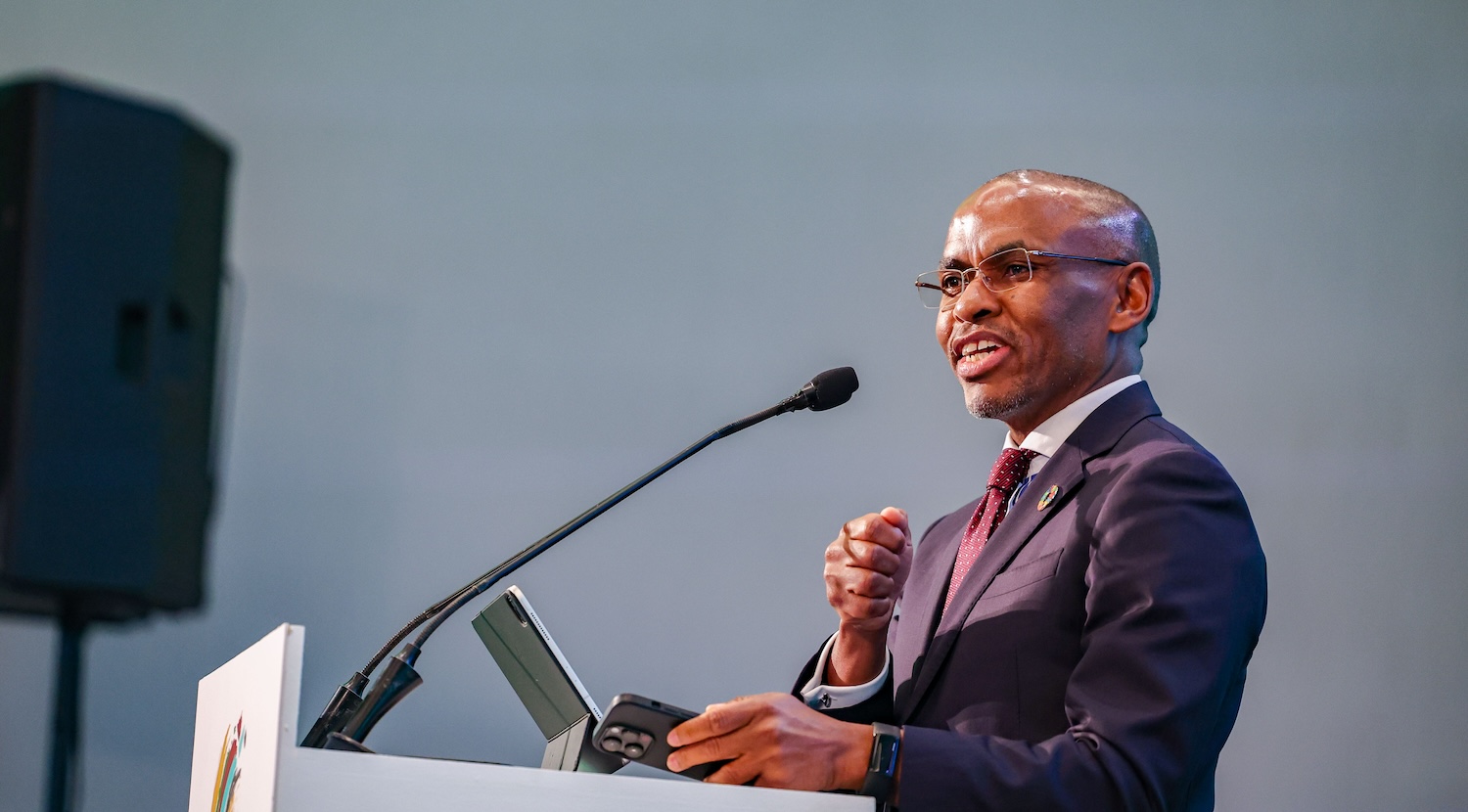
Safaricom is expanding M-Pesa into investments and wealth management, developing more services for merchants and bringing its digital products together through OneApp as it pursues growth beyond traditional telecommunications. CEO Peter Ndegwa says the company’s next stage will involve using technology to address a wider range of financial and business needs, building on decisions made during his six years leading the company.
In a CNN interview with Victoria Rubadiri, Ndegwa identified Safaricom’s entry into Ethiopia, the expansion of M-Pesa beyond payments and the extension of 4G coverage as three of the most consequential decisions of his tenure. He joined Safaricom on April 1, 2020, shortly after the COVID-19 pandemic was declared.
His comments provide a view of how the company intends to develop these investments into additional sources of growth. They also follow Safaricom’s public articulation of its technology ambitions at Decode 4.0 and the subsequent announcement of Decode 5.0, which placed African AI infrastructure at the centre of its next innovation agenda.
Safaricom’s technology ambitions extend beyond telecommunications
Safaricom had already outlined its ambition to become a broader technology company at Decode 4.0 in March and April 2026. The event brought together discussions around artificial intelligence, fintech, developer infrastructure and ecosystem building, with Group CTO James Maitai describing a transition towards a purpose-driven technology company by 2030.

The developer-focused sessions also highlighted Safaricom’s ambition to provide infrastructure that other businesses can build on, including connectivity, payments, identity services, APIs, cloud and AI tools. Its Fintech 2.0 plans placed M-Pesa within this wider platform strategy.
Safaricom subsequently announced Decode 5.0 under the theme “The Rise of Africa’s AI Supergrid”. The proposed initiative extended the company’s technology ambitions across eight African markets, with shared AI infrastructure and applications in areas including climate, food security and health.
Ndegwa’s CNN interview adds the executive and commercial perspective to that direction. Rather than focusing primarily on the technology infrastructure and developer ecosystem, he discussed how Safaricom intends to use its existing platforms to serve consumers, merchants and businesses.
He said the company had moved from its original focus on connecting people towards using technology and innovation to solve a wider range of problems. That includes expanding its services beyond individual consumers to small businesses and established merchants.
M-Pesa expands into investments and wealth management
Ndegwa said M-Pesa had more than doubled in the previous five to six years as Safaricom expanded the platform beyond payments. He wants customers to use it to pay, save, invest and obtain insurance, describing the ambition as a financial health ecosystem that other businesses can connect to.
Safaricom’s investment products provide a practical example of this expansion. The company launched Ziidi MMF in January 2025, working with Standard Investment Bank and ALA Capital to offer money market fund investments through M-Pesa. It later introduced Ziidi Trader in February 2026, enabling customers to buy and sell shares listed on the Nairobi Securities Exchange through their phones.
The development of Ziidi Trader has brought a new category of financial activity into the mobile money ecosystem. TechTrendsKE reported in May 2026 that 511,000 users had registered on the platform during its early launch period, while 84,000 accounts had actively purchased shares between February and March. Approximately 36,000 of the 73,000 retail applications for the Kenya Pipeline Company initial public offering also came through the platform, according to the publication’s reporting.
Safaricom expanded its investment offering again in October 2026 with Ziidi Shari’ah, a Sharia-compliant money market fund launched with Gulfcap Investment Bank. The product allows customers to start investing with KSh100 and make subsequent contributions from KSh10.
The scale of the business is also reflected in Safaricom’s wealth management figures. TechTrendsKE reported that the company had 2.2 million active customers using its M-Pesa wealth management service and KSh21.1 billion in assets under management in the financial year ended March 2026.
For Ndegwa, the objective is to make financial services accessible through a familiar digital channel while giving customers more reasons to use M-Pesa beyond sending money and paying bills. Working with specialist financial institutions also allows Safaricom to distribute investment products through its established customer network.
Merchant services extend M-Pesa’s role in business operations
Safaricom’s ambitions also extend to the way businesses receive and manage money. Ndegwa said the company was developing tools that allow merchants to accept payments, pay suppliers and settle employee payments through its platforms.
The existing merchant network gives Safaricom a substantial base from which to develop these services. TechTrendsKE reported that M-Pesa had 3.13 million merchants in the financial year ended March 2026. The platform processed 46.4 billion transactions worth KSh41.68 trillion during the period.
In October 2026, Safaricom partnered with Pesapal to introduce tap-to-pay and dynamic QR payments at participating merchant tills. The collaboration provides businesses with additional ways to accept M-Pesa payments at physical retail locations.
The company has also extended credit services to merchants. In October, Safaricom introduced Fuliza Ya Pochi, an overdraft facility for eligible Pochi La Biashara users. The service is designed to help qualifying businesses manage short-term cash flow requirements, including purchasing stock and paying suppliers.
Another potential extension of M-Pesa’s business infrastructure involves tax administration. Safaricom and the Kenya Revenue Authority have been discussing a proposed reverse electronic invoicing arrangement that could allow invoices to be generated on behalf of suppliers and merchants.
These developments extend Safaricom’s relationship with businesses beyond processing customer payments. Merchants can receive money, access eligible credit and potentially use additional services connected to their transactions and daily operations.
OneApp brings Safaricom’s digital services together
Ndegwa also identified OneApp as an important part of Safaricom’s future digital offering. He said the super app had launched in Kenya and was intended to give customers access to multiple services in one place, with artificial intelligence helping personalise the experience.
Safaricom introduced My OneApp in April 2026, combining M-Pesa and MySafaricom within a single application while creating room for third-party mini apps. The move brought together services that customers had previously accessed through separate applications.
The rollout encountered access and reliability problems, prompting Safaricom to issue updates and expand support for connections through Wi-Fi, rival mobile networks and roaming. Subsequent updates addressed authentication, navigation and service availability.
The company’s longer-term ambition is to make the application a common entry point for its digital ecosystem. For consumers, that means easier access to payments and financial products. For businesses, the platform could provide a route to services supporting transactions and other operational requirements.
Ndegwa said artificial intelligence would help tailor the application to individual needs, rather than relying on broad customer categories. He described the ambition as creating an experience for a “segment of one”, whether the user is an individual managing everyday activities or a business running its operations.
That ambition connects with the AI direction Safaricom presented at Decode 4.0 and the continental infrastructure plans announced for Decode 5.0. The interview, however, focuses on how AI could shape the customer experience within OneApp, rather than providing an update on the proposed AI Supergrid.
Network investment supports Safaricom’s digital expansion
The expansion of financial and digital services depends on continued investment in the infrastructure that supports them. Ndegwa said Safaricom spends approximately US$400 million to US$500 million on infrastructure in Kenya, with around half going towards its network.
He said data volumes were growing by approximately 30% annually, increasing pressure on network capacity and creating the possibility of congestion in areas experiencing high demand. Safaricom therefore needs to keep investing in capacity as customers consume more mobile internet and use a wider range of digital services.
Ndegwa also highlighted fibre connectivity, particularly for homes, as part of the company’s approach to managing demand. Fibre connections can help offload traffic from mobile networks while supporting customers who require reliable internet access at home.
Satellite connectivity will complement these investments, according to Ndegwa. He described satellite as an additional component of Safaricom’s infrastructure strategy, alongside mobile networks and fibre, rather than a replacement for existing connectivity technologies.
The investment requirements extend beyond maintaining mobile coverage. As M-Pesa develops into a financial services platform and businesses adopt more digital tools, network capacity becomes important to the company’s ability to deliver those services reliably.
Ethiopia remains a major part of Safaricom’s expansion
Ndegwa identified Safaricom’s entry into Ethiopia as one of the biggest decisions of his tenure. The expansion gave the company another national market in which to build a telecommunications operation and pursue opportunities in digital services.
Safaricom Ethiopia had passed 15 million 90-day active subscribers in 2026, according to TechTrendsKE. The publication reported that the operation generated KSh14.08 billion in service revenue in the financial year ended March 2026, while its loss narrowed to KSh21.2 billion. Safaricom was targeting EBITDA breakeven in the financial year ending March 2027.
The Ethiopian operation gives Safaricom a second market in which to develop its connectivity and digital services ambitions. Its inclusion in the Decode 5.0 AI Supergrid plans also places the country within the company’s broader vision for technology collaboration across African markets.
Ndegwa connected the future of the Kenyan and Ethiopian businesses to the development of OneApp, saying customers in Nairobi and Addis Ababa would be able to access services through a single platform tailored to their needs.
The strategy brings together several areas of investment: M-Pesa’s expansion into wealth management, the development of merchant services, AI-enabled digital platforms and the infrastructure needed to support rising data demand. These are the business priorities through which Safaricom is seeking to extend its reach beyond traditional telecommunications.
The technology-company ambition was already clear in Safaricom’s Decode 4.0 discussions, while Decode 5.0 extended that vision towards shared AI infrastructure across Africa. Ndegwa’s comments explain how the company intends to build a larger commercial business around those ambitions, with M-Pesa, merchant services and digital platforms at its centre.
Go to TECHTRENDSKE.co.ke for more tech and business news from the African continent and across the world.
Follow us on WhatsApp, Telegram, Twitter, and Facebook, or subscribe to our weekly newsletter to ensure you don’t miss out on any future updates. Send tips to info@techtrendsmedia.co.ke