Safaricom Family Share puts the value of bundled connectivity to the test
Safaricom Family Share combines Home Fibre with shared mobile allowances, but competing providers offer faster broadband at lower advertised prices. The value for households depends on how much they spend on mobile connectivity and whether the bundle's convenience justifies the premium.

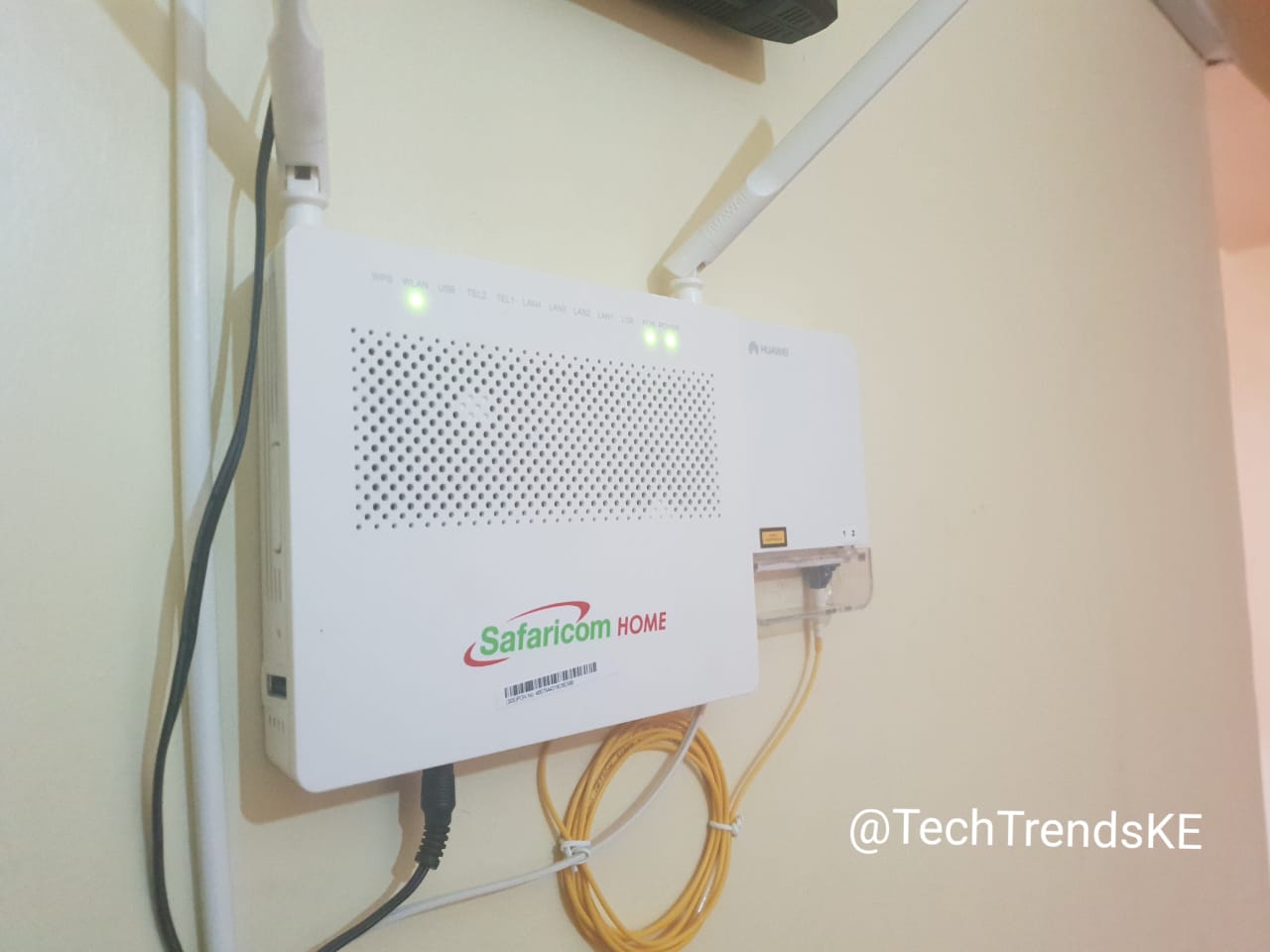
Safaricom Family Share adds mobile data or voice minutes to a Home Fibre subscription for up to five family members, with monthly prices ranging from Sh3,749 to Sh13,999. The packages give households a way to combine home broadband and mobile connectivity under one bill, but they arrive as Kenya’s internet providers compete through lower prices and faster advertised speeds.
The entry-level Bronze package costs Sh3,749 for 40 Mbps fibre and a choice of 14GB of mobile data or 750 voice minutes. That is Sh750 more than Safaricom’s standalone Bronze Home Fibre plan, which offers the same advertised fibre speed for Sh2,999.
The difference rises to Sh1,000 for Silver and Sh1,500 for Gold and Diamond. Whether the additional cost represents good value depends on how much mobile data or calling the household already purchases and how many family members can use the shared allowance.
How much do Safaricom Family Share plans cost?
Safaricom offers four Family Share tiers, combining different fibre speeds with mobile data or voice allowances. The mobile benefit is a choice between data and minutes, rather than both allowances being available simultaneously.


| Plan | Monthly price | Fibre speed | Mobile data option | Voice minutes option |
|---|---|---|---|---|
| Bronze | Sh3,749 | 40 Mbps | 14GB | 750 |
| Silver | Sh5,100 | 60 Mbps | 21GB | 1,000 |
| Gold | Sh7,799 | 150 Mbps | 33GB | 1,500 |
| Diamond | Sh13,999 | 500 Mbps | 33GB | 1,500 |
The mobile allowance can be shared among up to five family members. This could help households that regularly buy separate mobile bundles for people who use the same home internet connection but need connectivity while away.
The package structure also creates clear differences between tiers. Moving from Bronze to Silver costs an additional Sh1,351 a month, increasing fibre speed from 40 Mbps to 60 Mbps and the mobile data option from 14GB to 21GB.

Gold costs Sh2,699 more than Silver, with speeds rising to 150 Mbps and the mobile data option increasing to 33GB. The jump from Gold to Diamond is more pronounced: customers pay an additional Sh6,200 for 500 Mbps fibre, while the listed mobile data and voice allowances remain unchanged.
For households considering Diamond, the decision therefore rests largely on whether they need the additional broadband speed. The shared mobile allowance does not increase with the higher subscription.
How Family Share compares with standalone Home Fibre
Safaricom’s Family Share plans build on Home Fibre packages whose speeds were upgraded in 2026 without increasing their monthly prices. The corresponding standalone plans provide a useful baseline for determining what customers pay for the added mobile benefit.
| Plan | Standalone Home Fibre | Family Share | Additional monthly cost |
|---|---|---|---|
| Bronze, 40 Mbps | Sh2,999 | Sh3,749 | Sh750 |
| Silver, 60 Mbps | Sh4,100 | Sh5,100 | Sh1,000 |
| Gold, 150 Mbps | Sh6,299 | Sh7,799 | Sh1,500 |
| Diamond, 500 Mbps | Sh12,499 | Sh13,999 | Sh1,500 |
The price difference is the starting point for assessing the bundle, rather than proof that it offers better value. A household that already spends more than the additional monthly fee on mobile data or voice bundles may find the arrangement worthwhile. A household whose members rely mainly on Wi-Fi may have less reason to pay for the mobile component.
Customers should also establish how the selected allowance is allocated, whether it can be distributed according to each member’s needs, and what happens when the shared allowance runs out. Those details affect the practical value of the subscription.
How Safaricom compares with rival fibre providers
Family Share enters a market where providers have been improving advertised speeds and adjusting prices to attract households. TechTrendsKE’s reporting in May and August 2026 documented changes across Safaricom, Zuku, Airtel, Faiba and Savanna Fibre.
The following table compares published residential fibre packages reported by TechTrendsKE. Zuku’s figures are promotional prices reported in August 2026; the other figures come from the site’s May 2026 market comparison and April report on Airtel’s entry into fibre. Prices and availability should be confirmed with each provider before subscribing.
| Provider | Advertised speed | Monthly price |
|---|---|---|
| Safaricom Family Share Bronze | 40 Mbps | Sh3,749 |
| Safaricom Home Fibre Bronze | 40 Mbps | Sh2,999 |
| Zuku Shujaa | 30 Mbps | Sh2,099 |
| Zuku Bingwa | 80 Mbps | Sh2,799 |
| Zuku Stream | 100 Mbps | Sh3,099 |
| Zuku Connect | 200 Mbps | Sh6,999 |
| Airtel Xstream Fibre Starter | 15 Mbps | Sh1,999 |
| Airtel Xstream Fibre Basic | 30 Mbps | Sh2,999 |
| Airtel Xstream Fibre Standard | 60 Mbps | Sh3,999 |
| Airtel Xstream Fibre Premium | 100 Mbps | Sh4,999 |
| Faiba Home entry package | 35 Mbps | Sh3,000 |
| Faiba Home package | 60 Mbps | Sh4,000 |
| Faiba Home package | 90 Mbps | Sh5,000 |
| Faiba Home package | 150 Mbps | Sh10,000 |
The comparison shows why Family Share needs to be assessed as a bundle rather than as a standalone broadband plan. Zuku’s published promotional Stream package, for example, costs Sh3,099 for 100 Mbps, compared with Sh3,749 for Safaricom’s 40 Mbps Bronze Family Share. Zuku offers a higher advertised speed at a lower monthly price, but the listed package does not include the same shared mobile allowance.
Airtel’s fibre offering also provides lower-priced entry options, although its Starter package advertises 15 Mbps rather than 40 Mbps. Faiba’s 35 Mbps entry package is priced at Sh3,000, close to Safaricom’s standalone Bronze plan.
These differences matter for households that prioritise broadband speed and monthly cost above bundled mobile services. They do not establish which network will deliver the best experience at a particular address, since coverage, congestion, installation and service reliability can vary.
Savanna Fibre puts pressure on the price-per-speed equation
Savanna Fibre has added another dimension to the competition through residential packages priced aggressively against established providers.
| Savanna Fibre package | Advertised speed | Monthly price |
|---|---|---|
| CHUI | 100 Mbps | Sh2,000 |
| KIFARU | 250 Mbps | Sh4,500 |
| NDOVU | 500 Mbps | Sh6,000 |
| SIMBA | 1 Gbps | Sh10,000 |
The published prices make Savanna Fibre particularly relevant to customers comparing broadband speed against monthly expenditure. Its CHUI package advertises 100 Mbps for Sh2,000, while NDOVU offers 500 Mbps for Sh6,000.
On headline pricing alone, these packages offer substantially more speed than Safaricom’s entry-level Family Share plan. However, Savanna’s coverage is not universal, and the comparison does not include an equivalent shared mobile allowance. Households must confirm service availability and package conditions before treating it as an alternative.
The wider market trend is clear: providers are competing on the amount of bandwidth customers receive for their monthly payment. Safaricom’s Family Share adds a different consideration by combining broadband with mobile connectivity, which may appeal to households that value a consolidated bill.
What the comparison means for households
The best option depends on how a household uses the internet and mobile services.
Families that regularly purchase mobile bundles for several Safaricom users may find Family Share useful if its shared allowance replaces some of their existing spending. The arrangement also places home internet and the selected mobile benefit on one subscription, which can simplify bill management.
Households primarily concerned with broadband speed may find better headline offers elsewhere, particularly where Savanna Fibre or Zuku’s advertised packages are available. Airtel’s lower-speed entry plans may suit customers with more modest connectivity needs, while Faiba provides additional options across the mid-range.
Higher-speed users should compare the cost of the required bandwidth against the benefits included in each package. The Family Share Diamond tier costs Sh13,999 for 500 Mbps, while Savanna Fibre advertises 500 Mbps at Sh6,000. That is a substantial difference in monthly price, although the two plans do not offer the same stated mobile benefits and may not be available in the same locations.
Advertised speed should not be the only consideration. Customers should also check installation fees, fair-usage policies, post-cap speeds where applicable, router requirements, coverage and the reliability of service in their neighbourhood.
A different way to compete for household connectivity
Family Share is part of Safaricom’s Pata More initiative and follows the company’s earlier Home Fibre speed upgrades. The operator says active fibre-to-the-home customers have grown by 27 per cent, while the share of connected homes with active subscriptions rose to 71 per cent from 66.8 per cent.
The combined offer gives Safaricom another way to deepen relationships with existing fibre customers and attract households that want to manage fixed and mobile connectivity together. Its appeal will depend on whether the shared allowance offers enough practical value to justify the additional monthly fee.
For consumers, the decision is less about choosing the provider with the biggest advertised speed and more about comparing the full package against their actual usage. A household that needs faster fibre at the lowest possible monthly cost may reach a different conclusion from one that regularly pays for mobile connectivity for several family members.
Safaricom Family Share offers a consolidated option, but Kenya’s increasingly competitive broadband market gives households more reasons to compare prices, speeds, coverage and the full cost of staying connected before committing to a plan.


