

GreenShift Forum 2026: What businesses, founders and technology leaders should know

Businesses considering investment in electric mobility, clean energy, resource efficiency and sustainability reporting face a common challenge: deciding which opportunities can work commercially, what infrastructure they require and how to measure results. GreenShift Forum 2026 will bring these questions together in Nairobi on 22 October, with discussions covering business strategy, finance, technology and policy.
Organised by TechTrends Media, Ardena Consulting and Africa Business Communities (ABC), the forum is built around six themes: ESG as Competitive Advantage, Green Finance and Carbon Markets, eMobility, Circular Economy, Renewable Energy Innovations, and Public-Private Partnerships. Its stated theme, “Powering Kenya’s Sustainability Transformation,” places sustainability within decisions about capital, products, infrastructure, operations and long-term business performance.
For companies and founders, the programme offers a way to examine how environmental priorities connect with investment, product development and market opportunities. For financiers and policymakers, it brings into focus the conditions needed to fund projects and put them into operation.
Who should consider attending GreenShift Forum 2026?
The programme is relevant to business leaders assessing sustainability-related investment, founders developing climate and energy technologies, finance professionals evaluating green projects, and operators working across transport, manufacturing and resource management. Policymakers and development-sector participants also have a role in discussions about regulation, infrastructure and public-private collaboration.


For founders, the questions extend beyond securing capital. Deployment costs, customer financing, reliable infrastructure, regulation and evidence of demand can all determine whether a sustainability product or service can gain customers and scale. Conversations across sectors may help businesses understand where their commercial models meet the needs of potential partners and customers.
Established companies face a different set of decisions. They may need to assess climate-related risks, respond to reporting expectations, reduce resource costs or demonstrate progress against environmental and social commitments. These issues connect sustainability to procurement, finance, operations and corporate strategy rather than leaving it solely with specialist environmental teams.
Investors and financial institutions must assess whether proposed projects can deliver their intended commercial and environmental outcomes. A strong sustainability rationale does not automatically make a project financeable. Credible operating models, clear risk allocation, measurable outcomes and reliable information all influence how a proposal is evaluated.
What the six GreenShift tracks mean for business
The ESG as Competitive Advantage track addresses how environmental, social and governance considerations affect business strategy, investor confidence, risk management and market access. For companies, the practical question is how to connect sustainability commitments with business operations and provide evidence that supports their claims.
Green Finance and Carbon Markets focuses on funding mechanisms and market structures that can support sustainability projects. Businesses participating in carbon markets need to consider how credits are generated, measured and verified, as well as the regulatory and commercial conditions that influence their value. For lenders and investors, project credibility and the allocation of financial risk remain central concerns.
The eMobility track brings the economics of electric transport into focus. Vehicle acquisition costs, financing, charging or battery-swapping infrastructure, maintenance and operating models all affect adoption. These considerations are particularly relevant to businesses serving riders, fleet operators and urban transport users, where the cost of switching vehicles can influence commercial viability.
Circular Economy examines how businesses can reduce waste, recover materials, extend product lifecycles and rethink production and supply chains. These approaches can create new revenue opportunities, but they depend on collection systems, processing capacity, consumer behaviour and markets for recovered materials.
Renewable Energy Innovations covers technologies, financing arrangements and partnerships that can support cleaner energy. For companies evaluating solar power, storage or energy-efficiency systems, the decision involves installation costs, reliability, consumption patterns and expected financial returns.
Public-Private Partnerships addresses cooperation between businesses, government and other institutions to tackle challenges that cannot easily be resolved by one organisation alone. Infrastructure development, financing and policy implementation often require coordination between actors with different mandates and resources.
The investment and technology questions behind the agenda
Developments in Kenya illustrate why these themes overlap. Sustainable buildings, for example, require more than energy-efficient designs. Developers and building owners also need access to finance, suitable technologies, credible performance standards and information that allows financiers to assess projects.
Electric mobility offers another example. A proposed Kenyan electric-mobility investment package reported by TechTrendsKE in October outlined plans for vehicle production facilities and solar-powered charging hubs. The proposal points to the scale of infrastructure and financing that the sector may require, but planned facilities and capacity should not be confused with completed investment or operational output.
For businesses, the wider question is how to move from an announcement or promising technology to a project that can attract capital, secure customers and operate reliably. That requires decisions about supply chains, regulation, skills, pricing, infrastructure and measurement of results.
The same issue appears in green finance and ESG. Sustainability commitments can influence how businesses plan and report, but claims need to be supported by evidence. Financial institutions and investors need enough information to evaluate both the commercial case and the environmental or social outcomes a project is expected to deliver.
These are connected business questions rather than isolated environmental topics. An electric-vehicle deployment can depend on financing, electricity supply and charging infrastructure. A renewable-energy project can depend on regulation, technology and long-term customer demand. GreenShift’s cross-sector programme brings these relationships into the same discussion.
How to prepare for GreenShift Forum 2026
Participants can get more from the forum by identifying a specific decision or implementation challenge before attending. A founder might be looking for financing structures that make a product accessible to customers, while a sustainability manager may need better ways to measure operational performance or demonstrate the results of a programme.
Finance professionals could focus on the evidence required to evaluate green projects, including cash flows, project risks and measurable outcomes. Technology providers may want to understand what businesses and public institutions need before adopting a solution at scale. Policymakers and development organisations can consider where coordination, standards or infrastructure investment could address barriers.
The six tracks offer a framework for connecting these questions across sectors. Rather than treating sustainability as a single department’s responsibility, participants can examine how it intersects with investment, procurement, energy, transport, product design and public policy.
Event details and registration
GreenShift Forum 2026 takes place on 22 October 2026 at Hyatt Place Westlands in Nairobi. It is organised by TechTrends Media, Ardena Consulting and Africa Business Communities, with Absa, Bolt, Family Group Foundation, Samsung, VFS Global, WOJO and Maudhui House among the partners associated with the event.
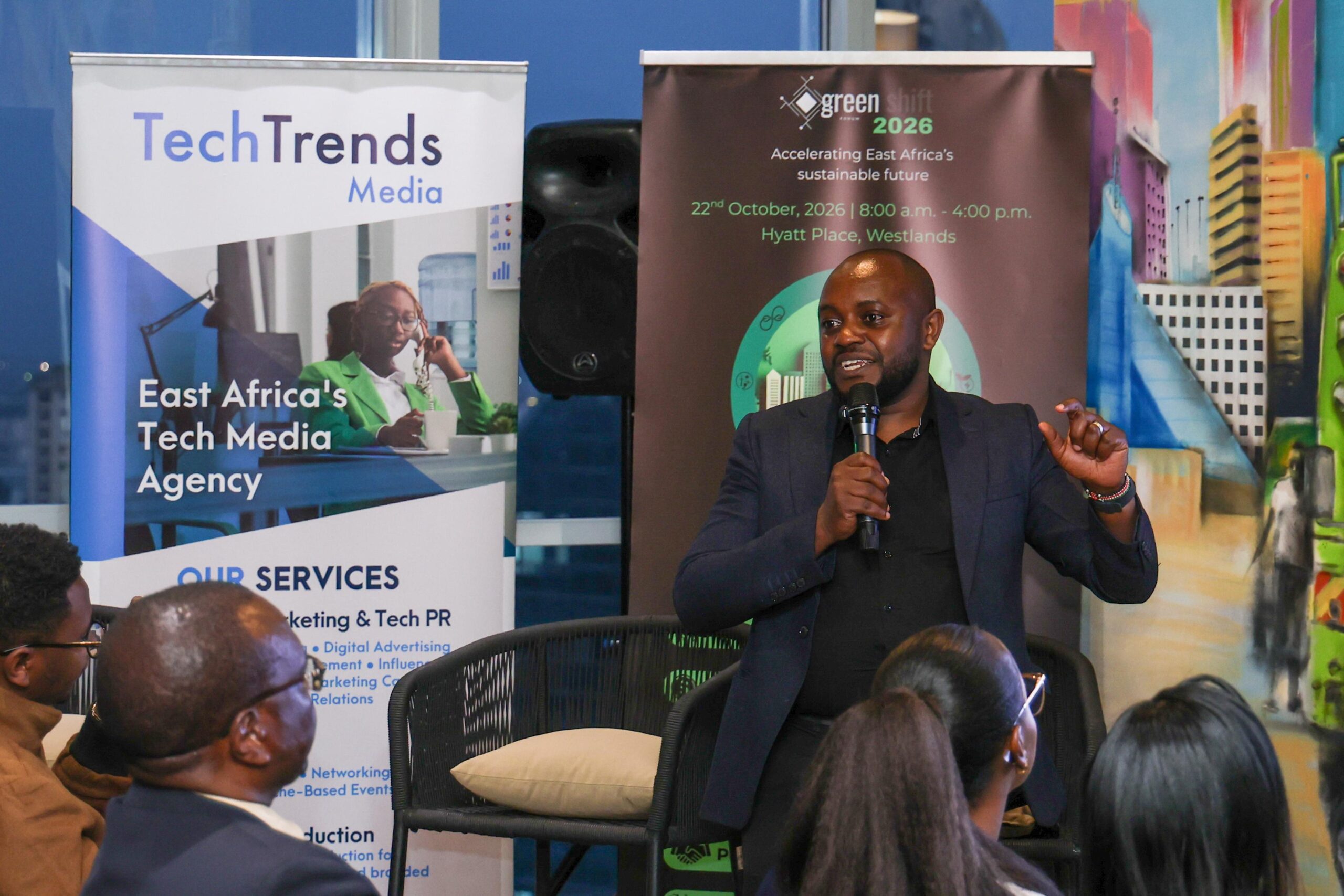
The September Countdown To GreenShift preview brought together people working across business, technology, sustainability, finance, academia and startups. Representatives from organisations including Ardena Consulting, Bolt Kenya, Samsung Electronics East Africa and Family Group Foundation took part in the preview discussions.
For businesses, investors and technology leaders, the central issue is how sustainability commitments connect with projects that can be financed, deployed and assessed.
Get your ticket to the GreenShift Forum 2026 through the official registration page.
Go to TECHTRENDSKE.co.ke for more tech and business news from the African continent and across the world.
Follow us on WhatsApp, Telegram, Twitter, and Facebook, or subscribe to our weekly newsletter to ensure you don’t miss out on any future updates. Send tips to info@techtrendsmedia.co.ke


