Banks want to finance green projects, but first they need reliable sustainability data

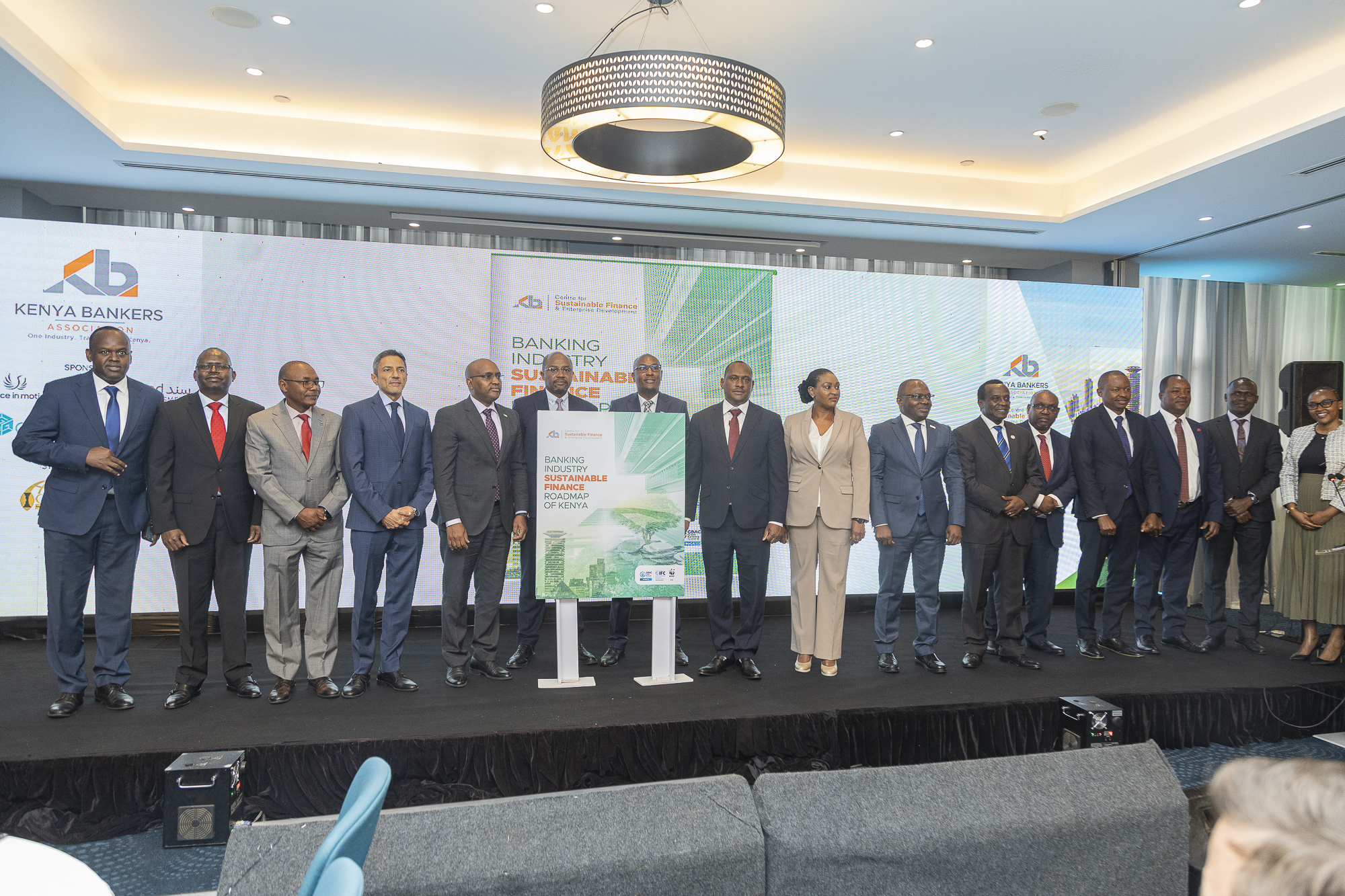
Kenya’s banks will need stronger ESG reporting systems, better climate data and more consistent monitoring tools to implement a new industry framework for sustainable finance. The Banking Industry Sustainable Finance Roadmap, unveiled by the Kenya Bankers Association (KBA), sets out a 2027–2037 plan that places sustainability information at the centre of lending decisions, risk management and capital allocation.
The roadmap was launched at the Banking Industry Sustainable Finance Summit 2026 in Nairobi, organised by KBA’s Centre for Sustainable Finance and Enterprise Development. Developed with support from the International Finance Corporation (IFC) and WWF-Kenya, it outlines how financial institutions can improve sustainability disclosures, assess climate and nature-related risks and track the flow of capital into sustainable activities.
The framework brings a technology and data challenge into focus for banks. Assessing whether a business or project qualifies for sustainable finance requires more than collecting environmental claims. Financial institutions need consistent information that can be examined, compared and incorporated into decisions about lending, risk exposure and performance.
Sustainable finance puts pressure on banking data systems
The practical difficulties of ESG reporting were discussed at GreenShift Forum 2026, where sustainability professionals examined how businesses collect and use environmental, social and governance information.


Julie Salerno described an audit involving roughly 800 data points in which employee-tenure information did not match the financial statements, despite six reviewers having examined the information. The inconsistencies required corrections to ESG risk ratings and board reporting.
The example illustrated how information spread across different business functions can create problems when companies attempt to consolidate it into sustainability reports. Data may exist within an organisation, but discrepancies between departments and reporting systems can affect its reliability and usefulness.
Salerno also said ESG performance had helped a business secure a major client whose request for proposals included quantified sustainability criteria. Her example showed how sustainability information can influence commercial decisions, making accurate reporting relevant beyond regulatory compliance.
Collins Kinoti warned against selective disclosure, describing it as “the worst form of greenwashing”. He also pointed to the potential for misrepresentation to expose businesses to investor lawsuits and litigation as assurance requirements expand.
These concerns have direct implications for financial institutions. Banks assessing borrowers need information that allows them to understand environmental exposure, evaluate sustainability performance and determine whether a proposed activity fits their financing criteria.
KBA’s roadmap addresses this requirement through proposals for improved sustainability reporting, consistent disclosure practices and the integration of climate and nature-related information into financial risk assessments.
The reporting problem extends beyond financial institutions
The data challenge facing banks is connected to the information their corporate and business customers can provide. A financial institution cannot reliably assess the environmental risks associated with a borrower if the underlying business information is incomplete, inconsistent or difficult to compare.
This is one of the problems addressed by ESG reporting technology. Ardena Consulting’s platform, covered by TechTrendsKE in October, focuses on consolidating sustainability information from different business functions, including finance, human resources, procurement and utilities.
The platform addresses the difficulty of collecting information across departments and preparing it for reporting under different sustainability frameworks. It also focuses on audit trails and calculation methods, which are important when organisations need to explain how reported figures were produced.
The connection with the banking roadmap is significant because financial institutions need structured information to assess the sustainability performance and risks of the businesses they finance. Better corporate reporting can give banks more usable data when evaluating projects, while stronger internal systems can help banks organise and analyse that information.
At GreenShift, Kui Kinyanjui also discussed the financial benefits of solar investment, saying it had reduced electricity spending by about 20% annually. Such operational figures can help businesses demonstrate the commercial impact of sustainability investments, provided they are properly recorded and supported by reliable data.
The reporting challenge also affects how businesses communicate their environmental performance to investors, customers and financial institutions. Kinoti’s comments on selective disclosure highlighted the need for complete and consistent information when companies present their sustainability credentials.
A roadmap for tracking sustainable finance
The KBA roadmap proposes a more structured approach to collecting and reporting information across the banking industry. Its priorities include aligning sustainability disclosures with international reporting frameworks and improving the tracking of finance directed towards climate- and nature-related activities.
The framework proposes a pilot sustainable finance tracker in 2028, followed by annual public implementation reporting from the same year. It also sets out plans for interoperable reporting infrastructure by 2029.
The proposed tracker would follow sustainable finance flows by sector, geography, financial instrument and beneficiary. This would help the industry build a clearer picture of how banks allocate capital and which parts of the economy receive financing for sustainable activities.
The roadmap also proposes distinguishing financial inputs from verified outcomes by 2031. That distinction matters because recording the amount of money allocated to a project does not, by itself, show the environmental or social results achieved.
For technology providers, these requirements point to a range of potential applications, from data collection and reporting tools to monitoring systems that can consolidate information across financial institutions. Banks would also need processes for maintaining consistent definitions and reporting standards so that information can be compared across institutions.
KBA Chairman and KCB Group CEO Paul Russo said the roadmap would guide banks in directing capital towards green and sustainable projects while improving their management of climate and nature-related financial risks.
KBA CEO Raimond Molenje said the framework would consolidate industry initiatives and provide a clearer path for scaling sustainable finance. The roadmap’s emphasis on common reporting and monitoring approaches is part of that effort.
Climate and nature data enter financial risk assessment
The roadmap also places environmental information within the broader management of financial risk. Climate change, ecosystem degradation and pressure on natural resources can affect business operations, asset values and the ability of borrowers to repay loans.
For banks, assessing these risks requires information about the locations and activities of borrowers, their exposure to climate-related hazards and their dependence on natural resources. The quality of that information can affect how institutions evaluate credit applications and manage their portfolios.
The roadmap proposes integrating priority climate and nature datasets into financial risk analysis by 2030. It also points to the use of nature-related assessments and Nature Transition Plans, alongside reporting approaches aligned with the Taskforce on Nature-related Financial Disclosures.
Other proposed measures include improved access to environmental data, carbon registries and possible connections with existing financial information infrastructure. These tools could help institutions understand the environmental implications of economic activities and incorporate relevant information into their financial assessments.
The roadmap’s focus on climate and nature data builds on work already underway in Kenya’s banking sector. A KBA and WWF-Kenya study cited in the framework found that all commercial banks had adopted sustainable finance guiding principles, while 83% were using KBA-developed disclosure templates aligned with the Task Force on Climate-related Financial Disclosures. The study also reported that 73% were complying with Central Bank of Kenya climate risk guidelines.
Despite those measures, the roadmap identifies climate- and nature-aligned lending as a relatively small share of banking portfolios. It also points to limited information on sustainable finance volumes, pricing and performance, making better monitoring an important part of the proposed framework.
WWF-Kenya CEO Jackson Kiplagat said Kenya’s economic ambitions depended on safeguarding the natural systems that support its businesses and communities. He also highlighted the role of Nature Transition Plans in helping banks connect their financing decisions with nature-related priorities.
Technology becomes part of the implementation challenge
The roadmap is structured around three implementation phases between 2027 and 2037. The foundation phase runs from 2027 to 2032, followed by scale-up from 2032 to 2035 and consolidation and review from 2035 to 2037.
Its proposed milestones include establishing a baseline for MSME financing gaps by 2028, improving reporting infrastructure by 2029 and integrating priority climate and nature datasets into financial risk analysis by 2030. The framework also calls for annual public reporting to track progress.
These priorities create opportunities for technology providers working in data management, financial reporting, risk analytics and environmental monitoring. Banks will need ways to organise information from different sources, apply consistent assessment methods and track financing activity over time.
The work also extends to businesses seeking sustainable finance. Small enterprises may need support in producing financial and sustainability information that lenders can use, particularly when their activities involve climate-sensitive sectors or nature-based projects.
IFC Regional Director for Eastern Africa Mary Porter Peschka said the organisation would support the roadmap’s implementation. Samson Toniok, CEO of the National Environment Trust Fund, delivered remarks on behalf of Environment, Climate Change and Forestry Principal Secretary Festus Ng’eno, who emphasised the importance of environmental protection in economic planning.
The roadmap gives Kenya’s banking industry a common direction for incorporating sustainability into financial decisions. Its implementation will depend partly on the quality of the information banks collect, the systems they use to assess environmental risks and their ability to track whether financing reaches the activities and businesses it is intended to support.
Go to TECHTRENDSKE.co.ke for more tech and business news from the African continent and across the world.
Follow us on WhatsApp, Telegram, Twitter, and Facebook, or subscribe to our weekly newsletter to ensure you don’t miss out on any future updates. Send tips to info@techtrendsmedia.co.ke