Airtel Money turns to digital payments as it targets up to $9bn valuation

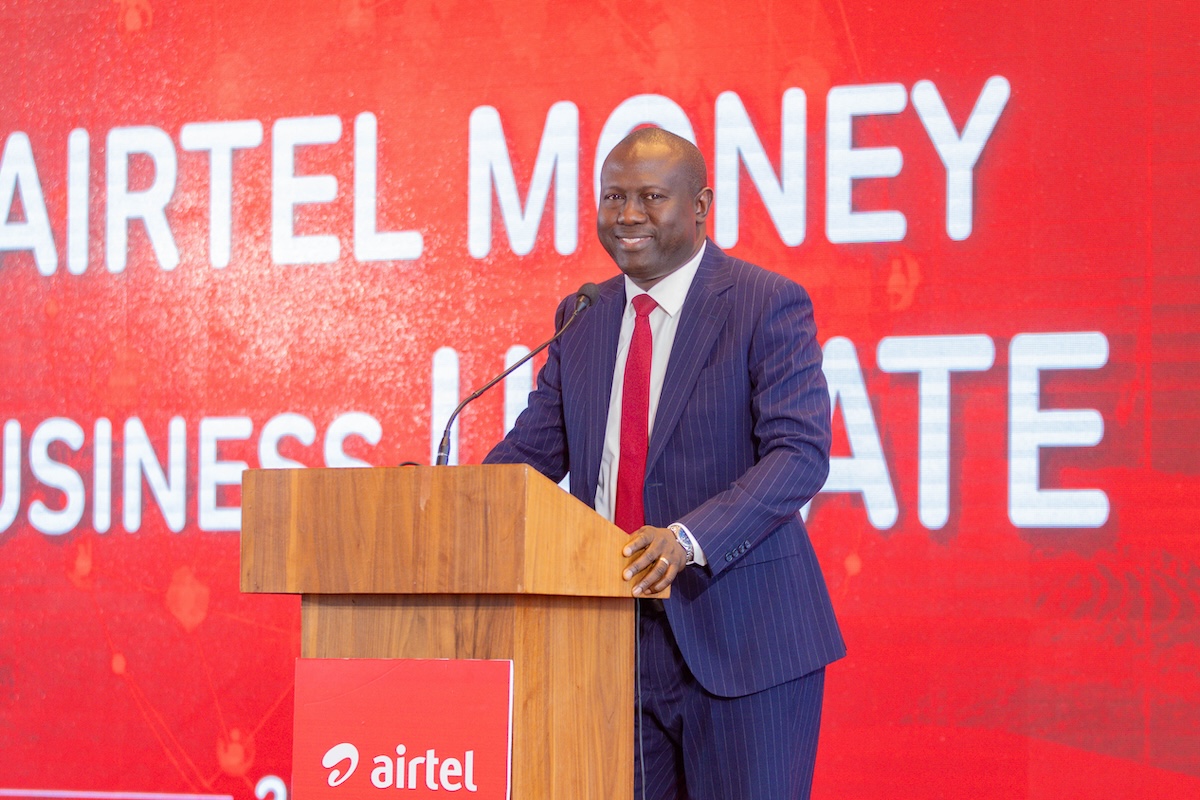
Airtel Money is preparing for a London listing that could value the mobile-money business at between $8 billion and $9 billion, with digital payments and financial services emerging as central to its growth strategy.
The mobile money arm of Airtel Africa operates across 13 African countries and is seeking to raise at least $800 million through the sale of existing shares. The proposed listing would give Airtel Money a standalone market valuation and put greater focus on how the business converts its large customer and transaction base into higher-value digital financial services.
Airtel Money is selling a broader payments story
Airtel Money CEO Ian Ferrao says the business has been shifting away from a model centred on cash deposits and withdrawals through agents, branches and kiosks. Customers are using the platform for payments, goods and services, bill payments, transfers and microloans, changing the composition of revenue generated by the wallet.
That shift matters because digital payments can generate a different revenue profile from basic cash-in and cash-out activity. Ferrao described payments and transfers as higher-quality revenue with better margins, while financial services such as lending, savings and insurance currently account for about 4% of the business and are growing rapidly.
The company is also looking at wealth technology, including services that could eventually allow customers to buy and sell shares on local stock exchanges. That would push Airtel Money further into territory traditionally occupied by banks, brokers and specialist financial technology companies.
The broader strategy is therefore about extracting more value from an existing financial relationship. Airtel Money already has scale across multiple African markets; the opportunity is to increase the number and value of transactions that customers conduct through the platform.
Kenya shows where the wallet market is heading
Kenya offers a useful view of how this strategy is developing. Airtel Money has been gaining ground in a market long dominated by Safaricom’s M-Pesa, with its share of mobile-money subscriptions reaching 11.1% in the fourth quarter of the 2025/26 financial year.
The company has also been expanding its agent network and building out products around payments, business wallets and financial services. Its partnership with KCB, for example, gives Airtel Money customers access to more than 22,000 KCB agents for deposits and withdrawals.
That combination of distribution, merchant acceptance, interoperability and additional financial products is becoming important as mobile money matures. Kenya had about 54 million mobile-money subscriptions by June 2026, while the number of registered agents declined during the same period, showing that the growth of digital financial relationships does not necessarily require a matching expansion in physical cash infrastructure.
Airtel Money’s Kenyan strategy also illustrates the limits of measuring competition purely through subscriber numbers. As wallets become platforms for payments, credit, savings and other services, transaction frequency, merchant activity and financial-product usage become increasingly important to the economics of the business.
Interoperability is becoming part of the strategy
The shift toward digital payments is happening alongside a broader push to make African payment systems more connected. The Pan-African Payment and Settlement System, or PAPSS, has reported sharp increases in transaction volumes as banks, payment providers and switches connect to the continental infrastructure.
For mobile-money operators, greater interoperability can expand the number of places where a wallet can be used and reduce some of the friction associated with moving money between different financial networks. That matters particularly in markets where customers use several banks, wallets and payment services depending on the transaction.
Airtel Money’s own expansion of partnerships follows the same logic at a more local level. Connecting its customers to external agent networks and other financial institutions can make the wallet more useful without requiring Airtel to build every part of the financial infrastructure itself.
The result is a model where the wallet becomes an access point into a wider financial ecosystem rather than a closed channel for sending and receiving money.
Banks and fintechs are moving into the same space
The competitive landscape around mobile money is also changing. Banks are building digital platforms that combine payments, savings, investments, lending and other services, while fintech companies are embedding payments directly into commerce platforms.
Recent moves in Kenya illustrate the overlap. Banks such as I&M and Absa have expanded digital account opening, lending, savings and investment services, while payment companies such as Paystack are integrating payments more deeply into online commerce.
This creates a market where the traditional boundaries between a telecom wallet, a bank account and a fintech application are becoming harder to draw. Each can increasingly provide overlapping financial services, although they retain different advantages in distribution, customer relationships, infrastructure and regulation.
For Airtel Money, its biggest asset remains the combination of a large telecommunications customer base and an established payment network across multiple African markets. The IPO provides a way for investors to put a separate valuation on that financial-services business and its expansion potential.
The IPO puts a value on Airtel Money’s growth strategy
Airtel Money is currently the third-largest mobile-money operator in Africa by transaction value, behind Safaricom’s M-Pesa and MTN’s MoMo. The company identifies the Democratic Republic of Congo as one of its fastest-growing markets, while markets such as Chad and Niger still have substantial room for deeper mobile-money adoption.
The proposed London listing is expected to be one of the largest UK offerings since 2021. Airtel Africa owns about 78% of Airtel Money, while other shareholders include Chimetech Holding, Mastercard and the Qatar Investment Authority. The International Finance Corporation has separately agreed to purchase $90 million of existing Airtel Money shares.
Airtel Africa itself listed in London in 2019 at a valuation of about $3.9 billion and is now valued at roughly $13 billion. A separate Airtel Money listing would give the market a clearer view of the value attached to its mobile-money operation rather than leaving that value embedded within the wider telecoms group.
The timing also places Airtel Money within a broader African fintech fundraising story. OPay is pursuing a potential US listing, while Flutterwave has been expanding its capabilities through acquisitions as it builds toward a potential public offering.
For Airtel Money, the central question around the London IPO will be how investors value the transition from a cash-heavy mobile-money service into a broader digital payments and financial-services platform. The company’s existing reach provides the foundation, but the proposed valuation will ultimately depend on how effectively it turns that reach into sustained transaction growth, higher-value services and stronger financial performance.
Real ESG impact doesn’t happen in panels alone, it happens in the rooms where financiers, operators, and policymakers actually align. Our GreenShift Forum 2026 cuts the noise, bringing together the people rewiring Africa’s sustainability and energy frameworks for one focused day in Nairobi. Secure your seat.
Go to TECHTRENDSKE.co.ke for more tech and business news from the African continent and across the world.
Follow us on WhatsApp, Telegram, Twitter, and Facebook, or subscribe to our weekly newsletter to ensure you don’t miss out on any future updates. Send tips to info@techtrendsmedia.co.ke