
Airtel Money's rise from a marginal player to an 11% share of Kenya's mobile-money market

In a market long described as a one-horse race, Airtel Money has been gaining ground without much noise.
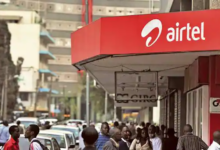
Four years ago, it held less than 2% of Kenya’s mobile money market. According to the Communications Authority of Kenya’s latest report, it now holds about 11%. Over the same period, its agent network has grown from fewer than 20,000 outlets to 270,000.
“If you look at our growth story, it’s quite an interesting one,” Bonke Michael, acting Managing Director of Airtel Money Kenya, said on The TechTrends Podcast.
Michael has spent nearly a decade at Airtel Money, in roles across sales, business development and marketing, and about 15 years in telecoms and fintech overall. He took the acting role about six weeks ago, at a significant moment. The parent company, Airtel Money, is preparing for a standalone London listing that could value the business at about USD 10 billion.

He attributes the climb to three things. The first is a steady stream of new products and use cases. The second is the regulatory environment, which he says the Central Bank of Kenya has kept stable and competitive. The third, and in his view the most important, is customer experience.
“You can have the best products in this world,” he said. “But if your customers are not happy with you, they’ll not come to you. Or they can come and they’ll not come again.”
Interoperability, championed by the regulator, removed one of the biggest barriers to switching. Money now moves freely between Airtel Money, rival wallets and bank accounts, so trying a second provider no longer means being locked out of the first.
That is how Michael pitches it. He is not asking M-PESA users to leave. He wants them to add Airtel Money alongside it. Airtel has about 24 million subscribers in Kenya, but only about six million use its mobile money service.
“The same way you have two SIM cards in your phone and use both of them, try Airtel Money,” he said. Existing subscribers can activate the service by dialling *334#, with no registration visit needed.
Cashback and the merchant battleground
Airtel Money’s most visible tool for winning and keeping users is cashback. The scheme, branded Rudisha, launched in 2023 as an airtime refund on agent withdrawals. It later extended to paybill payments and bank-to-wallet transfers.
Customer feedback changed it. Users said they would rather have cash than airtime, so they could buy tokens, pay bills or spend it however they liked. Airtel Money now refunds 50% of the transaction fee in cash to a dedicated cashback wallet. It applies to transfers to other networks, bank-to-wallet and wallet-to-bank transfers, and bill payments.
Michael says the programme started as a thank-you to loyal users. It has since become a reason for new ones to join and existing ones to stay.
“As a human being, if you’re appreciated, you’re happy and then you transact more, you stick with us longer,” he said.
The cashback now feeds into what Michael sees as the industry’s next battleground: merchant payments. The recently launched Business Wallet lets small traders keep business takings separate from personal money. Customers pay nothing to send money to a Business Wallet, from KES 1 up to the regulatory ceiling of KES 250,000. Merchants get the same 50% cashback when they move funds to the bank or pay bills.
“If you go across the country right now, you’ll start seeing businesses displaying the Business Wallet,” Michael said. He adds that more merchant products will launch within the next one to two months.
Partnerships underpin the strategy. I&M Bank and Absa have joined on the merchant side. KCB and the Naivas supermarket chain have joined as agency partners, extending where customers can deposit and withdraw cash.
“You can’t grow alone, so you have to grow with partners,” Michael said.
Reach remains central for underserved and rural customers. The aim is an agent within reach even in the remotest parts of the country, supported by USSD, an SDK option, and bank links for customers without smartphones.
On fraud, a live issue in an industry dealing with SIM-swap scams, Michael says new products go through internal security testing and regulatory vetting before launch.
“We don’t just come up with the product today and launch it tomorrow,” he said.
Next on the list are loans, savings and investment products, and overdrafts, along with partnerships with more banks and with savings and credit cooperatives, a sector Michael calls very big. Airtel Money also plans more branded shops where customers can have problems resolved by Airtel staff.
“You’ll see a lot of things in the space of loans, in the space of wealth, in the space of overdrafts,” he said. “Quite a number of interesting things are coming.”
Real ESG impact doesn’t happen in panels alone, it happens in the rooms where financiers, operators, and policymakers actually align. Our GreenShift Forum 2026 cuts the noise, bringing together the people rewiring Africa’s sustainability and energy frameworks for one focused day in Nairobi. Secure your seat.
Go to TECHTRENDSKE.co.ke for more tech and business news from the African continent and across the world.
Follow us on WhatsApp, Telegram, Twitter, and Facebook, or subscribe to our weekly newsletter to ensure you don’t miss out on any future updates. Send tips to info@techtrendsmedia.co.ke


