Airtel Kenya acquires 100 MHz of 5G spectrum in a 25-year deal with the regulator

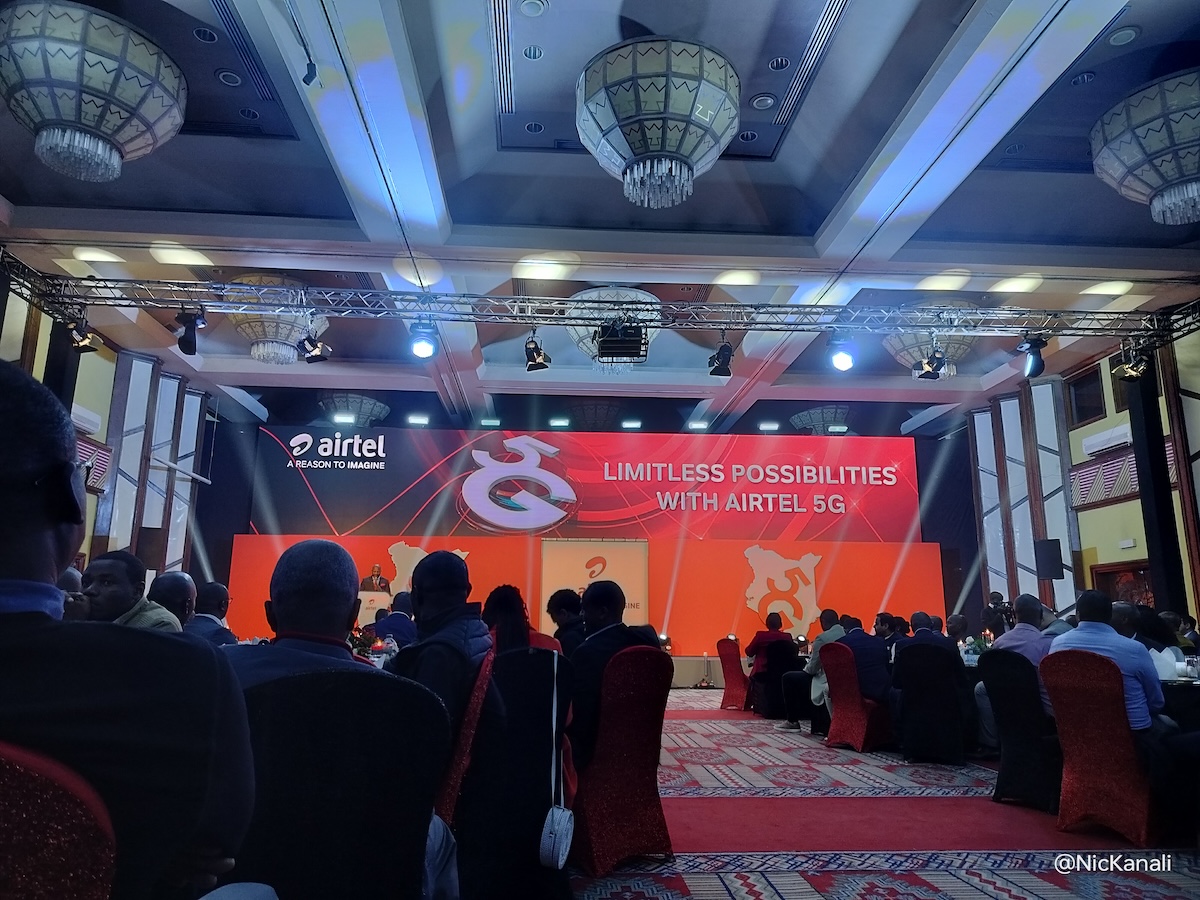
Airtel Kenya has paid $65 million (approximately Sh8.4 billion) for 100 MHz of spectrum in the 3500 MHz band, securing rights to use the frequency for 25 years as it strengthens its position in Kenya’s mobile broadband market.
Airtel Africa said its Kenyan subsidiary acquired the spectrum following approval from the Communications Authority of Kenya (CA), subject to standard conditions. The allocation gives Airtel additional capacity to expand its fifth-generation (5G) network, which competes with Safaricom’s services in a market where demand for high-speed connectivity is growing.
The 3500 MHz frequency range, commonly known as the C-band, is one of the principal bands used for commercial 5G deployments globally. According to the Global System for Mobile Communications Association (GSMA), the band has become a major platform for launching 5G services because of its capacity to support high-speed mobile broadband.
Airtel acquires 100 MHz of 3.5 GHz spectrum
The 25-year spectrum allocation gives Airtel a long-term foundation for expanding its mobile network and serving customers who require higher data speeds and greater network capacity. The company will be able to use the additional frequency resources to support data-intensive applications, mobile broadband and other services running on its 5G infrastructure.


Spectrum is a critical resource for telecommunications operators because it determines the radio-frequency capacity available to transmit data between network infrastructure and connected devices. The 3.5 GHz band offers a balance between network capacity and coverage, making it particularly useful in urban and other locations with high data traffic.
Airtel’s acquisition comes after the company secured a separate 25-year operating licence in August 2026. Airtel Kenya managing director Djibril Tobe announced that the company had obtained the renewed authorisation after paying an undisclosed fee, ending a prolonged dispute over its operating permits.
The company’s original operating licence expired in 2015, after which Airtel relied on permits inherited from YuMobile, which it acquired in 2014. An out-of-court settlement with the CA in 2022 paved the way for renewal arrangements, followed by a temporary two-year authorisation running to January 2027 before the new long-term licence was announced.
The two 25-year authorisations give Airtel a longer planning horizon for its telecommunications operations and access to additional network capacity. The spectrum allocation covers the specific 3500 MHz frequency rights, while the operating licence provides the broader regulatory authorisation for its business.
Kenya’s 5G subscribers consume more mobile data
The investment comes as Kenya’s 5G market records strong subscriber growth, with Communications Authority statistics showing that subscriptions increased to 2.1 million in June 2026 from 1.2 million a year earlier. This represents a 75 percent annual increase as operators expand their networks and more customers adopt compatible devices.
Data consumption figures also illustrate the commercial importance of the technology. According to figures reported by TechTrendsKE from the CA’s June 2026 statistics, average monthly data consumption among 5G subscriptions reached 64.4GB in the quarter ended June, compared with 15.8GB for 4G and 8.3GB for 3G.
The difference points to the heavier network demands associated with 5G users, who consume substantially more data than subscribers on older mobile technologies. For operators such as Airtel, additional spectrum capacity can help accommodate this traffic while supporting the delivery of high-speed services.
Kenya’s wider mobile market provides room for further growth. The CA recorded 52.26 million smartphone connections and 54.93 million mobile broadband subscriptions in June 2026, reflecting the substantial base of connected consumers and businesses that operators can target with broadband services.
Safaricom launched commercial 5G services in October 2022 following trials that began in March 2021 in Nairobi, Mombasa, Kisumu and other urban centres with high data traffic. Airtel Kenya entered the market in 2023, initially recording more 5G sites than its rival before Safaricom expanded its network to 803 sites in March 2024, against Airtel’s 690.
The two operators have since competed to expand their infrastructure and attract customers seeking faster mobile connectivity. Safaricom held 64.4 percent of Kenya’s mobile broadband market in June 2026, while its overall mobile subscription market share stood at 69.8 percent, according to CA figures reported by TechTrendsKE.
Airtel expands its broadband ambitions beyond mobile
Airtel’s spectrum investment forms part of a wider strategy to serve Kenya’s home and business broadband market through different connectivity technologies. In April 2026, the company introduced Airtel Xstream Fibre packages for residential and business customers, with monthly prices starting at Sh1,999 for advertised speeds of 15 Mbps and reaching Sh4,999 for 100 Mbps.
The retail fibre service operates through Airtel Networks Kenya Limited, which is separate from Airtel Kenya Telesonic Limited, the company’s wholesale fibre subsidiary. Telesonic was established to sell fibre capacity and connectivity services to other operators, internet service providers, enterprises and institutions.
Airtel Kenya Telesonic recorded no revenue in 2024 and 2025, while its net loss increased to Sh16.1 million in 2025, according to its financial records reported by Business Daily. The subsidiary subsequently began voluntary winding-up procedures, with the company citing strategic, operational and commercial considerations.
The closure does not affect Airtel’s separate retail fibre operation. Airtel Networks Kenya Limited continues to operate the consumer and enterprise broadband business, giving the company a presence in the fixed internet market alongside its mobile network services.
Airtel Africa has also identified fixed wireless access (FWA) as part of its home broadband strategy, using 5G spectrum to deliver internet connections through compatible wireless routers. The approach allows operators to serve households and businesses through mobile network infrastructure, complementing fibre connections in locations where fixed-line deployment is less practical.
The wider infrastructure programme also includes Airtel Africa’s investment in terrestrial fibre and international connectivity. The group reported adding more than 3,250 network sites and 3,200 kilometres of fibre over the preceding year, while its Nxtra data centre project in Kenya is targeting completion in July 2027.
Safaricom competition and spectrum pricing disputes
Airtel’s spectrum acquisition comes as Kenya’s telecommunications industry faces a wider debate over the cost of accessing radio frequencies. In October 2026, Safaricom secured permission from the High Court to participate in a legal dispute involving Jamii Telecommunications and the CA’s revised spectrum pricing framework.
The dispute centres on changes introduced in 2025 that replaced a previous spectrum fee structure based on the number of network transmitters with charges calculated according to the amount of spectrum allocated to an operator. The regulator said the revised framework accounts for inflation, technological developments, efficient spectrum utilisation and investment requirements.
Jamii Telecommunications challenged the revised charges, arguing that the framework could favour larger operators and weaken competition. The Communications and Multimedia Appeals Tribunal suspended implementation of the revised fees in April 2025 pending determination of the company’s application, while Safaricom sought to participate because the outcome could affect its regulatory obligations, financial expenditure and investment planning.
The dispute highlights the financial importance of spectrum allocation as operators seek additional capacity to support mobile broadband growth. Airtel’s purchase of 100 MHz for $65 million represents a long-term commitment to Kenya’s 5G market as it competes with Safaricom for mobile and fixed broadband customers.
Safaricom has also secured a new 25-year operating licence, although it did not disclose the amount paid for the renewal. Its financial statements for the year ended March 2026 showed Sh16.3 billion in licence expenditure in Kenya during the year, reflecting the scale of regulatory costs associated with operating telecommunications infrastructure.
Airtel’s spectrum acquisition adds another substantial investment to the company’s Kenyan operations, giving it access to additional 5G capacity as mobile data consumption grows and competition for broadband customers continues.
Go to TECHTRENDSKE.co.ke for more tech and business news from the African continent and across the world.
Follow us on WhatsApp, Telegram, Twitter, and Facebook, or subscribe to our weekly newsletter to ensure you don’t miss out on any future updates. Send tips to info@techtrendsmedia.co.ke