
Airtel's Gopal Vittal secures another GSMA term as telecom operators pursue AI, cloud and advanced networks

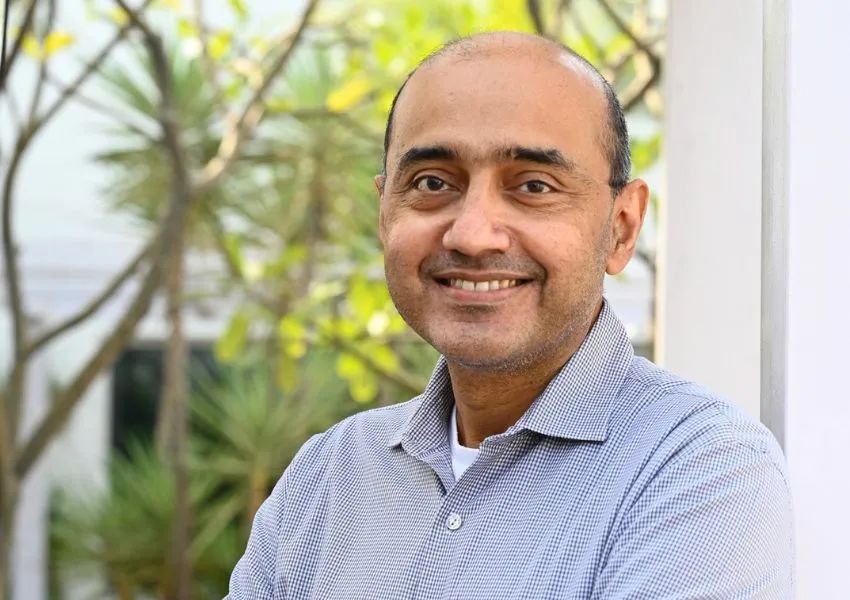
The re-election of Gopal Vittal as chair of the GSMA comes as major telecommunications operators reposition their businesses around artificial intelligence, cloud computing and advanced connectivity. Vittal, executive vice chairman of Bharti Airtel, will lead the global mobile industry association for the 2027-28 term, which runs until December 2028.
The appointment gives Vittal another two years to oversee the GSMA’s strategic direction as operators pursue new sources of growth beyond traditional voice and data services. He described the industry as entering a new era in which advanced networks, artificial intelligence and digital platforms could create economic value, while identifying cybersecurity as a priority for maintaining a sustainable mobile industry.
The GSMA board of directors voted to reappoint Vittal, while MTN Group CEO Ralph Mupita and Vodafone Group CEO Margherita Della Valle retained their positions as co-deputy chairs.
GSMA retains Airtel and MTN executives in senior leadership
The leadership arrangement brings together executives from three major international telecommunications groups, two of which have extensive operations across African markets. Mupita has led MTN since 2020, having previously served as the group’s chief financial officer, and has held the GSMA co-deputy chair position since April 2025. He also serves as a commissioner on the Broadband Commission for Sustainable Development and was a founding commissioner of the International Telecommunication Union’s AI for Good Global Commission.


Della Valle became Vodafone Group CEO in January 2023 after serving as the company’s chief financial officer from 2018. Her tenure has involved a major restructuring of the operator group, while Vittal’s leadership at Airtel places him at the centre of one of the world’s largest mobile businesses by customer numbers.
For Africa, the continued presence of Mupita in the GSMA’s senior leadership is particularly relevant because MTN operates across several markets where operators face challenges involving infrastructure financing, spectrum costs, smartphone affordability and mobile internet adoption. Airtel also has substantial operations across the continent through Airtel Africa, including Kenya, Nigeria, Uganda, Tanzania and Zambia.
The two groups are investing in infrastructure and digital services that reflect the priorities Vittal identified. Their strategies also illustrate the commercial opportunities and policy questions facing the wider mobile industry as operators seek to serve consumers, businesses and governments with more sophisticated digital services.
Airtel and MTN expand beyond traditional telecom services
Airtel Africa’s investments demonstrate how network operators are allocating capital to support growing demand for data and enterprise connectivity. The company announced plans for approximately $1.1 billion in investment across its 14 markets, covering network expansion, fibre, spectrum, home broadband and additional capacity. CEO Sunil Taldar said data traffic was growing by more than 50%, requiring further investment in network infrastructure and transmission capacity.
In October 2026, Airtel Africa also reported adding more than 3,250 network sites and 3,200 kilometres of fibre over the preceding year. The company identified artificial intelligence tools and direct-to-device satellite connectivity among the technologies forming part of its broader infrastructure and service strategy.
Airtel’s financial performance also illustrates the growing contribution of digital services to its business. For the six months ended September 2026, the company reported revenue of $3.82 billion and profit after tax of $452 million. Data revenue reached $1.57 billion, while mobile money revenue stood at $840 million, demonstrating the importance of connectivity and financial services to the group’s commercial performance.
Airtel has also committed capital to data centre infrastructure through Nxtra, its data centre business, which received a $1 billion investment commitment from Bharti Airtel. The investment adds computing and enterprise infrastructure to a business that has traditionally been associated with mobile networks and telecommunications services.
MTN is pursuing a comparable expansion through its Africa Data Hub strategy. The group established Africa Data Hub following a strategic partnership with a UAE-backed data centre investment platform, identifying South Africa and Nigeria as priority markets. The initiative covers data centres, cloud services, computing capacity and infrastructure for artificial intelligence workloads.
MTN’s wider digital infrastructure strategy also involves fibre networks, cloud-native financial services and distributed computing. Its EVA 3.0 analytics platform processes approximately 22 billion records daily, drawing on more than 1,700 data feeds across over 800 analytics workflows. The group’s investment direction reflects the growing importance of data processing and computing resources to telecommunications businesses.
Advanced mobile networks remain another part of this investment cycle. MTN South Africa recorded peak download speeds of 10.35Gbps in a 5G-Advanced trial using Upper 6GHz spectrum with Huawei. Meanwhile, Airtel Kenya acquired 100 MHz of spectrum in the 3500 MHz band for $65 million, securing rights for 25 years as it expands its 5G capacity.
These investments illustrate why advanced networks and digital infrastructure feature prominently in the GSMA’s agenda. Operators need additional network capacity, fibre and computing resources to support growing data consumption, enterprise applications and services built around artificial intelligence.
AI ambitions bring infrastructure and affordability into focus
The GSMA has already established a substantial African AI agenda through its partnership with the United Nations Development Programme. Announced in October 2026, the partnership seeks to strengthen Africa’s AI ecosystem through locally developed applications, African-language solutions, computing infrastructure and connections between innovators and commercial opportunities.
The initiative builds on ATLAS Umoja AI, launched in July 2026, and reflects efforts to develop AI capabilities that address African markets and their specific needs. It also connects to the wider infrastructure investments being made by companies such as Airtel and MTN, which are developing data centres, cloud platforms and networks capable of supporting more demanding digital services.
However, the expansion of AI infrastructure is taking place alongside a significant access challenge. The GSMA reported that 3.4 billion people globally were not using mobile internet, with more than 90% of this population living within areas covered by mobile broadband networks. Smartphone affordability remains a major barrier, particularly in low-income markets where the cost of an internet-enabled device can consume a substantial share of household income.
In Sub-Saharan Africa, the GSMA reported that an entry-level internet-enabled handset cost people in the poorest 20% of the population the equivalent of 76% of average monthly income. This affordability challenge affects the potential reach of digital platforms and AI services because consumers need suitable devices and reliable connectivity to access them.
The GSMA has also worked with Airtel, MTN, Orange, Vodacom and other operators through its Handset Affordability Coalition to promote more affordable entry-level 4G smartphones. The initiative reflects the industry’s recognition that network coverage alone cannot deliver widespread mobile internet adoption when consumers cannot afford compatible devices.
The usage gap also has a gender dimension. GSMA reporting found that women in low- and middle-income countries were 12% less likely than men to use mobile internet, with affordability, digital literacy and online safety among the barriers. Addressing these challenges is central to extending the economic benefits of connectivity to more households and businesses.
For African telecom operators, these access constraints sit alongside the opportunity to generate additional revenue from data, mobile money, cloud and enterprise services. The GSMA estimated that mobile technologies and services contributed $240 billion to Africa’s GDP in 2025, representing 7.8% of the continent’s economic output, while supporting 13 million jobs.
The association projected that the sector’s contribution could reach $290 billion by 2030. Its work on mobile internet affordability, infrastructure investment and digital skills therefore connects directly to the economic potential of the industry Vittal will continue leading.
Cybersecurity becomes central to the industry’s digital future
Vittal also identified security as a priority, as telecommunications networks support an expanding range of services, including mobile financial transactions, digital identity, enterprise systems and other essential digital infrastructure. Protecting these networks has implications for consumers, businesses and governments that depend on reliable digital services.
Kenya provides an example of the security pressures facing major operators. Safaricom reported detecting and monitoring approximately 1.25 billion intrusion attempts during its 2026 financial year, alongside investigations into more than 130,000 security events. CEO Peter Ndegwa said digital trust had become a leadership and customer issue, reflecting the importance of security to the company’s relationship with its users.
Safaricom has also highlighted the role of artificial intelligence in both cyberattacks and digital defence. Its cybersecurity discussions covered threats involving deepfakes, impersonation and automated scams, alongside the use of AI for threat detection and incident response.
The Communications Authority of Kenya’s National KE-CIRT/CC recorded 11.12 billion cyber threat events during the last financial year, according to figures reported by TechTrendsKE, representing a 29% increase from 8.62 billion. The figures illustrate the scale of the cybersecurity challenge facing the country’s digital ecosystem, including the operators that provide connectivity for financial and commercial services.
Across Africa, Mastercard-commissioned research reported that cyberattacks against organisations increased by more than 421% between 2016 and 2025. The research identified 69,236 cyber events targeting African organisations in 2025 and estimated a shortage of approximately 200,000 cybersecurity professionals across the continent.
The GSMA has also called on African governments to recognise telecommunications networks as critical national infrastructure, arguing that mobile networks underpin services such as healthcare, emergency response, education, finance and communications. This places cybersecurity within a broader discussion about infrastructure resilience and the ability of African economies to maintain essential digital services.
As Vittal begins another term, the GSMA’s priorities encompass the infrastructure required to support AI, the affordability challenges limiting access to digital services and the security of networks carrying an expanding share of economic activity. Airtel and MTN’s investments show how major operators are positioning their businesses around these developments, while the association’s African initiatives provide a policy framework for addressing the connectivity and infrastructure challenges accompanying that transformation.
Go to TECHTRENDSKE.co.ke for more tech and business news from the African continent and across the world.
Follow us on WhatsApp, Telegram, Twitter, and Facebook, or subscribe to our weekly newsletter to ensure you don’t miss out on any future updates. Send tips to info@techtrendsmedia.co.ke

