
AMACO’s $1.5 billion Hercules project puts dedicated power at the centre of Kenya’s AI infrastructure push

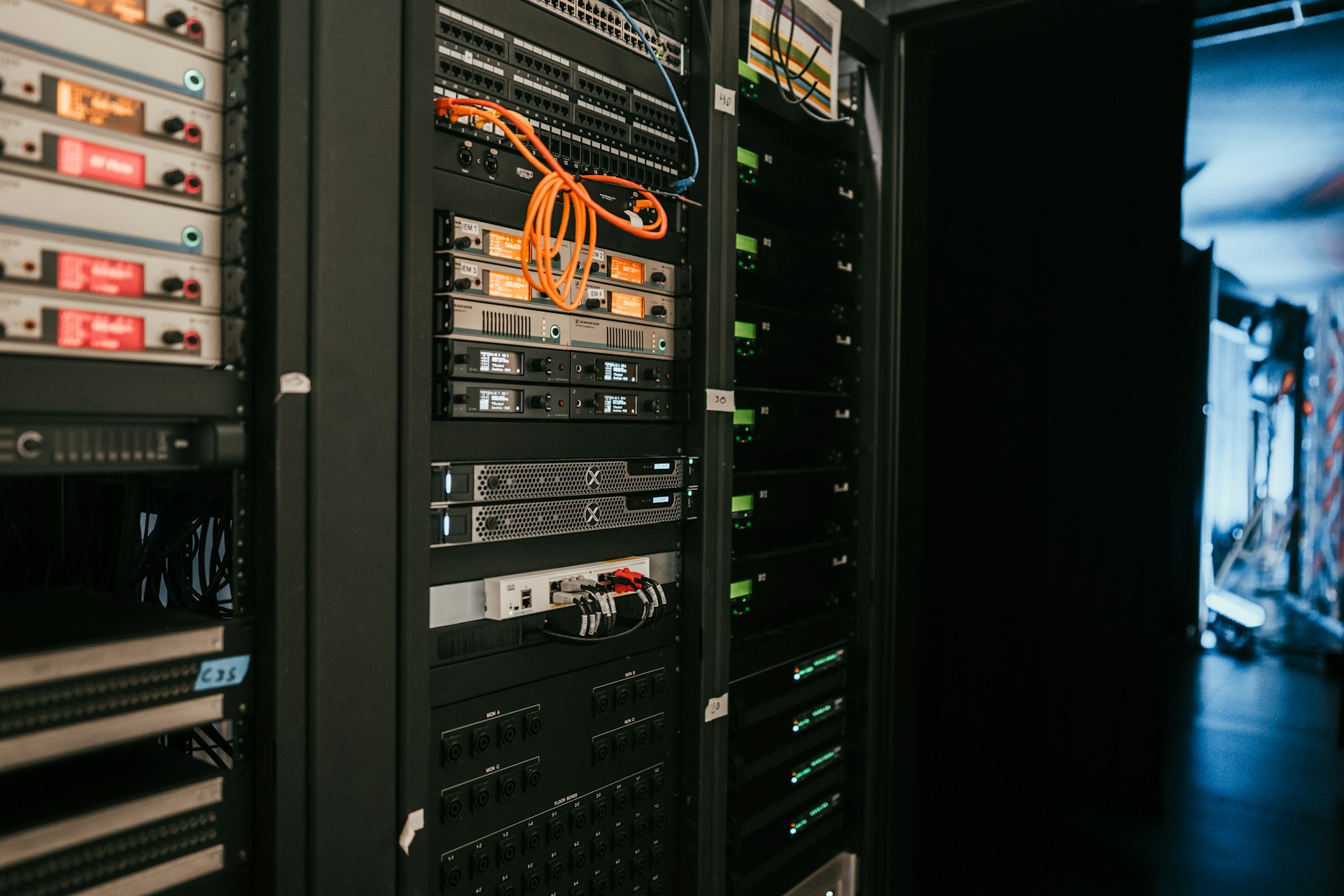
Greek energy company AMACO Energy Group has brought GE Vernova into its proposed $1.5 billion artificial intelligence data centre in Mombasa, adding a major power-equipment company to a project built around generating its own electricity.
Under the cooperation agreement, AMACO says GE Vernova gas turbines will be integrated into the power barge planned for its Hercules project, with the possibility of adding other GE Vernova electrification and digital technologies as the platform develops. The agreement gives the proposal a defined generation technology partner, although it does not by itself establish that turbines have been ordered, financing has closed or construction is ready to begin.
Hercules is being designed as an integrated offshore system combining AI data-centre infrastructure with LNG-powered electricity generation and cooling. AMACO has proposed operating the facility independently of Kenya’s national grid, a model that would place generation alongside a power-intensive computing load rather than relying entirely on electricity delivered through the conventional grid.
That distinction is becoming increasingly important as Kenya attracts larger data-centre projects. Airtel’s Nxtra is developing a 44 MW AI-ready facility at Tatu City, while Digital Realty has added another 6.4 MW of capacity through its NBO2 expansion in Nairobi. The projects illustrate the scale at which Kenya’s digital infrastructure market is developing, but they also expose the importance of reliable electricity, cooling and connectivity when computing loads increase.

AMACO’s model takes the power question further by making electricity generation part of the data-centre architecture itself.
Power is becoming part of the data-centre investment decision
Kenya does not lack renewable electricity generation. Geothermal, hydro and wind provide a substantial share of the country’s electricity, while KenGen continues to expand generation capacity. The challenge for large computing facilities is increasingly about securing reliable power at the required scale, location and cost as demand across the economy rises.

That distinction matters for AI infrastructure because large computing facilities require continuous electricity and sophisticated cooling. A project can therefore face constraints even when the national system has sufficient generation in aggregate if transmission capacity, connection arrangements, power quality or commercial terms do not match its requirements.
AMACO’s proposal is built around that problem. Instead of asking the national grid to supply the entire facility, Hercules would have its own generation system using LNG-powered gas turbines.
The approach resembles a broader trend in the data-centre industry, where operators are increasingly considering dedicated or behind-the-meter generation as electricity demand from AI workloads grows. It also creates a fundamentally different infrastructure proposition for Kenya: the data centre and its power plant become parts of the same investment.
That could make the project easier to structure around a large and predictable electricity load, but it does not remove the need for other infrastructure. Hercules would still depend on telecommunications networks, submarine cable connectivity, port logistics, LNG supply, regulatory approvals and an operating environment capable of supporting a hyperscale facility.
GE Vernova gives the power architecture a clearer shape
GE Vernova says its installed base includes more than 7,000 gas turbines representing more than 800 GW across more than 120 countries. Its involvement therefore gives AMACO access to an established gas-generation technology platform rather than leaving the generation component at the level of a broad project concept.
The precise configuration remains important.
AMACO has not disclosed the turbine model, number of turbines, total generation capacity or whether the proposed installation will use simple-cycle or combined-cycle generation. Those details will determine how efficiently the system converts LNG into electricity and how much fuel it would require at different operating loads.
They will also matter to the project’s environmental profile.
An LNG-powered facility would still rely on fossil fuel generation. That is significant in Kenya, where renewable electricity is one of the country’s strongest advantages in attracting digital infrastructure and where the government is simultaneously pursuing wider clean-energy and climate objectives.
Calling Hercules a lower-emissions alternative to other fossil-fuel systems would therefore require actual operating data. The relevant questions include turbine efficiency, LNG consumption, carbon intensity, methane leakage assumptions, nitrogen oxide emissions, cooling requirements and how much electricity is ultimately consumed by computing equipment rather than auxiliary systems.
AMACO has previously presented Hercules as an architecture that could eventually accommodate different energy sources, including hydrogen. But the immediate proposal is centred on LNG, and that is the system that needs to be evaluated against Kenya’s energy and climate objectives.
Mombasa gives the project more than access to the sea
The choice of Mombasa is also significant because the city already sits at the intersection of Kenya’s digital and energy infrastructure.
Mombasa hosts major submarine cable systems connecting East Africa to international networks, making the coast an important entry point for regional internet traffic and cloud connectivity. The port also provides the logistics infrastructure relevant to an LNG-based offshore energy system.
AMACO has identified potential locations including Dongo Kundu and Kilindini, citing proximity to the port and industrial demand around the Special Economic Zone. The company has also pointed to potential electricity demand from nearby heavy industry and prospective data-centre customers.
Those demand estimates need to be treated carefully until AMACO identifies actual customers and contracted loads. The company has discussed potential industrial demand of roughly 75 MW and another 75–100 MW from initial data-centre customers, but these figures should not be presented as confirmed consumption.
The location nevertheless creates a potentially interesting infrastructure cluster. A coastal data centre could combine international fibre connectivity, port access, industrial electricity demand and dedicated power generation in one geographic area.
That is also where the economics become more important than the headline investment figure.
A $1.5 billion announcement does not establish that the project has reached financial close. AMACO has yet to disclose the final computing capacity, construction schedule, financing structure, confirmed site or anchor customers. Until those details emerge, Hercules should be treated as a substantial infrastructure proposal rather than a committed $1.5 billion construction project.
The Microsoft-G42 experience offers a warning
Kenya’s separate effort to attract a large Microsoft and G42 data-centre development illustrates why electricity is becoming a central investment issue.
The project was originally described as a $1 billion green data-centre initiative at Olkaria, with an initial 100 MW phase within a longer-term plan that could scale substantially. Later discussions around the project’s electricity requirements helped expose the difficulty of accommodating hyperscale computing within Kenya’s existing power and infrastructure arrangements.
The lesson for AMACO is broader than generation capacity.
Large AI facilities need reliable power, high-capacity fibre, cooling, land or suitable offshore infrastructure, customers capable of supporting the investment and financing that can withstand the long development periods associated with major infrastructure projects.
Hercules attempts to address one of those constraints at the project level by making power generation part of the facility itself.
Whether that is commercially superior to a grid-connected model will depend on the cost of LNG, turbine efficiency, financing, electricity demand and the value customers place on dedicated power. It will also depend on whether the project can secure sufficient demand to justify the scale of its generation infrastructure.
The climate question cannot be separated from the power question
This is where the Hercules proposal becomes particularly relevant to Kenya’s energy transition.
Kenya is trying to expand digital infrastructure while maintaining a power system in which geothermal, hydro, wind and other renewable sources play major roles. At the same time, electricity demand is increasing as the economy industrialises and new energy-intensive industries emerge.
A dedicated LNG-powered AI facility could help avoid adding a large new load to the national grid. It could also provide a predictable electricity supply for computing workloads that cannot tolerate interruptions.
But that benefit comes with a different environmental cost.
The project would create a new fossil-fuel electricity demand specifically to support digital infrastructure. Its climate case will therefore depend on details AMACO has not yet published, including generation efficiency, emissions controls, LNG supply arrangements, cooling technology and whether the platform can eventually transition to lower-carbon fuels.
There is also a wider question about how much of the economic value created by such an independently powered facility would remain in Kenya.
An offshore or highly integrated facility could limit its exposure to some local infrastructure constraints, but Kenya would still need to capture employment, tax revenue, technical skills, supplier opportunities, connectivity investment and wider demand for digital services if the project is to deliver benefits beyond the physical data centre.
Regulation is another piece of the equation
The regulatory environment is also evolving.
The Communications Authority of Kenya is proposing a standalone data-centre licence category as part of efforts to provide clearer regulatory treatment for data-centre operators. The proposal is intended to improve visibility over the sector and provide greater regulatory clarity as the market develops.
That framework does not amount to approval for Hercules. AMACO would still need to navigate the relevant energy, environmental, maritime, construction and data-centre requirements before a project of this scale could move into development.
The environmental component will be particularly important. Kenya requires environmental impact assessment and licensing for projects that fall within the relevant regulatory categories before construction can proceed.
For Hercules, that process should provide an opportunity to examine the project’s emissions, marine impacts, LNG handling, cooling requirements, waste management and interaction with surrounding infrastructure rather than evaluating the data centre purely as a digital investment.
The bigger question is who powers Kenya’s AI economy
The GE Vernova agreement makes Hercules more tangible, but the larger significance of the project lies in the infrastructure model AMACO is proposing.
Kenya’s emerging data-centre market is already pursuing several approaches to the power problem. Some facilities remain connected to the national electricity system, others are pairing data-cententre development with renewable generation and dedicated electrical infrastructure, while AMACO is proposing to place an LNG-powered generation system directly alongside an AI computing facility.
That makes Hercules an unusually clear example of a question that will become harder to avoid as AI infrastructure expands: who generates the electricity, who pays for the infrastructure required to deliver it and what energy source ultimately powers the computing economy?
AMACO has supplied a concept for answering the first question. The GE Vernova agreement adds a major equipment partner to that concept.
The remaining questions are considerably more consequential: whether the project can secure financing and customers, whether its power architecture is commercially competitive, how much electricity and LNG it would actually consume, and whether an LNG-powered facility can fit comfortably within Kenya’s longer-term energy and climate ambitions.
Until those questions are answered, Hercules remains a proposal. But it is already useful as a case study in the changing relationship between AI infrastructure and energy infrastructure in Kenya.
Real ESG impact doesn’t happen in panels alone, it happens in the rooms where financiers, operators, and policymakers actually align. Our GreenShift Forum 2026 cuts the noise, bringing together the people rewiring Africa’s sustainability and energy frameworks for one focused day in Nairobi. Secure your seat.
Go to TECHTRENDSKE.co.ke for more tech and business news from the African continent and across the world.
Follow us on WhatsApp, Telegram, Twitter, and Facebook, or subscribe to our weekly newsletter to ensure you don’t miss out on any future updates. Send tips to editorial@techtrendsmedia.co.ke


