
Kenya reaffirms digital investment push at ITW Africa

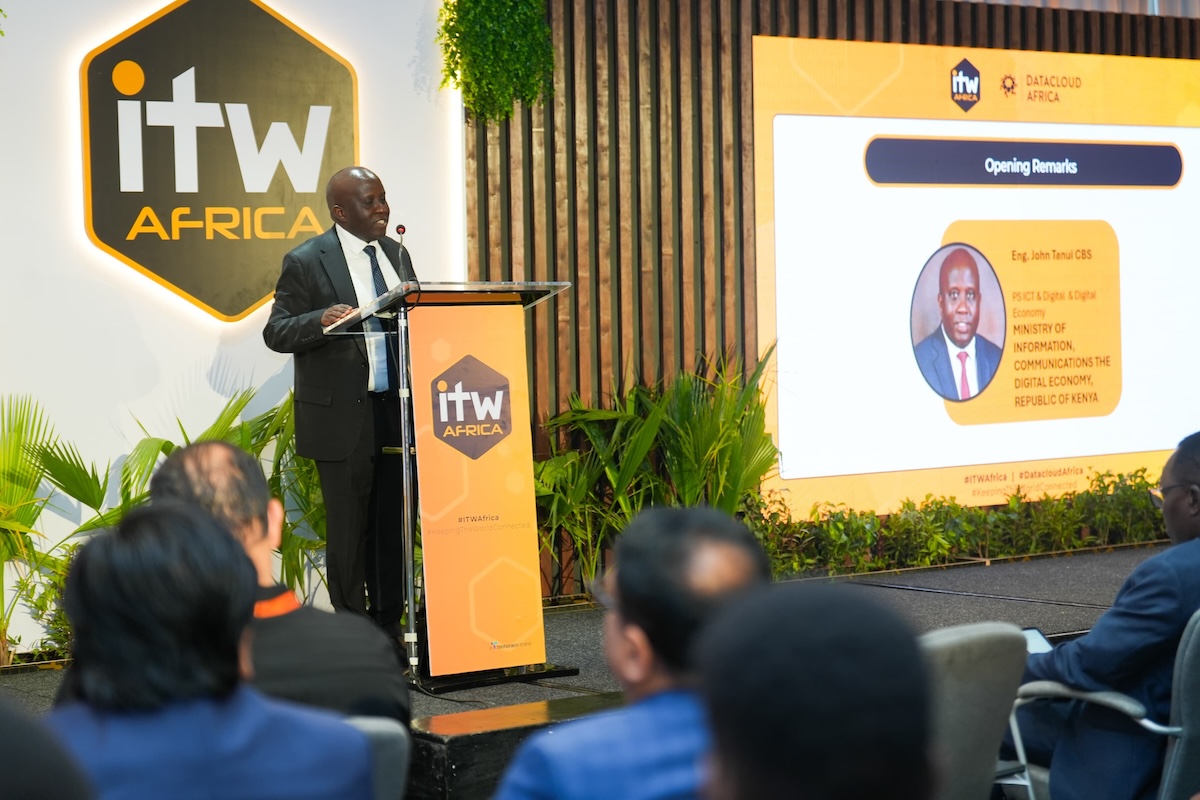
Kenya has reaffirmed its commitment to accelerating digital transformation through stronger public-private partnerships, infrastructure investment and supportive policy frameworks.
The commitments were made during a Ministerial Breakfast Briefing held on the sidelines of the fourth edition of the ITW and Datacloud Africa Conference in Nairobi, which brought together government officials and industry stakeholders to explore opportunities in Africa’s digital economy.
Representing Cabinet Secretary for Information, Communications and the Digital Economy William Kabogo, Principal Secretary for ICT and the Digital Economy John Tanui said Kenya’s decision to host ITW Africa for a fourth consecutive year reflected the country’s growing standing as a digital infrastructure market.
Tanui cited a series of reforms aimed at improving Kenya’s competitiveness for technology investors, including the removal of the 30 percent local shareholding requirement in the ICT sector, the introduction of a Cloud Policy and the recent adoption of the National AI Strategy.


He said the government is also expanding Special Economic Zones and pursuing bilateral arrangements to open new markets for technology firms.
“You will be the ones to enable Africa to claim its rightful share of global economic output,” Tanui told delegates, pointing to Kenya’s connectivity roadmap spanning submarine cable infrastructure, terrestrial networks and continental integration.

Principal secretary for Broadcasting and Telecommunications Stephen Isaboke, who opened the conference, said digital infrastructure had become a critical pillar of the economy and public service delivery rather than a purely technical concern.
“Digital infrastructure is no longer simply a technology issue. It underpins our economy and the delivery of essential services, and when it fails, the impact extends to livelihoods and public trust,” Isaboke said.
He called for greater focus on the security, reliability and resilience of infrastructure underpinning the region’s digital economy, citing route diversity, cybersecurity, reliable power and data governance as priorities as Kenya expands capacity and seeks further investment.
Isaboke said the government is positioning Kenya as a digital gateway to East Africa, backed by plans to lay 100,000km of fibre-optic cable nationwide, set up digital skills hubs for young people and roll out 25,000 public WiFi hotspots at markets, hospitals and schools.
The push comes as the Communications Authority of Kenya separately consults on a standalone data centre licence, part of a wider effort to tighten oversight as investment in cloud and AI infrastructure grows.
The week-long conference drew nearly 2,000 technology, government and business leaders from more than 80 countries. Dignitaries in attendance included Niger’s Minister of Communication and New Information Technologies, Adji Ali Salatou, alongside senior government and industry representatives from across the region and beyond.
Real ESG impact doesn’t happen in panels alone, it happens in the rooms where financiers, operators, and policymakers actually align. Our GreenShift Forum 2026 cuts the noise, bringing together the people rewiring Africa’s sustainability and energy frameworks for one focused day in Nairobi. Secure your seat.
Go to TECHTRENDSKE.co.ke for more tech and business news from the African continent and across the world.
Follow us on WhatsApp, Telegram, Twitter, and Facebook, or subscribe to our weekly newsletter to ensure you don’t miss out on any future updates. Send tips to editorial@techtrendsmedia.co.ke


