Airtel Africa plans $1.1 billion investment as data demand surges


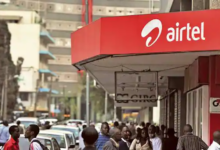
Airtel Africa plans to invest approximately $1.1 billion across its 14 African markets as the telecommunications company expands network coverage, boosts data capacity and prepares for growing demand driven by artificial intelligence and digital services.
Airtel Africa CEO Sunil Taldar said the planned capital expenditure will target network expansion, fibre infrastructure, spectrum acquisition, home broadband and additional capacity as data consumption continues to rise across the continent.
Speaking to Arise News, Taldar said data traffic on Airtel Africa’s network is increasing by more than 50%, creating a need for continued investment in network infrastructure and transmission capacity.
Nigeria is expected to remain a significant focus of the investment programme, with Taldar saying the company has nearly doubled its capital spending in the market. The planned investment comes as African telecom operators face increasing demand for mobile data, smartphones and digital services while dealing with infrastructure constraints that raise the cost of network operations.

Power supply remains one of the biggest challenges, particularly in Nigeria. Taldar said unreliable electricity has forced telecom operators to depend heavily on diesel to keep network sites operational.
According to the CEO, running a telecom site on diesel can cost almost four times as much as using electricity from the national grid. Rising fuel prices have added to the pressure, with diesel in Nigeria increasing from about N900 to nearly N1,800 per litre over the past eight to nine months.
The cost of maintaining network sites is also affected by the logistics required to transport fuel to remote locations. Taldar said delays in delivering diesel can result in disruptions to network availability, highlighting the close relationship between reliable electricity and telecommunications connectivity.
Infrastructure vandalism is another challenge affecting network operations. Taldar welcomed Nigeria’s decision to designate telecommunications infrastructure as national critical infrastructure but said stronger enforcement is needed to protect telecom assets.
He cited cotinued fibre cuts as an indication that infrastructure protection remains a challenge, while urging communities to safeguard telecommunications facilities because disruptions can affect businesses and other users that depend on connectivity.
Beyond traditional mobile services, Airtel Africa is increasing its focus on technology-driven opportunities, including artificial intelligence, data centres and business to business services.
Taldar said the company is positioning its infrastructure to support the expected growth of AI across Africa, while expanding digital offerings in areas such as mobile money, SME services and digital education.
The company is also pursuing satellite connectivity as part of its strategy to reach underserved areas. Taldar defended Airtel Africa’s partnership with Starlink, saying satellite technology can complement traditional towers and fibre networks in locations where conventional infrastructure would be difficult or uneconomical to deploy.
The partnership is expected to support enterprise connectivity, satellite backhaul and direct-to-device services, extending network access to areas with limited telecommunications infrastructure.
Taldar said Airtel Africa’s approach will involve both competition and collaboration with other industry players, particularly where infrastructure sharing can lower duplication costs and increase coverage.
Meanwhile, Airtel Africa is continuing preparations for a potential London listing of Airtel Money before the end of 2026, subject to market conditions. Taldar said London was selected because of its established investor base and experience with fintech companies.
The company is also using its foundation to support digital and financial inclusion initiatives across its markets. Taldar said the Airtel Africa Foundation has provided free connectivity to 2.1 million children and connected 3,300 schools across Africa.
In Nigeria, the company has connected around 1,500 schools and trained 74,000 teachers in digital education. Airtel Africa is also adopting 10 Nigerian schools to support infrastructure improvements and digital learning.
The investment programme and expansion of digital services form part of Airtel Africa’s broader shift from a traditional telecommunications operator towards a technology focused business, with the company seeking to use connectivity and digital platforms to expand access to financial, educational and economic opportunities across Africa.
Real ESG impact doesn’t happen in panels alone, it happens in the rooms where financiers, operators, and policymakers actually align. Our GreenShift Forum 2026 cuts the noise, bringing together the people rewiring Africa’s sustainability and energy frameworks for one focused day in Nairobi. Secure your seat.
Go to TECHTRENDSKE.co.ke for more tech and business news from the African continent and across the world.
Follow us on WhatsApp, Telegram, Twitter, and Facebook, or subscribe to our weekly newsletter to ensure you don’t miss out on any future updates. Send tips to editorial@techtrendsmedia.co.ke