

Shein's Hong Kong listing marks a bigger bet beyond fast fashion

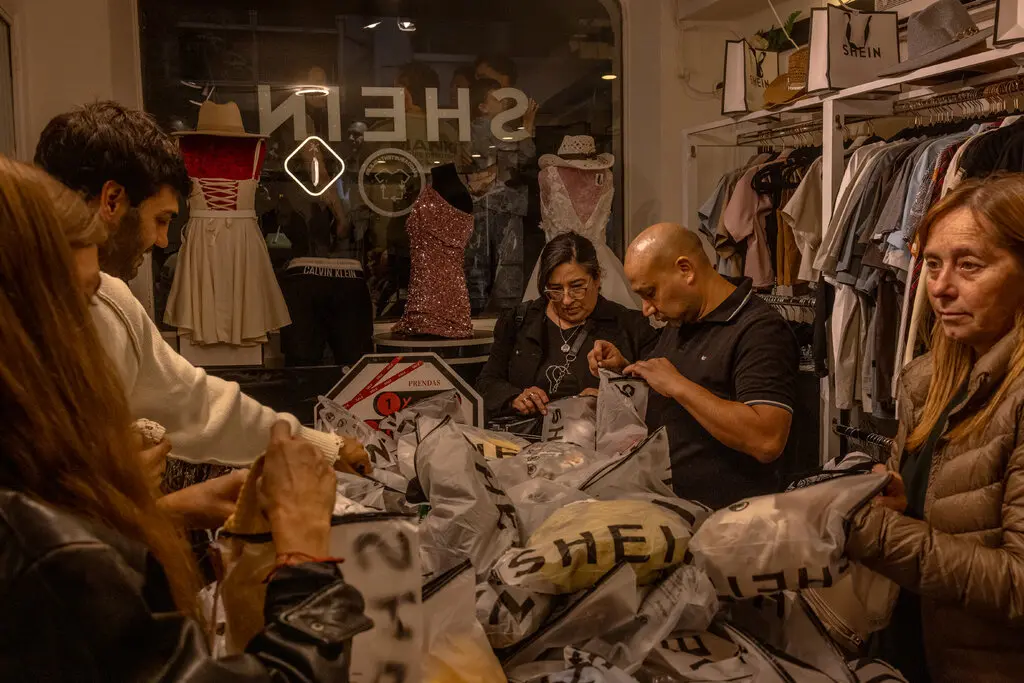
Shein is heading to Hong Kong with a very different story to tell investors than the one that made it one of the world’s most valuable private companies.
The fast-fashion giant is reportedly targeting a valuation of about $27 billion, a steep discount to the more than $100 billion investors once placed on it. Yet behind that lower valuation sits a much bigger ambition: Shein wants to use its supply chain, technology and cash to build a broader fashion business, including through acquisitions of established Western brands.
The timing is significant. Shein faces tougher scrutiny across the United States and Europe over its supply chain, low-value imports and potential exposure to forced labour, while changes to trade rules are putting pressure on the economics of cross-border e-commerce. At the same time, the company is pushing further into emerging markets such as Africa, where its low prices remain compelling but taxes, logistics and local competition can quickly change the equation.
The Hong Kong listing therefore arrives at an awkward but potentially important point in Shein’s development. The company has already proved that it can sell huge volumes of inexpensive fashion online. Now it has to convince public-market investors that the technology, supplier network and operating model behind those sales can support a much bigger business.


Shein’s $27 Billion IPO Comes With Something to Prove
A $27 billion valuation would still make Shein one of the world’s most valuable fashion companies, but the comparison with its earlier private-market valuation is difficult to ignore. Investors once valued the company at more than $100 billion during the extraordinary growth of online retail. The proposed Hong Kong listing therefore represents more than a route to public capital; it is a public-market reassessment of Shein’s growth prospects, margins and risks.
The company has spent much of its rise proving that consumers will buy enormous volumes of inexpensive, trend-driven clothing through a smartphone. Its data-driven production model allows suppliers to make small batches, monitor demand and scale products that perform well. Social media and influencer marketing then turn those products into a constantly refreshed stream of online demand.
That formula remains powerful, but the conditions surrounding it have become harder. In the United States, scrutiny has centred on the de minimis rule that allowed low-value packages to enter with limited customs friction, while lawmakers and regulators have also questioned Shein’s supply-chain controls and potential exposure to forced labour in Xinjiang. Europe has been considering tighter treatment of low-value imports as governments respond to the volume of inexpensive goods arriving directly from China.
The result is a different risk calculation for investors. Shein is no longer being judged only on whether it can sell another million dresses. The bigger question is whether its economics remain attractive when governments place more of the costs of cross-border commerce onto the platforms that built their businesses around it.
From Fast-Fashion Retailer to Fashion Platform
This is where Shein’s reported ambition to become the Amazon Web Services of fashion becomes important.
AWS built an enormous technology infrastructure and turned it into a service that other companies could use. Shein appears to be considering a comparable model for fashion: use its manufacturing relationships, demand forecasting, merchandising technology, logistics and digital commerce capabilities to support a portfolio of brands.
An acquisition such as Everlane would fit that strategy. A recognised Western fashion brand brings something Shein cannot manufacture through software or supplier relationships: established brand identity and a customer base that may sit at a different point on the fashion and quality spectrum.
The opportunity is straightforward. Shein could provide the operational machinery while keeping the acquired brand’s identity in front of consumers. A company that can reduce inventory risk, shorten production cycles or improve sourcing for several brands could potentially generate value without relying entirely on the Shein label.
But the model has a built-in tension. The more an acquired brand depends on Shein’s infrastructure, the more important it becomes to preserve the qualities that made that brand valuable in the first place. A premium or sustainability-oriented label cannot simply be run as another ultra-fast-fashion storefront without risking the consumer trust that justified the acquisition.
The Supply Chain Behind Shein Is Also Its Biggest Risk
Shein’s Chinese manufacturing network remains central to the entire proposition.
It is the reason the company can test products rapidly, order limited quantities, respond to demand and keep prices exceptionally low. The network is difficult for conventional retailers to replicate because it is built around a dense ecosystem of suppliers and a digital feedback loop connecting consumer demand to production.
That advantage also creates concentration risk.
Shein has faced questions about labour conditions, sourcing and the traceability of materials, alongside wider environmental criticism of ultra-fast fashion. The company has denied forced-labour allegations and said it has controls designed to ensure compliance with human-rights requirements.
The regulatory issue extends beyond labour. Governments can alter the economics of Shein’s model through tariffs, VAT, customs requirements and import rules, even where no specific action targets the company. That makes supply-chain concentration a financial issue as well as a reputational one.
There is an important distinction here. Acquiring Western brands can diversify Shein’s revenue and customer base, but it does not automatically diversify the manufacturing infrastructure on which those brands could depend. Shein could end up owning more brands while retaining the same underlying exposure to Chinese production and cross-border logistics.
Africa Shows Both the Strength and Limits of the Model
Africa provides a useful test of Shein’s approach because the company can reach consumers without replicating the physical retail networks of established fashion chains.
Shein has expanded mainly through cross-border e-commerce, targeting young, price-sensitive urban shoppers with a huge catalogue of inexpensive fashion. South Africa is its most developed African market, while influencer-driven marketing and app-based shopping have helped build awareness in markets including Kenya and Ghana. Nigeria presents a somewhat different competitive environment, where Temu has pursued a more aggressive expansion strategy and Shein’s fashion focus is more pronounced.
The appeal is obvious. Consumers gain access to a much wider selection at prices that local retailers can struggle to match, while Shein avoids the cost of building a large network of shops and warehouses across the continent.
South Africa also demonstrates the limits of that advantage. Changes to the treatment of small-value imports raised the cost of the cross-border parcel model, weakening part of the price advantage that Shein and Temu enjoyed. Shein’s growth in the market subsequently slowed, illustrating how quickly the economics can change when governments alter tax and customs treatment.
That experience matters beyond South Africa. Shein’s model works particularly well when the savings generated by Chinese production can reach the customer largely intact. Add higher duties, taxes, delivery costs or more demanding compliance requirements, and the gap between a cross-border platform and a local retailer begins to narrow.
Africa therefore offers Shein both a growth opportunity and a useful warning. The continent has a large young population, expanding smartphone use and growing appetite for digital commerce, but local infrastructure, customs systems, payment preferences and consumer expectations vary sharply between markets.
Jumia Is Adapting Rather Than Trying to Beat China on Price
The response from African e-commerce companies is revealing.
Jumia has been adding more China-based merchants to its marketplace, effectively bringing some of the price and selection advantages of Chinese manufacturing into a local platform. Rather than attempting to reproduce China’s manufacturing economics, it can focus on the parts of the transaction where local knowledge matters: delivery, customer service, returns, payments and consumer trust.
That creates a different competitive proposition.
Shein can offer an extraordinary range of fashion products at prices that are difficult for local retailers to match. Jumia can provide a more locally integrated buying experience, with infrastructure that a cross-border platform cannot easily reproduce without substantial investment.
The outcome could be a hybrid African e-commerce market in which Chinese manufacturers supply the products, global platforms provide demand and merchandising technology, and African companies handle some of the local distribution and trust layer.
That model could matter to Shein’s future because it offers a way to expand without building every piece of infrastructure itself.
Acquisitions Could Diversify Shein, But They Won’t Solve Everything
The appeal of acquisitions becomes clearer when viewed against these pressures.
Shein needs ways to grow that do not depend entirely on selling ever-cheaper products under the Shein name. Established brands can provide different customers, higher price points and stronger recognition in Western markets. They can also give Shein a broader portfolio through which to deploy its technology and supply-chain capabilities.
But acquisitions bring their own risks. Buying a brand is easy compared with preserving its identity while extracting operational efficiencies from it. Shein would need to decide how much of its manufacturing and merchandising system can be introduced without changing what customers think they are buying.
There is another issue: the acquisition strategy does little to resolve the geopolitical question at the heart of the business.
Washington, Brussels and other regulators are concerned not only about Shein’s brand. They are concerned about how goods made in China enter their markets, how supply chains are monitored and whether existing trade rules adequately account for the scale of modern cross-border commerce.
A larger Shein-owned portfolio could therefore attract broader scrutiny if regulators conclude that the same infrastructure sits behind multiple brands.
The IPO Will Test Whether Shein Can Build a Bigger Business
Shein’s next chapter will depend on whether it can turn an exceptionally efficient retail system into something broader and more durable.
The company has already demonstrated that its supply chain can produce fashion quickly and cheaply at global scale. The harder task is proving that this infrastructure can support multiple brands, different price segments and markets with very different regulatory environments.
Africa shows why that challenge matters. Shein can reach consumers in Nairobi, Johannesburg or Accra without building the physical footprint required by a traditional retailer, but tax changes, customs enforcement and local logistics can quickly affect the economics. The same tension exists elsewhere, particularly as governments reassess the rules governing low-value imports.
That leaves Shein with a strategic balancing act. It needs to preserve the speed and cost advantages created by its Chinese manufacturing ecosystem while reducing the business’s exposure to the regulatory and geopolitical risks associated with that same ecosystem.
The proposed Hong Kong listing gives investors a chance to decide whether that transformation is credible.
At $27 billion, the market is no longer paying the extraordinary pandemic-era price for Shein’s growth. The company now has to make the case that the machinery behind its fast-fashion success is worth more than the Shein fashion label itself.
If it can turn that machinery into a platform for brands, markets and commerce, the lower valuation could eventually look like the starting point for a different business. If regulatory pressure keeps eroding the economics of cross-border retail while the supply chain remains concentrated in China, the AWS analogy may prove much harder to realise than the pitch suggests.
The real test of Shein’s IPO is therefore not whether investors still believe in fast fashion. It is whether they believe Shein can turn its supply-chain advantage into a global fashion infrastructure business without allowing that same advantage to become its defining weakness.
Real ESG impact doesn’t happen in panels alone, it happens in the rooms where financiers, operators, and policymakers actually align. Our GreenShift Forum 2026 cuts the noise, bringing together the people rewiring Africa’s sustainability and energy frameworks for one focused day in Nairobi. Secure your seat.
Go to TECHTRENDSKE.co.ke for more tech and business news from the African continent and across the world.
Follow us on WhatsApp, Telegram, Twitter, and Facebook, or subscribe to our weekly newsletter to ensure you don’t miss out on any future updates. Send tips to editorial@techtrendsmedia.co.ke