
Inside Absa's response to margin pressure in its HY2026 earnings

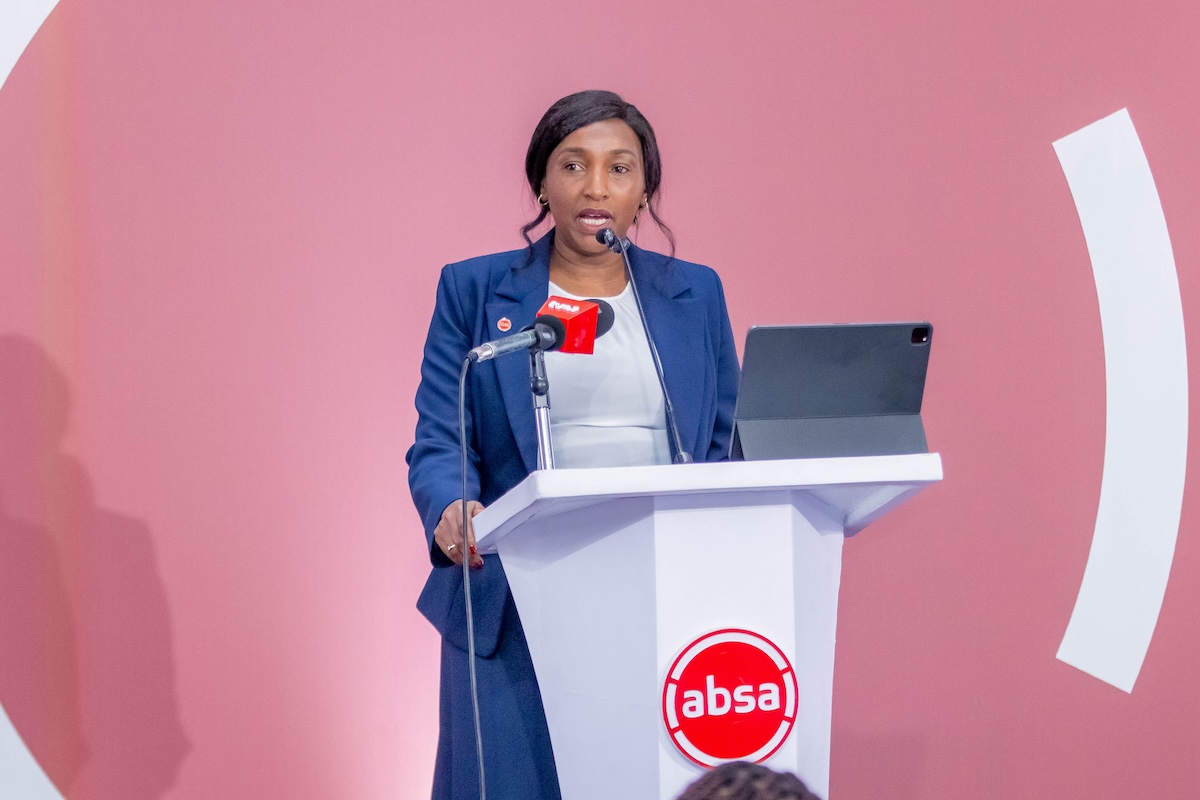
Absa Bank Kenya’s half-year results landed with a headline that was hard to miss: an interim dividend raised by 150% to KSh0.50 per share. The bigger story, though, sits deeper in the numbers.
Revenue came under pressure as lower interest rates squeezed margins, yet management argues the weaker income lines reflect a deliberate trade-off rather than a weakening franchise.
Conversations with Interim MD and CEO Yusuf Omari and Interim CFO Diana Mwaniki suggest the bank accepted near-term earnings pressure while building a cheaper deposit base, stronger lending momentum and healthier asset quality ahead of what it expects to be a more revealing second half.
Why revenue came under pressure
The pressure on Absa’s income statement is difficult to ignore. Net interest income fell 5% year-on-year, non-funded income declined 10%, and total revenue dropped 7%, reflecting a banking sector adjusting to a lower-rate environment.


Omari argues that these comparisons need to be viewed alongside the dramatic change in the operating environment. Around 70% of Absa’s revenue is driven by interest rates, which means earnings inevitably felt the impact as yields retreated from the elevated levels seen a year earlier. The bank chose to pass roughly 150 basis points of lower rates directly to borrowers instead of holding on to that benefit, a decision he says improved affordability for customers even as it reduced funded income.
Management expects that dynamic to look different later in the year. Omari repeatedly pointed to Q4 2026 as the point when year-on-year comparisons will finally reflect a similar interest-rate backdrop, making it easier to judge the underlying earnings trajectory.

The deposit franchise became the anchor
If lending margins weakened, the deposit book became the strongest part of Absa’s defence.
The bank reduced its cost of funds to 2.8%, which management describes as one of the lowest levels in the industry, while reshaping its funding mix toward cheaper transactional deposits.
That transformation appears more deliberate when both executives’ accounts are viewed together. Omari explained that transactional deposits rose from about 65% to 75% of total deposits over the past year as expensive term deposits declined and current-account activity expanded.
Mwaniki adds another layer: management had originally targeted a 70:30 funding mix, which means the current 75% CASA position is already ahead of plan. She attributes much of that progress to stronger payment capabilities, particularly among SMEs, which made customer deposits stickier while helping the bank keep funding costs under control.
The result is a balance sheet that costs less to fund even as lending margins tighten.
Lending volumes are now the main growth lever
The interviews reveal that Absa’s response to margin compression is not simply to wait for interest rates to stabilise. The bank is leaning on higher lending volumes to offset weaker pricing.
Mwaniki provided the clearest evidence of that approach. Absa disbursed roughly KSh104 billion in loans during the first half of the year, and nearly 64% of those disbursements occurred in Q2, indicating that borrowing demand accelerated as rates became more affordable.
That momentum is unfolding alongside a broader recovery in business credit across Kenya. Kenya Bankers Association data shows banks disbursed KSh245.06 billion in new MSME loans during H1 2026, while private-sector credit growth reached 10.6%, the fastest pace in 28 months. Absa contributed KSh12.9 billion in MSME lending, placing it seventh among the country’s largest lenders, which reinforces management’s view that cheaper borrowing costs are bringing credit demand back even as competition for business lending remains intense.
The lending push also ties directly into the bank’s broader relationship strategy. Omari noted that customer advances now account for roughly 60% of the balance sheet, while the average customer uses 3.2 Absa products, suggesting that lending is creating opportunities to deepen banking relationships rather than simply expand the loan book.
Questions remain around the 88% loan-to-deposit ratio, which leaves less room for aggressive expansion than some competitors enjoy, but management argues that capital buffers and additional funding sources provide flexibility beyond what that single ratio implies.
Fee businesses are growing but remain a smaller piece of revenue
One of the biggest debates surrounding the HY2026 results is whether Absa’s diversification strategy has become meaningful enough to cushion earnings during rate cycles.
The headline figures suggest it has not. The underlying trend tells a more nuanced story.
Omari said that once foreign exchange and trading effects are stripped out, underlying non-funded income actually grew 9%, with newer businesses expanding by more than 20% year-on-year.
Mwaniki added more detail, describing three businesses that management sees as long-term growth engines. Bancassurance now contributes roughly KSh1 billion annually, asset management continues posting double-digit growth, and the custody business is expanding at more than 100% from a relatively small base. Together, these newer businesses grew around 24% during the period.
She also acknowledged that they remain a relatively small share of total non-funded income, which currently contributes about 27% of revenue. Management’s internal target is to lift that figure to 30%, a level it believes would create a stronger balance between interest-driven earnings and customer-driven revenue.
That ambition did not begin with HY2026. The bank has been investing heavily in these adjacent businesses alongside annual technology spending of roughly KSh2–3 billion, while digital channels now handle the vast majority of customer transactions.
Asset quality strengthens the case for the strategy
The strongest evidence supporting management’s confidence may be found in the quality of the loan book.
Lower borrowing costs have helped some previously distressed customers return to performing status, while recoveries have continued across other segments. Omari said the bank’s loan-loss ratio improved to about 1.9%, comfortably below its internal risk appetite of 2.2%.
He argues that Absa’s credit discipline held up even when macroeconomic conditions were tougher, and points out that loan growth has continued without a corresponding deterioration in credit quality.
Mwaniki reinforces that perspective by pointing investors toward another measure that received less attention than the dividend: 21.7% return on equity. She contends that viewing the earnings decline without considering growing customer assets, stronger deposits and healthy profitability provides an incomplete picture of the franchise.
Years of digital investment are beginning to pay off
Some of HY2026’s expenses reflect investments that are expected to deliver savings over time rather than recurring operational costs.
The bank booked roughly KSh700 million related to a voluntary exit programme after automation increased from 45% to 71% of core processes, allowing some back-office functions to be consolidated while staff were redeployed into customer-facing roles where possible.
Omari remains comfortable with a cost-to-income ratio in the low 40% range, arguing that extremely low ratios can sometimes indicate underinvestment rather than superior efficiency.
That explanation aligns with Absa’s longer-running investment programme. Previous investments in automation, digital channels and process redesign are now supporting lower operating costs while helping the bank grow customer activity beyond traditional branch banking.
Q4 will test whether the strategy works
Taken together, the two executive interviews point to a strategy built around three connected priorities: protect margins through a cheaper deposit base, replace lost yield with stronger lending volumes, and expand fee-generating businesses until they carry more of the earnings burden.
The unresolved question is whether those pieces come together quickly enough.
Management expects Q4 2026 to provide the clearest answer because the bank will finally be comparing performance against a similar interest-rate environment while giving the volumes strategy more time to flow through into earnings.
The 150% dividend increase demonstrated confidence in capital strength today. The more important test will be whether cheaper funding, healthier lending activity and expanding customer businesses translate into a stronger revenue engine once those comparisons become more meaningful later in the year.
Download the FREE Kaspersky Next Enterprise Security Guide here to explore the complete framework for simplifying security operations and building cyber resilience.
Go to TECHTRENDSKE.co.ke for more tech and business news from the African continent and across the world.
Follow us on WhatsApp, Telegram, Twitter, and Facebook, or subscribe to our weekly newsletter to ensure you don’t miss out on any future updates. Send tips to editorial@techtrendsmedia.co.ke


