KCB emerges ahead on the latest asset figures as a stronger balance sheet meets improving credit quality

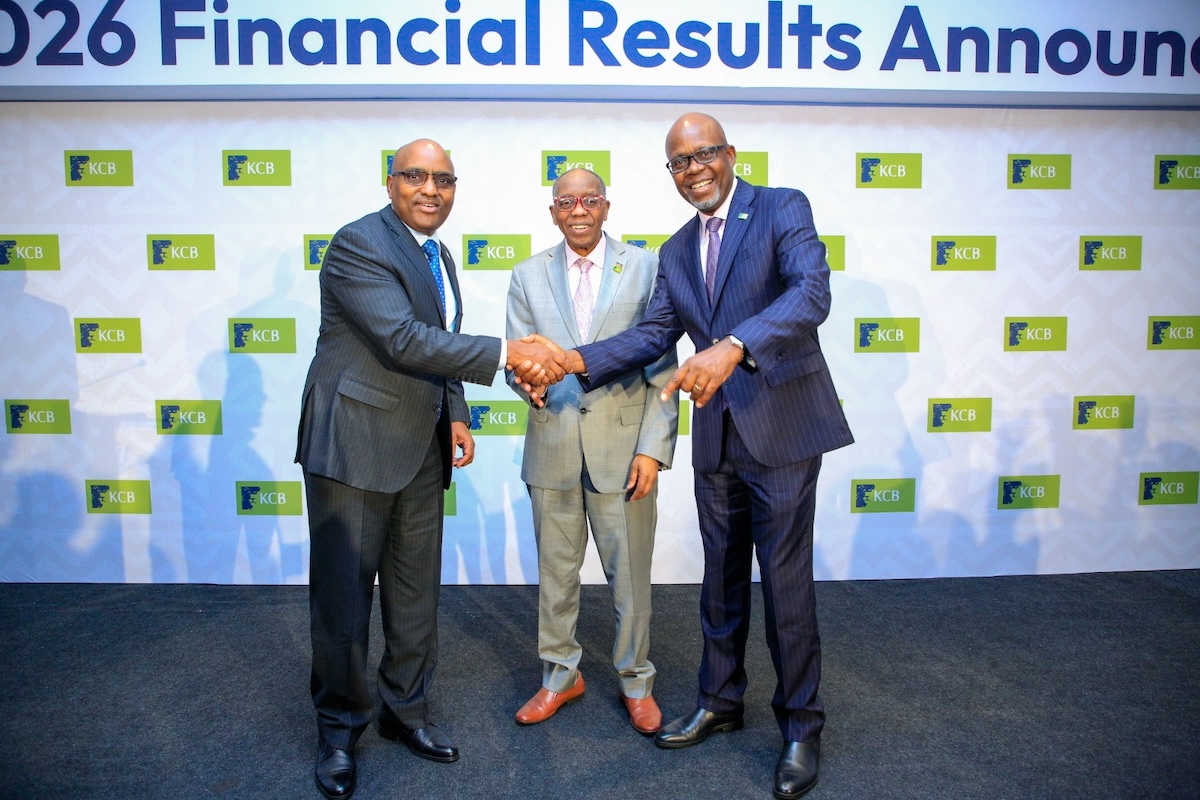
KCB’s latest half-year results put the bank ahead of Equity on the asset figures currently available, with total assets rising 16.8% to KSh2.299 trillion by June. Equity had reported KSh2.04 trillion at the end of March, although that comparison will need to be revisited once Equity publishes its own June results.
The bigger story in KCB’s numbers, though, is what is happening underneath that headline: deposits and lending have picked up sharply, profit before tax is growing much faster than operating income, and gross non-performing loans have fallen by KSh17.3 billion.
KCB moves ahead on the latest asset figures
KCB’s return to the top of the regional banking asset ranking is being driven by growth across the balance sheet rather than a single accounting line. Customer deposits increased 15.1% to KSh1.711 trillion, while gross loans rose 14.2% to about KSh1.3 trillion. Net loans and advances stood at KSh1.241 trillion, up 13.3% from a year earlier, giving the group a larger earning-asset base while deposits provided much of the funding for that expansion.
The contrast with the first half of 2025 is striking. At that point, KCB’s total assets had declined 0.4% year on year and customer deposits were down 0.3%, while loans and advances grew by only 6.1%. Twelve months later, asset growth is running at 16.8%, deposits at 15.1% and loans at more than 13%. The bank has therefore moved from a period of relatively subdued balance-sheet growth into a much stronger expansion cycle.


That helps explain why the asset ranking matters, although it should not be treated as a definitive competitive result yet. KCB’s KSh2.299 trillion figure is a June 30 position, while the Equity figure cited in the comparison is from March 31. Once Equity reports its six-month numbers, the two banks can be compared on the same reporting date. Until then, KCB has the lead on the latest figures available.
The regional footprint also matters when reading the consolidated balance sheet. KCB’s subsidiaries outside Kenya accounted for 31.1% of the group’s total balance sheet and 27.7% of profit before tax in the first half. The asset ranking therefore reflects a banking group with substantial operations across several East African markets, rather than the size of its Kenyan banking operation alone.
Profit is growing faster than income
The more revealing part of the results is the relationship between revenue and profit. KCB Group’s total operating income increased 9.5% to KSh108.09 billion, while profit before tax climbed 20.8% to KSh49.32 billion. Profit after tax rose 14% to KSh36.87 billion.
That gap suggests that the group retained more of each additional shilling of operating income after expenses and credit costs. It is particularly notable because income growth itself was not spectacular by KCB’s recent standards. The stronger PBT result therefore reflects a combination of revenue generation, cost control and lower credit-related pressure rather than simply a much larger lending book.
Net interest income rose 7% to KSh74 billion. That was slower than the 12.7% increase recorded in the first half of 2025, even though the loan book expanded more quickly in 2026. Non-interest income tells a different story, rising 15.4% to KSh34.08 billion. The result is a broader income mix, with fees, commissions, foreign-exchange activity, advisory work and other non-funded businesses making a larger contribution to earnings.
That diversification matters for a bank operating in a market where lending margins can be affected by interest rates, competition for quality borrowers and changes in the cost of deposits. KCB is generating more income outside the traditional interest spread, giving businesses such as investment banking, payments, insurance and other financial services a larger role in the group.
The performance of KCB Investment Bank illustrates that development. Its profit before tax jumped 226.6% to KSh503.2 million, supported by increased advisory mandates and capital-markets transactions. The figure is modest next to the group’s KSh49.32 billion PBT, but its strategic importance is greater than its contribution to the bottom line suggests because investment banking provides another channel for fee income and corporate relationships.
Loan growth comes with a better credit picture
The strongest part of KCB’s results may be the improvement in asset quality.
Gross non-performing loans fell by KSh17.3 billion to KSh203.83 billion from KSh221.07 billion a year earlier. That pushed the gross NPL ratio down from 18.7% to 15.1%, a reduction of 3.6 percentage points.
The improvement becomes more meaningful when placed against loan growth. KCB expanded gross lending by 14.2%, yet its bad-loan balance moved lower. That is a considerably healthier combination than growing the loan book while allowing problem assets to rise at the same time.
Loan-loss provisions also declined 13.6% to KSh10.77 billion. In the first half of 2025, provisions had increased 2.2%. The reversal helped support the faster growth in pre-tax profit and suggests that recoveries and tighter credit-risk management are reducing some of the pressure that weighed on earnings previously.
There is still a substantial credit-risk burden, however. A 15.1% gross NPL ratio remains high for a bank of KCB’s scale, even after the improvement. The latest figures show progress in dealing with problem loans, but they do not mean the underlying credit risk has disappeared.
The loan-to-deposit ratio also improved slightly to 78.8% from 79.5%. With deposits rising 15.1% and net loans increasing 13.3%, KCB has been able to grow its lending without stretching the relationship between customer funding and loans. That provides a more balanced picture of the expansion than the asset number alone.
Regional subsidiaries are reshaping the group
KCB’s regional operations are now large enough to materially influence both earnings and the balance sheet. Their 27.7% contribution to group PBT and 31.1% share of total assets show why the bank’s regional strategy matters to the consolidated results.
The significance goes beyond geographic diversification. A regional subsidiary that contributes a meaningful share of group earnings can change the composition of revenue, funding and risk across the entire organisation. It also gives KCB additional exposure to markets where banking penetration, digital finance and corporate activity can develop at different rates from Kenya.
The group’s Rwanda operations provide an example of that broader strategy. BPR Bank Rwanda and MTN MoMo Rwanda launched MoFaya, a digital lending and savings platform, combining banking and mobile-money infrastructure. In Tanzania, KCB’s Mapato Sukuk Islamic bond raised TZS30.24 billion against a TZS10 billion target, showing that the regional network is also being used to develop capital-market products.
These activities sit alongside KCB’s Kenyan businesses, which continue to push into digital and specialised financial services. Bid Express allows customers to obtain unsecured bid bonds digitally, while Pata Kwako has expanded mortgage financing for underserved borrowers. KCB also partnered with the Kenya Defence Forces to offer dedicated mortgage financing at rates starting from 4%.
Taken together, the initiatives show a banking group trying to capture more of the financial relationship with customers rather than relying solely on conventional deposits and loans.
Capital strength supports a bigger dividend
KCB’s stronger earnings have also given shareholders a larger immediate return. The board recommended an interim dividend of KSh3 per share, up 50% from the KSh2 paid in the previous year. The total proposed payout is KSh9.64 billion.
The dividend increase comes alongside a stronger capital position. Core capital rose 19.7% to KSh331.92 billion, while total capital increased 20.6% to KSh387.56 billion. At the regulatory level, KCB reported a core capital ratio of 18.6%, against a minimum requirement of 10.5%, while total capital stood at 21.6%, compared with the 14.5% regulatory minimum.
That gives the bank considerable room above the minimum capital thresholds even as it expands the balance sheet and returns more money to shareholders. Return on equity stood at 21.1%, while shareholders’ equity increased 16.3% to KSh357 billion.
The numbers also help explain why the higher dividend does not necessarily represent a trade-off against balance-sheet strength. KCB is generating enough capital internally to support growth while maintaining a substantial regulatory buffer.
Payments and digital services add another competitive layer
KCB’s move to reduce PesaLink charges also fits into the wider competitive environment. The bank introduced a flat KSh20 fee for PesaLink transfers, while transfers of up to KSh1,000 were made free. At a time when customers can move money through bank accounts, mobile wallets and other digital channels, transaction pricing has become part of the competition for everyday financial relationships.
The same logic can be seen in Bid Express and the group’s digital lending initiatives. Rather than treating digital banking simply as an alternative interface for existing products, KCB is applying it to specific business processes such as bid bonds, lending and payments.
That matters because the battle for customers increasingly extends beyond the traditional deposit-and-loan relationship. A bank that can handle payments, financing, insurance, investment services and business transactions through connected digital channels has more opportunities to generate fee income and retain customers.
KCB’s 15.4% growth in non-funded income provides some evidence that this broader financial-services model is contributing to the group.
The Equity comparison is not settled yet
The most tempting conclusion from the results is that KCB has definitively reclaimed the title of East and Central Africa’s largest bank by assets. The latest numbers do put KCB ahead of Equity, but the comparison needs to be handled carefully.
KCB reported KSh2.299 trillion in consolidated assets at June 30. Equity reported KSh2.04 trillion at the end of March, and its half-year results are still pending. A comparison between different reporting dates can establish which bank is ahead on the latest publicly disclosed figures, but it cannot establish the final June ranking until both banks have reported.
There is also a broader methodological issue with regional rankings. Banks must be compared using consistent reporting periods, consolidated asset definitions and currencies if a claim about the largest institution across East and Central Africa is to be definitive. The available figures are enough to establish KCB’s current lead over Equity on the disclosed numbers, but they do not by themselves settle every possible regional comparison.
That qualification does little to diminish the strength of KCB’s underlying performance.
The first-half numbers show a bank whose balance sheet expanded rapidly after a weak H1 2025, with deposits growing 15.1% and loans more than doubling their previous year’s growth rate. At the same time, gross NPLs fell 7.8%, provisions declined 13.6%, PBT rose 20.8% and the interim dividend increased by half.
The KSh2.3 trillion asset milestone is therefore the most visible part of the result, but the more consequential story is the combination underneath it. KCB has added scale while improving the quality of its loan book, widened its sources of income and maintained capital buffers well above regulatory requirements. Whether it remains ahead of Equity once both banks have reported June results is still to be established, but on the numbers available today, KCB has made a strong case for the regional asset lead.
Download the FREE Kaspersky Next Enterprise Security Guide here to explore the complete framework for simplifying security operations and building cyber resilience.
Go to TECHTRENDSKE.co.ke for more tech and business news from the African continent and across the world.
Follow us on WhatsApp, Telegram, Twitter, and Facebook, or subscribe to our weekly newsletter to ensure you don’t miss out on any future updates. Send tips to editorial@techtrendsmedia.co.ke