

Airtel Kenya wins 25-year operating licence under revised CA framework

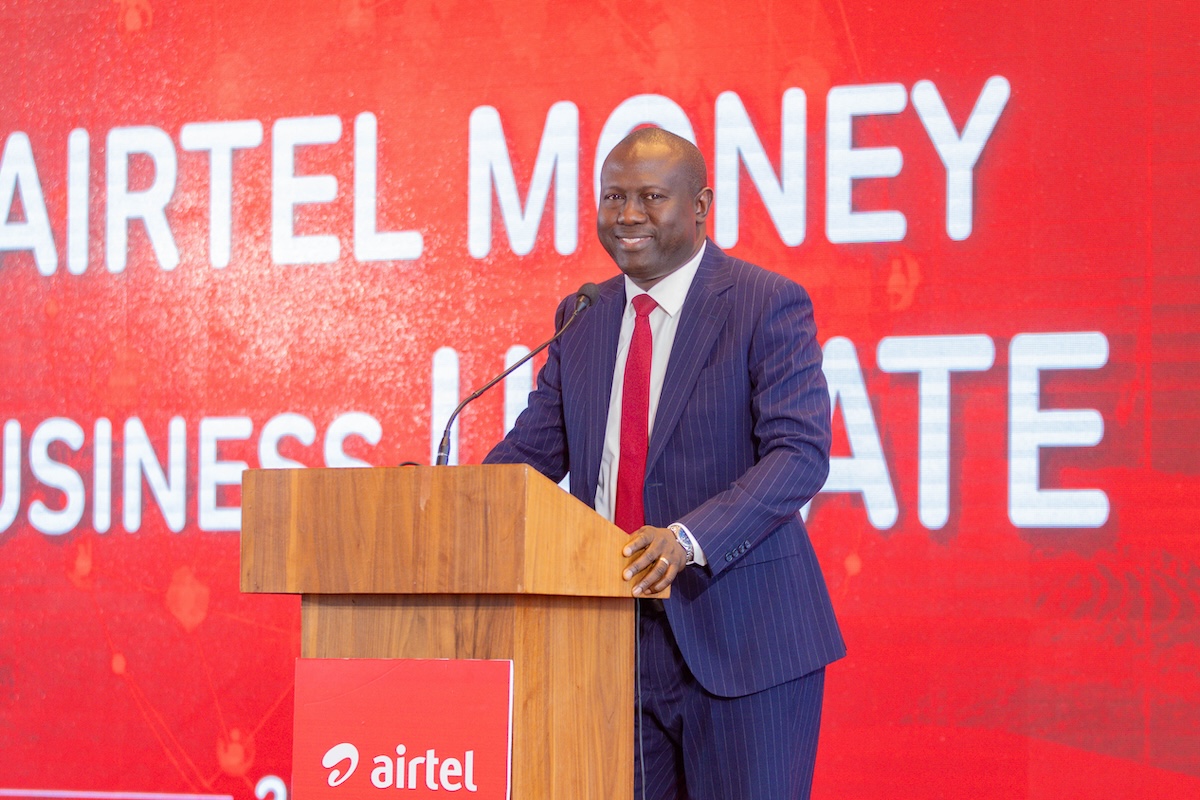
Airtel Kenya has secured a 25-year operating licence from the Communications Authority of Kenya (CA), concluding a prolonged licensing process and giving the country’s second-largest mobile operator a stable foundation for long-term investment. Granted under Kenya’s Unified Licensing Framework (ULF), the approval removes a long-standing regulatory hurdle and comes as Airtel accelerates investments across fibre broadband, enterprise connectivity, digital financial services, satellite communications and AI-ready infrastructure. The licence also places Airtel alongside Safaricom under Kenya’s revised long-term licensing regime, giving both operators greater certainty as they plan investments expected to shape the country’s digital economy over the next two decades.
The announcement closes a chapter that stretches back to 2015, when Airtel’s original operating licence expired. The operator continued serving customers under successive regulatory arrangements, including rights associated with its acquisition of YuMobile in 2014, before an out-of-court settlement with the Communications Authority in 2022 paved the way for renewal of the expired licence through 2025. A temporary extension running until January 2027 followed while discussions over long-term licensing continued. The latest approval now replaces those interim arrangements with a single 25-year, technology-neutral licence.
For Airtel, the significance extends well beyond regulatory compliance. Telecommunications investments are measured over decades rather than quarters. Fibre networks, spectrum assets, mobile infrastructure and hyperscale data centres require substantial capital, and operators are far more likely to commit those resources when they know the regulatory environment will remain stable throughout the life of those assets. The new licence gives Airtel a clearer planning horizon while reducing uncertainty around long-term capital allocation.
The approval also reflects a broader evolution in Kenya’s telecommunications regulatory framework. Both Airtel Kenya and Safaricom had been operating under temporary approvals while the Communications Authority reviewed the country’s licensing framework, spectrum management and related regulatory policies. Safaricom became the first operator to receive a 25-year licence earlier this year, and Airtel’s approval now completes the transition for Kenya’s two largest mobile network operators. Rather than isolated renewals, the approvals point to a regulatory model that provides operators with greater certainty to plan infrastructure investments over much longer time horizons.


That consistency matters because Kenya’s telecommunications sector is entering another investment cycle. Demand for cloud computing, artificial intelligence, enterprise connectivity and digital financial services continues to expand, while operators are extending fibre infrastructure, deploying additional network capacity and exploring satellite-enabled connectivity. These projects require long planning horizons and significant capital commitments that become easier to justify when regulatory certainty improves.
Airtel has already outlined where it intends to direct much of that investment. Since becoming Managing Director, Djibril Tobe has consistently identified fibre broadband, enterprise connectivity and digital financial services among the company’s strategic priorities. Rather than competing through pricing alone, Airtel is expanding its presence across multiple parts of Kenya’s digital economy.
That strategy is already evident across several initiatives announced in recent months. Airtel has entered Kenya’s fixed broadband market with fibre-to-the-home and fibre-to-the-business services, allowing it to compete for residential and enterprise customers beyond traditional mobile connectivity. Enterprise services also position the operator to benefit from growing demand for cloud infrastructure, cybersecurity and high-capacity digital networks as organisations modernise their operations.
The company is also investing in digital infrastructure through Nxtra by Airtel, which is constructing a 44MW AI-ready data centre campus in Tatu City. Scheduled for completion in 2027, the facility forms part of a broader investment programme designed to expand hyperscale data centre capacity across Airtel’s markets. The campus is intended to provide the computing capacity needed to support AI workloads, cloud services and enterprise applications closer to businesses operating across East Africa.
Satellite connectivity represents another important element of Airtel’s roadmap. The operator is awaiting regulatory approval to launch SpaceX’s Starlink Direct-to-Cell service in Kenya after completing pilot deployments. Once authorised, compatible smartphones would be able to connect directly to low-Earth orbit satellites whenever users move beyond the reach of conventional mobile towers, helping extend connectivity into remote areas where traditional mobile infrastructure is difficult or uneconomical to deploy.
Although satellite connectivity has attracted considerable attention, Airtel has consistently positioned the technology as a complement to terrestrial infrastructure rather than a replacement for existing mobile networks. Mobile towers, fibre backhaul and licensed spectrum will remain the foundation of nationwide connectivity, while satellite services provide an additional layer of coverage for locations where conventional infrastructure presents significant economic or geographical challenges.
Financial services remain another pillar of Airtel’s expansion strategy. Airtel Money has continued growing its customer base while expanding merchant services, cashback programmes and products for small businesses such as Bizna Wallet. The operator has also confirmed plans to introduce a mobile money overdraft product before the end of the current quarter as it seeks to deepen customer engagement within its payments ecosystem.
Viewed individually, these initiatives may appear distinct. Together, they illustrate Airtel’s ambition to build a broader digital platform that extends well beyond mobile voice and data. Fibre broadband, enterprise connectivity, AI-ready data centres, mobile financial services and satellite communications reinforce one another by expanding the range of services customers can access through the Airtel ecosystem.
The timing also aligns with developments at the parent company level. Bharti Airtel recently increased its effective ownership stake in Airtel Africa to more than 79 percent through a share-swap transaction while reporting stronger earnings, improved cash generation and lower leverage. Those developments strengthen the group’s balance sheet and provide greater financial flexibility as it continues investing across African markets.
Kenya remains one of Airtel Africa’s most strategic markets because of its mature telecommunications sector, vibrant technology ecosystem and growing enterprise demand. The country presents opportunities across connectivity, fintech, cloud infrastructure and digital services that extend beyond traditional consumer mobile subscriptions, making it an important market within Airtel’s broader African growth strategy.
Competition within Kenya’s telecommunications market is also evolving. Price remains important, but operators now compete across a much broader range of services than they did several years ago. Mobile money, enterprise connectivity, cloud infrastructure, fibre broadband, cybersecurity, AI infrastructure and satellite communications have become key areas where companies seek to differentiate themselves while building stronger relationships with consumers, businesses and public institutions.
Airtel’s new operating licence should therefore be viewed as more than an administrative renewal. It concludes a regulatory process that has unfolded over several years while giving the operator the certainty needed to plan investments over a 25-year horizon. More broadly, the approval completes Kenya’s transition to a new long-term licensing model for its two largest mobile network operators, creating a more predictable environment for investment in fibre networks, AI-ready data centres, enterprise connectivity, satellite communications and next-generation mobile infrastructure. That regulatory foundation is likely to influence the pace and scale of digital infrastructure investment across Kenya well beyond Airtel itself.
Go to TECHTRENDSKE.co.ke for more tech and business news from the African continent and across the world.
Follow us on WhatsApp, Telegram, Twitter, and Facebook, or subscribe to our weekly newsletter to ensure you don’t miss out on any future updates. Send tips to editorial@techtrendsmedia.co.ke