
Kenya's two new undersea fibre optic cables could strengthen East Africa's digital backbone before 2027

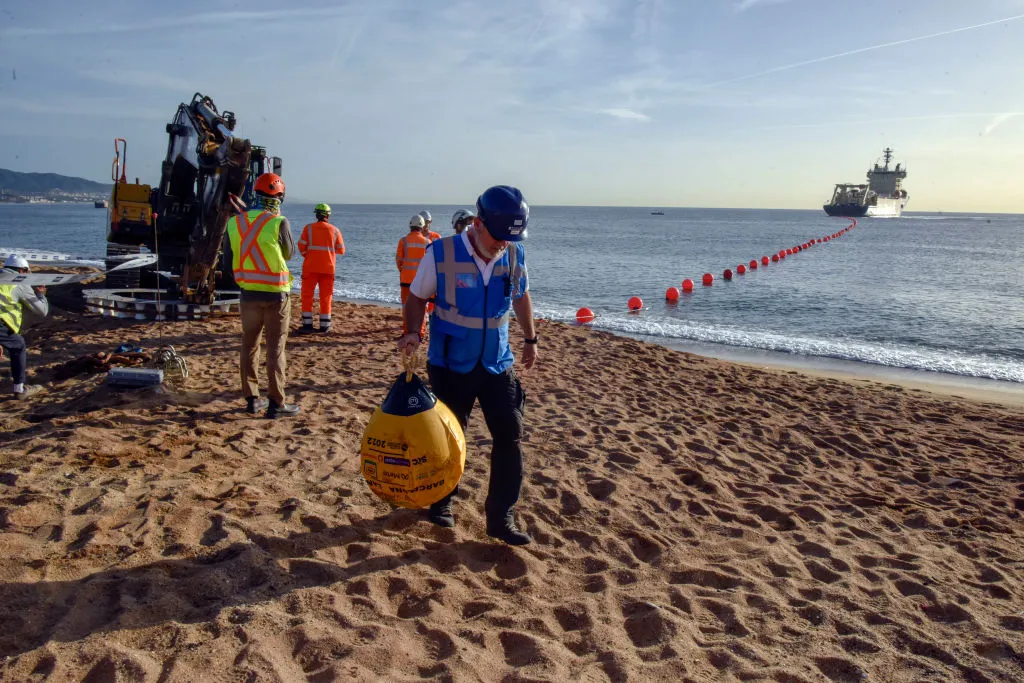
Kenya undersea fibre optic cables are set to expand again before 2027, strengthening the country’s position as one of Africa’s leading connectivity hubs at a time when demand for AI, cloud computing and digital services is rising rapidly. Two new international submarine cable systems are expected to land in Mombasa over the next two years, adding fresh capacity to an internet network that already recorded a 16.4 percent increase in available international bandwidth during the first quarter of 2026.
According to telecom research firm TeleGeography, the first project is a 4,108-kilometre subsea cable linking Oman and Mombasa through a partnership involving Meta and Safaricom. A second system, Africa-1, is expected to reach Kenya next year, extending from France through Africa to the Middle East. Together, the projects will add new international routes into East Africa while improving network resilience and expanding the country’s long-term internet capacity.
Submarine cables remain the foundation of the global internet, carrying the overwhelming majority of international data traffic between continents. Although low-Earth orbit satellite services have broadened internet access in underserved areas, fibre-optic cables continue to provide the scale, speed and economics needed for cloud platforms, enterprise networks, streaming services and artificial intelligence workloads.
Kenya already occupies a strong position in Africa’s connectivity landscape. The country has seven submarine cable landings, placing it behind Egypt, Djibouti, South Africa and Nigeria. Once the two planned systems become operational, Kenya will further strengthen its role as East Africa’s primary international internet gateway, giving businesses and internet providers additional routing options while reducing dependence on existing links.
The planned expansion comes as existing cable infrastructure is already being upgraded. The Communications Authority of Kenya reported that available international internet bandwidth rose from 24,161 Gbps to 28,130 Gbps during the quarter ending March 2026, representing growth of 16.4 percent. The largest increase came from SEACOM, whose provisioned capacity expanded from 6,850 Gbps to 10,500 Gbps, while EASSy, PEACE, Lion2 and DARE1 all registered smaller increases.
Those figures also reveal another important trend. While available bandwidth grew by 16.4 percent, utilized international bandwidth increased by 3 percent, suggesting operators are provisioning capacity ahead of future demand rather than waiting for networks to become congested. That approach reflects the growing need to support larger volumes of cloud traffic, enterprise applications and digital services.
Demand for connectivity continues to rise across the country. Mobile broadband subscriptions climbed to 52.9 million during the quarter, while mobile data subscriptions reached 62.6 million. Mobile broadband consumption also exceeded 800 million GB, with average data usage per subscription rising from 14.6 GB to 15.1 GB in just three months. Fixed internet subscriptions grew to 2.66 million, adding further pressure on international connectivity infrastructure.
Those usage trends help explain why major technology companies are investing directly in submarine cable networks. AI platforms, cloud computing services, software development environments, video streaming and enterprise collaboration tools all depend on high-capacity international fibre networks. Every interaction with cloud-hosted AI models generates traffic between users and data centres, placing greater demands on international internet infrastructure.
Google has previously said its latest submarine cable investments are intended to deliver industry-leading connectivity across multiple continents while supporting future AI services. Meta has also expanded its investment in global cable infrastructure as demand for digital services continues to grow.
For Kenya, the arrival of two additional submarine cables is about more than faster internet speeds. Greater international capacity improves network redundancy, reduces the impact of cable outages and strengthens the country’s appeal as a destination for data centres, cloud providers, fintech companies and digital businesses serving the wider East African market.
The upgrades also reflect a broader regional contest for digital infrastructure. Egypt remains Africa’s largest submarine cable hub with 15 cable landings, followed by Djibouti with 12, South Africa with nine and Nigeria with eight. Kenya’s current seven cable systems already make it one of the continent’s most connected markets, and the next two projects will further reinforce that position as governments and technology companies invest in the infrastructure needed to support the next generation of internet services.
Go to TECHTRENDSKE.co.ke for more tech and business news from the African continent and across the world.
Follow us on WhatsApp, Telegram, Twitter, and Facebook, or subscribe to our weekly newsletter to ensure you don’t miss out on any future updates. Send tips to editorial@techtrendsmedia.co.ke