
Safaricom Raises Pochi Fee-Free Limit to KSh200 as It Pushes More Everyday M-PESA Payments

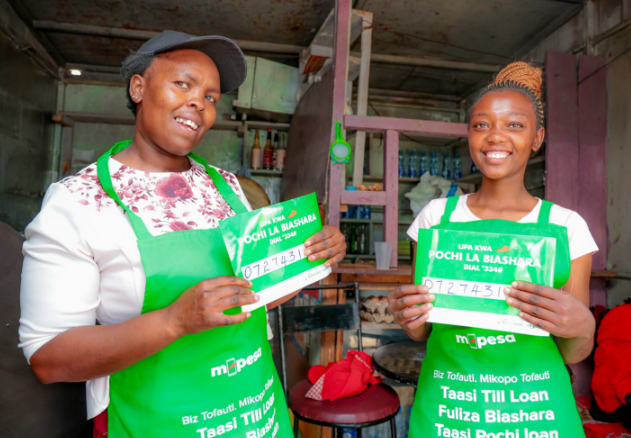
Safaricom is temporarily raising the fee-free payment limit on Pochi la Biashara from KSh100 to KSh200 as part of a broader reduction in M-PESA merchant charges aimed at making everyday digital payments more affordable. The revised Pochi tariffs will apply for 90 days from 1 August 2026, while additional reductions affecting Lipa na M-PESA Buy Goods and M-PESA Business Till transfers take effect from 7 August. Together, the changes are designed to lower the cost of accepting and making small digital payments while encouraging more transactions to remain within the M-PESA ecosystem instead of reverting to cash.
The announcement addresses a practical challenge that Safaricom says remains common despite Kenya’s high mobile money adoption. Customers often receive money through M-PESA but still withdraw cash before paying for groceries, fresh produce or matatu fares because many small merchants either do not accept digital payments or customers believe cash is the simpler option for low-value purchases. By extending fee-free Pochi payments to KSh200, Safaricom wants paying directly from an M-PESA wallet to become the default option for many everyday transactions.
Speaking during the announcement, Safaricom Chief Consumer Business Officer Fawzia Ali said the company intends to help more merchants adopt Pochi la Biashara so customers no longer feel compelled to convert digital money back into cash before making routine purchases.
“Pochi customers are now used to using M-PESA, but when they go to a market sometimes they feel they need to withdraw to buy tomatoes, potatoes or whatever they need. Or you’re in a matatu and you feel like you need to withdraw to pay the fare,” Ali said.

“What we are saying now is that we’re going to help all these merchants to have Pochi la Biashara so that they can be able to receive money as M-PESA. Previously, if you sent Pochi up to KSh100 you were not getting charged, but because we know there’s a bit of pressure at the moment we are increasing that limit to KSh200. So if a customer is paying fare for KSh150, they’ll not be charged. It will be free.”
Her comments illustrate that Safaricom is focusing on one of the final parts of Kenya’s payment journey where cash continues to dominate. Mobile money is widely used to send and receive funds, but many purchases at neighbourhood kiosks, open-air markets and on public transport still involve withdrawing cash before paying the merchant. Raising the fee-free threshold removes one of the costs associated with staying entirely within the digital payments ecosystem.
For the next 90 days, customers paying Pochi merchants will not incur transaction charges on payments of up to KSh200. Charges above that level have also been reduced, making small digital transactions more affordable across a wider range of everyday purchases.
The Pochi changes are also part of a broader refresh of Safaricom’s merchant payment pricing. From 7 August, businesses using Lipa na M-PESA Buy Goods will benefit from a higher fee-free collection limit, which rises from KSh200 to KSh500. Businesses transferring money from M-PESA Business Till accounts to M-PESA wallets or PayBills will also receive reductions of up to 50% on transfer charges. Safaricom said the revised tariffs are intended to support businesses while aligning with the Central Bank of Kenya’s pricing principles around customer centricity, transparency, fairness, competition and affordability.
Although the higher Pochi threshold may appear modest, it applies to the kinds of purchases millions of Kenyans make every day. A KSh200 limit comfortably covers many matatu fares, vegetables, groceries, household essentials and other routine purchases. Removing transaction charges for those payments reduces one more reason for customers to withdraw cash before completing a purchase.
The move also builds on a platform that has quietly become one of Safaricom’s fastest-growing merchant payment products. According to a GSMA study published in May, Pochi la Biashara had grown to about 1.5 million accounts during the first half of Safaricom’s 2026 financial year, representing 72.6% year-over-year growth. Revenue from the platform rose 95% to KES1.68 billion and contributed 19.2% of Safaricom’s total business payment growth during the period.
Those figures show Pochi has become an important part of Safaricom’s financial services business rather than simply another merchant wallet. Lowering transaction costs on one of its fastest-growing platforms reflects continued investment in a service that already serves a large and expanding merchant base.
The GSMA research also highlighted who is driving much of that growth. By the end of 2025, women accounted for just over 52% of active Pochi users, representing more than 900,000 merchants. Active female users grew by approximately 92% between December 2024 and December 2025, compared with 78% growth among men, making Pochi one of the few M-PESA products where women form the majority of active users.
For many merchants, Pochi has become more than a payment collection tool. The study found business owners use it to separate business income from household spending, making it easier to monitor cash flow, preserve working capital and understand whether their businesses are generating profits. Others cited the platform’s non-reversible payment feature as one of the main reasons they adopted it because it gives traders greater confidence that completed customer payments cannot easily be reversed.
The research also points to opportunities that remain. While awareness of features such as Lipa na Pochi was relatively high, actual usage remained lower, and services including mini-statements and airtime sales were still underused. That suggests Safaricom’s next challenge extends beyond registering more merchants to encouraging businesses to make fuller use of the platform’s capabilities.
Field research found that personal engagement remains the strongest driver of adoption. More than six in ten new users said they signed up after interacting with Safaricom field representatives, while recommendations from fellow traders ranked as the second most influential factor. The company also refined the product after merchants raised privacy concerns, removing visible phone numbers from payment confirmation messages, simplifying parts of the USSD journey and introducing targeted incentives to encourage merchants to try more features.
The latest tariff revisions follow that same pattern of refining services based on how customers actually use them. Rather than launching another standalone payment product, Safaricom is reducing friction in a platform that already plays an important role for merchants across Kenya’s informal economy. Together with lower Buy Goods collection charges and cheaper Business Till transfers, the changes reduce costs across different parts of the merchant payments ecosystem while encouraging more everyday transactions to remain digital.
If more merchants accept Pochi la Biashara and more customers choose to pay directly from their M-PESA balances, the benefits will extend beyond saving a few shillings in transaction fees. Fewer cash withdrawals, broader merchant acceptance and stronger participation in the digital economy would reinforce M-PESA’s role in Kenya’s day-to-day commerce. For Safaricom, raising the fee-free threshold from KSh100 to KSh200 is therefore more than a promotional pricing adjustment; it is a targeted effort to make digital payments the easiest option for the small, frequent transactions that take place across the country every day.
Download the free Kaspersky SMB Cybersecurity Guide here to learn how businesses can move beyond traditional antivirus and build a more resilient approach to cybersecurity.
Go to TECHTRENDSKE.co.ke for more tech and business news from the African continent and across the world.
Follow us on WhatsApp, Telegram, Twitter, and Facebook, or subscribe to our weekly newsletter to ensure you don’t miss out on any future updates. Send tips to editorial@techtrendsmedia.co.ke


