

Sim Manqina | Why Great Ideas Don’t Necessarily Translate Into Great Businesses

Entrepreneurs often believe that success starts with a great idea. It doesn’t. Ideas are plentiful. What is far less common is the ability to turn an idea into something customers genuinely want and are willing to pay for.
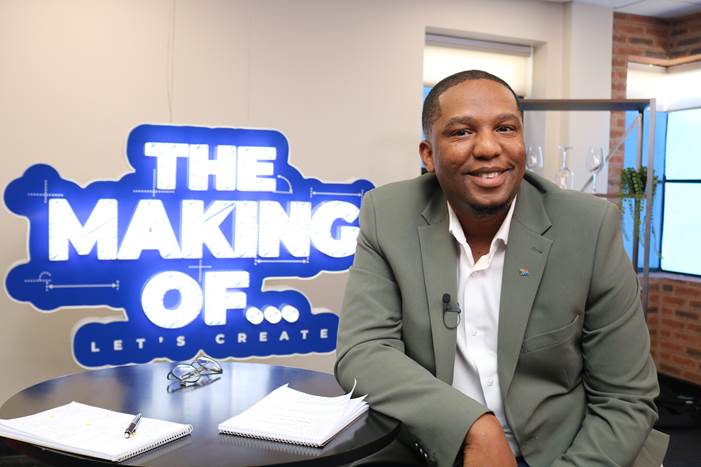
The businesses that succeed aren’t necessarily the ones built around the most original ideas. They’re the ones that can identify a real problem, develop a solution people value and bring it to market before the opportunity disappears. That is exactly what Engen The Making Of is designed to test.
Sponsored by Engen and powered by Raizcorp, the reality-based innovation competition places ten entrepreneurs under pressure to solve real-world business challenges. In just four hours, contestants must conceptualise market-ready products or services, test their commercial viability and present to a panel of industry experts. The compressed timeframe is not simply a test of speed; it is designed to reveal how entrepreneurs approach decision-making, problem-solving and execution when resources and time are limited. In business, customers do not buy ideas. They buy products and services that solve real problems.
According to Allon Raiz, CEO of Raizcorp, that distinction is important. “Most people place too much emphasis on having a great idea and not nearly enough on building something customers actually want. Ideas create possibilities, but products create businesses. The entrepreneurs who succeed are the ones who can make good decisions, adapt quickly and keep moving.”


Execution has become one of the clearest measures of business capability. Research by McKinsey found that organisations that make decisions faster than their competitors are twice as likely to outperform financially. It also found that improving both the speed and quality of decision-making can increase productivity by as much as 25%. This is not a marginal gain. It is often the difference between staying competitive and being left behind.
A compressed timeline exposes weaknesses that ordinary business conditions often allow teams to hide. When time is available, inefficiencies can be absorbed. Slow communication, too many approval layers and unclear leadership can be disguised as process. Under pressure, those weaknesses surface immediately. Speed forces clarity because there is no time for confusion.
It also forces a different way of working. Instead of spending weeks refining an idea, contestants must focus on developing a product or service with real market potential. They need to test assumptions, make decisions and build something viable quickly enough to prove it has value. The principle is simple: learn early, fail early if necessary and adapt quickly. The cost of getting it wrong at the beginning is far lower than discovering failure after months of investment.
This way of operating is particularly relevant in South Africa, where business conditions are rarely predictable. Entrepreneurs are faced with infrastructure instability, rising costs and fragmented systems as part of daily life. Working under pressure is not an occasional exercise. It is the operating environment. In this context, speed becomes less about efficiency and more about survival.
Pressure also has a way of unlocking resourcefulness. When time is limited, people stop waiting for ideal conditions and start working with what they have. They improvise, adapt and collaborate with greater urgency. The focus shifts away from perfection and towards progress. In many cases, the process reveals that the biggest obstacle was never a lack of resources, but a delay in making decisions.
Sim Manqina, Transformation and Stakeholder Engagement Strategist at Engen, believes this is where businesses discover what they are really capable of.
“When you remove time as a safety net, you strip away the luxury of overthinking and expose how a business really operates. You see very quickly whether a team can adapt, make decisions and keep moving when conditions are difficult. In South Africa, where constraint is part of doing business, this ability is often what separates an idea that survives from one that never gets off the ground.”
There is still a tendency in business to confuse slowness with thoughtfulness, as if taking longer automatically leads to better decisions. It often does not. Speed and quality are not opposites. Strong businesses understand that timing is part of strategy and that moving too slowly can be just as damaging as moving recklessly.
Download the free Kaspersky SMB Cybersecurity Guide here to learn how businesses can move beyond traditional antivirus and build a more resilient approach to cybersecurity.


