

Ahead of Galaxy Unpacked, Samsung Looks Ready to Broaden Its Foldable Lineup

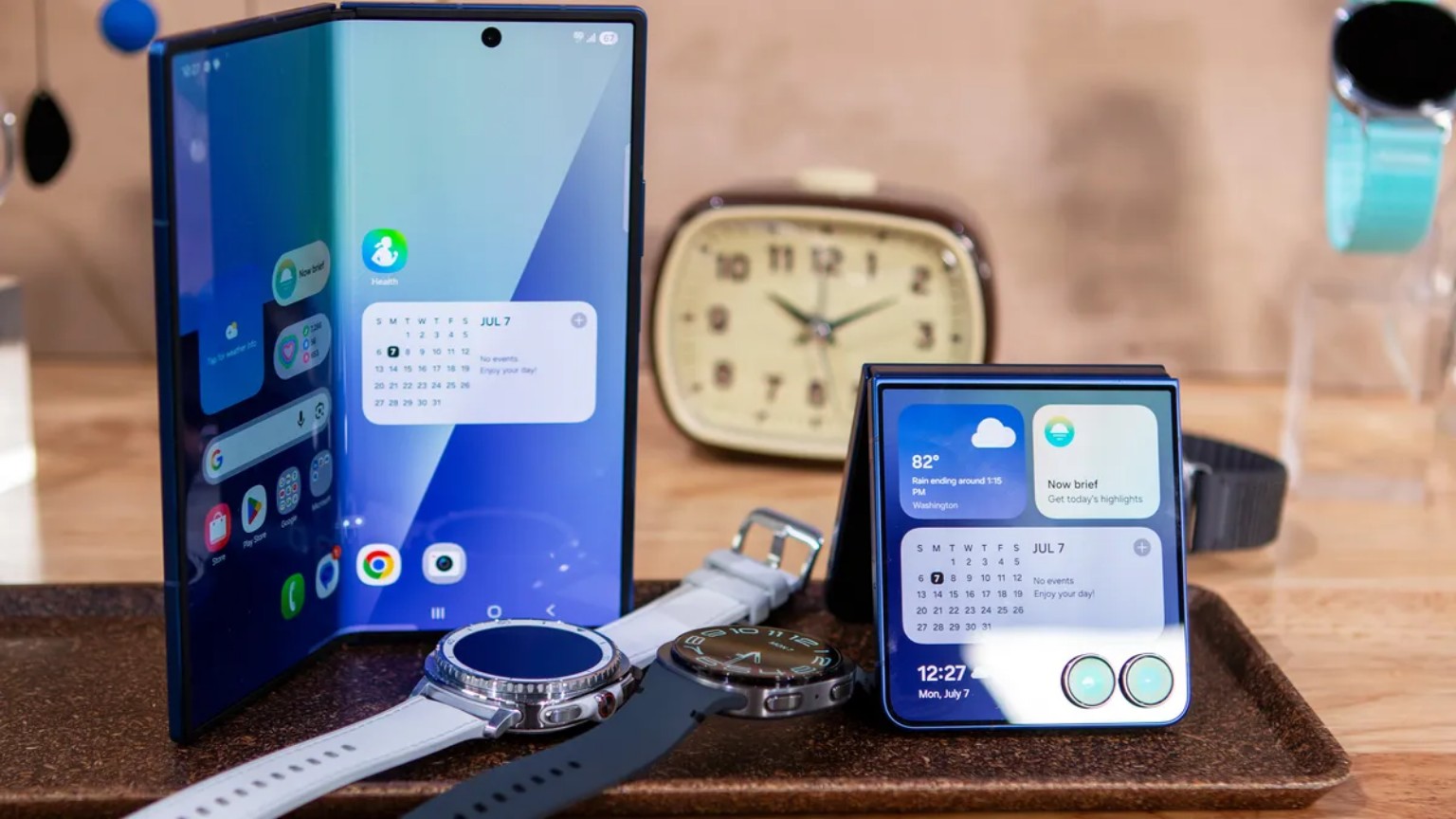
Samsung Galaxy Unpacked 2026 lands on July 22 with expectations of one of the company’s most comprehensive product launches in recent memory.
If you’re wondering what to expect at Samsung Galaxy Unpacked 2026, early reports point to much more than another generation of foldable phones. Samsung is widely expected to unveil three new foldables, two new Galaxy Watches, expanded Galaxy AI experiences, upgraded battery technology and a broader approach to its premium mobile lineup.
The event comes as the foldable smartphone market enters a different stage. The biggest question is no longer whether foldables belong in the mainstream, but which designs offer the best balance between portability, productivity and everyday usability. Samsung’s reported announcements reflect that evolution, placing greater emphasis on form factor and user experience alongside the annual hardware upgrades.
The timing is also notable. Apple is widely expected to introduce its first foldable iPhone next year, while Chinese manufacturers including Honor, Huawei, Oppo and Vivo continue refining their own devices. Samsung, which has led the foldable market since launching the original Galaxy Fold in 2019, now faces growing pressure to show that its next generation of devices can stay ahead of an increasingly competitive field.

Why Galaxy Unpacked 2026 Matters
Samsung has spent years making foldable smartphones thinner, lighter and more durable. Each generation has brought incremental improvements, but the overall formula has remained largely unchanged: one Galaxy Z Fold for productivity and one Galaxy Z Flip for buyers who preferred a compact design.
This year’s event looks set to break that pattern.
Instead of introducing only direct successors, Samsung is expected to split its Fold lineup into two distinct devices. Alongside the Galaxy Z Fold8 Ultra, reports suggest the company will unveil an all-new Galaxy Z Fold8 featuring a wider display designed to make multitasking, reading and media consumption feel more natural.
The move suggests Samsung is no longer treating every Fold customer as having the same priorities. Rather than asking one device to satisfy every premium buyer, the company appears to be creating clearer choices between productivity-focused hardware and its most feature-rich flagship.
Samsung’s own production plans appear to reinforce that thinking.
Industry reports indicate the company plans to manufacture around 2.8 million Galaxy Z Fold8 units, compared with roughly 2 million Galaxy Z Fold8 Ultra devices and 1.5 million Galaxy Z Flip8 units during the initial production cycle. If those figures prove accurate, the wider Fold8—not the Ultra or Flip8—would become Samsung’s highest-volume premium foldable.
Another noticeable change is where Samsung has placed its marketing emphasis.
Rather than focusing heavily on cameras or processor performance, the company’s teaser campaign has highlighted shape, proportions and industrial design. That aligns with reports that the Fold8 adopts a wider aspect ratio, suggesting the physical experience of using a foldable phone has become just as important as raw specifications.
With Apple preparing to enter the foldable market and rival Android manufacturers experimenting with different form factors, Galaxy Unpacked 2026 offers Samsung an opportunity to define what it believes the next generation of foldables should look like.
Galaxy Z Fold8 Headlines Samsung’s New Foldable Strategy
Among everything expected at Galaxy Unpacked, the Galaxy Z Fold8 may prove to be the most important announcement.
Unlike previous Fold devices, the new model is expected to feature a wider 4:3-style inner display. The adjustment may sound modest on paper, but it could fundamentally change how the phone feels during everyday use. Documents, websites, spreadsheets and videos would have more usable space, while split-screen multitasking could feel closer to working on a small tablet.
Many of this year’s reported improvements appear designed around usability rather than headline specifications. Samsung seems to be focusing on making the Fold easier to live with every day, whether that means reducing compromises on the cover display, extending battery life or making the unfolded screen feel more natural.
Expected specifications include a 7.6-inch foldable display, a 5.5-inch cover display, and the Snapdragon 8 Elite Gen 5 for Galaxy processor. Additionally, the device is expected to feature 12GB of RAM (with 16GB options on higher-capacity variants), a 4,800mAh silicon-carbon battery supporting 45W wired charging, and dual 50MP rear cameras.
One notable omission is a dedicated telephoto camera. Reports suggest Samsung is reserving its most advanced camera hardware for the Ultra model, giving buyers a clearer distinction between the two Fold devices.
The battery may represent one of the biggest hardware upgrades. If Samsung adopts silicon-carbon battery technology as expected, the Fold8 could deliver greater capacity without becoming thicker or heavier. That would mark one of the company’s most significant battery improvements since introducing the Fold series.
For buyers who have been interested in foldables but hesitant about narrow cover screens or awkward proportions, the Galaxy Z Fold8 may be Samsung’s clearest attempt yet to make the category feel less experimental and more practical for everyday use.
Galaxy Z Fold8 Ultra Builds on Samsung’s Flagship Foldable
While the Galaxy Z Fold8 introduces a different direction for Samsung’s foldable lineup, the Galaxy Z Fold8 Ultra appears focused on refining the company’s flagship experience.
Rather than redesigning the device from the ground up, Samsung is expected to concentrate on the areas users interact with every day: the display, battery, durability and overall finish.
The display is expected to receive several notable upgrades, including peak brightness of up to 3,000 nits, an anti-reflective display coating, and improved Ultra Thin Glass. Additionally, enhancements include reduced visibility of the display crease and a Flex Titanium hinge construction.
Taken together, these changes aim to make the Fold8 Ultra feel closer to a conventional flagship smartphone while preserving the flexibility of a foldable design.
Battery life is also expected to improve considerably.
Reports suggest Samsung will increase capacity from 4,400mAh on the Galaxy Z Fold7 to around 5,000mAh on the Fold8 Ultra while retaining 45W wired charging. Combined with Qualcomm’s Snapdragon 8 Elite Gen 5 for Galaxy processor, the larger battery could translate into longer productivity sessions, gaming and video playback between charges.
Camera upgrades appear more measured.
Samsung is expected to retain its 200MP primary camera while upgrading the ultra-wide sensor to 50MP. The 3x telephoto camera is also expected to remain, indicating the company has prioritised display quality, endurance and durability over a complete overhaul of the imaging system.
For many buyers, those refinements may prove more meaningful than an entirely new design. Foldable phones have now reached a stage where comfort, reliability and everyday usability matter just as much as introducing another eye-catching specification.
Galaxy Z Flip8 Focuses on Everyday Refinement
The Galaxy Z Flip8 is expected to receive a more measured update than its Fold siblings, but that doesn’t necessarily make it less important.
Samsung’s compact foldable has become the entry point for many buyers interested in the category, and this year’s improvements appear aimed at polishing the experience rather than changing it completely.
Reports suggest the Galaxy Z Flip8 will feature either the Snapdragon 8 Elite Gen 5 for Galaxy or the Exynos 2600 processor, depending on the market, wrapped in a slightly thinner and lighter design. Additionally, it is expected to include a 50MP main camera, a 12MP ultra-wide camera, a battery capacity of around 4,300mAh, and support for 45W wired charging.
While the camera system is expected to remain largely unchanged, Samsung appears to have focused on improving efficiency, battery life and thermal performance.
That approach reflects a broader theme running through this year’s Galaxy lineup. Instead of chasing dramatic specification increases, many of the reported upgrades aim to make the devices more comfortable to use over months and years rather than simply standing out on launch day.
Galaxy Watch Ultra2 Gets Its Biggest Upgrade Yet
Samsung’s wearables could be among the biggest beneficiaries of this year’s event.
The Galaxy Watch Ultra2 is expected to receive several substantial hardware improvements, making it one of the largest upgrades since Samsung introduced the Ultra series.
Leaked specifications include a 5,000-nit AMOLED display, the Snapdragon Wear Elite processor, and a large 800mAh battery. Additionally, the device features a rugged titanium case with an upgraded IP69K durability rating, all housed within a body that is roughly 12% thinner than before.
The brighter display should improve visibility outdoors, while the larger battery could allow longer GPS tracking sessions and multi-day use between charges.
Samsung is also expected to improve durability, reinforcing the Ultra’s position as the company’s smartwatch for outdoor enthusiasts, athletes and users who need a more rugged wearable.
Galaxy Watch9 Expands Samsung’s AI Health Features
The standard Galaxy Watch9 may not receive the same dramatic hardware overhaul, but software is expected to become a much bigger part of its story.
Reports indicate Samsung will pair the Snapdragon Wear Elite platform with a new version of One UI Watch built on Wear OS.
Health remains one of Samsung’s biggest priorities.
Expected additions include an Energy Score, a Running Coach, Vitals monitoring, and Sleep Apnea Detection. Additionally, the software updates are set to feature an enhanced Sleep Score alongside skin temperature tracking.
Google Gemini is also expected to play a larger role across Samsung’s wearables, allowing more natural voice interactions and personalised assistance directly from the wrist.
Rather than introducing isolated AI features, Samsung appears focused on making its health ecosystem work more seamlessly across phones, watches and connected services.
Galaxy AI Continues to Spread Across the Ecosystem
Artificial intelligence is expected to feature throughout Galaxy Unpacked, but not as a standalone announcement.
Instead, Galaxy AI appears set to become the layer connecting Samsung’s expanding ecosystem of devices.
The company is expected to demonstrate new AI-powered health experiences, deeper Gemini integration and features that work across smartphones and smartwatches instead of remaining confined to individual devices.
That reflects another theme running through this year’s event. Samsung appears to be positioning its devices less as individual products and more as parts of a connected ecosystem where information, recommendations and assistance move naturally between screens.
Expected Prices
Samsung is expected to confirm pricing during Galaxy Unpacked, but leaks have already offered an early indication of where the new devices could land.
For readers in Kenya, however, local pricing is often influenced by more than Samsung’s global announcement.
Previous Galaxy foldables were sold locally through both official retail channels and independent importers, with prices varying depending on storage configurations, availability and retailer mark-ups.
For reference, Samsung Kenya introduced the previous generation at the following recommended prices:
| Device | Launch Price in Kenya |
|---|---|
| Galaxy Z Fold7 | KSh 254,999 |
| Galaxy Z Flip7 | KSh 149,999 |
| Galaxy Watch Ultra | KSh 89,999 |
| Galaxy Watch8 | From KSh 44,999 |
Based on the leaked European pricing and current exchange rates, the upcoming devices could broadly translate to:
| Expected Device | Leaked European Price | Approximate Kenya Equivalent* |
|---|---|---|
| Galaxy Z Fold8 | €1,999 | Around KSh 300,000 |
| Galaxy Z Fold8 Ultra | €2,199 | Around KSh 330,000 |
| Galaxy Z Flip8 | €1,299 | Around KSh 195,000 |
| Galaxy Watch9 | €409–€459 | Around KSh 62,000–69,000 |
| Galaxy Watch Ultra2 | €749 | Around KSh 113,000 |
*Indicative currency conversions before taxes, import duties and retailer pricing.
Samsung will announce official pricing during Galaxy Unpacked, while local availability and Kenyan retail prices are expected to follow in the weeks after the event.
What Samsung May Not Announce
Not every rumoured Galaxy product appears ready for a full unveiling.
Samsung has been linked with smart glasses and a new open-ear audio device known as Galaxy Able. Both could receive a brief preview during the presentation, but neither is widely expected to become immediately available.
Likewise, there has been little indication that Samsung plans to introduce another Fan Edition foldable this month, making Galaxy Unpacked likely to remain focused on the company’s premium lineup.
As with previous events, Samsung could also reserve a few software announcements or ecosystem updates as surprises for the keynote itself.
More Than a Showcase of New Hardware
Galaxy Unpacked 2026 is shaping up to be more than a launch event for new smartphones and smartwatches.
The expected announcements paint a picture of a company refining its premium ecosystem on several fronts at once. Foldables are becoming more specialised, wearables are taking on a larger role in health monitoring, and Galaxy AI is being woven more deeply across Samsung’s products rather than treated as a standalone feature.
The event also arrives at an important moment for the wider smartphone industry. Apple is expected to enter the foldable market next year, while manufacturers such as Honor, Huawei and Oppo continue experimenting with different approaches to foldable design. That competitive backdrop makes Samsung’s product decisions on July 22 especially significant.
Rather than asking whether foldable phones belong in the mainstream, Samsung now appears focused on answering a different question: what kind of foldable best fits the way people actually use their devices.
Galaxy Unpacked 2026 should provide the clearest picture yet of how the company intends to answer that question, not just with new hardware, but with an ecosystem designed to tie together smartphones, wearables and artificial intelligence into a more cohesive experience.
Download the free Kaspersky SMB Cybersecurity Guide here to learn how businesses can move beyond traditional antivirus and build a more resilient approach to cybersecurity.


