
BasiGo Brings Public EV Fast Charging to More Kenyan Towns Through Rubis Deal

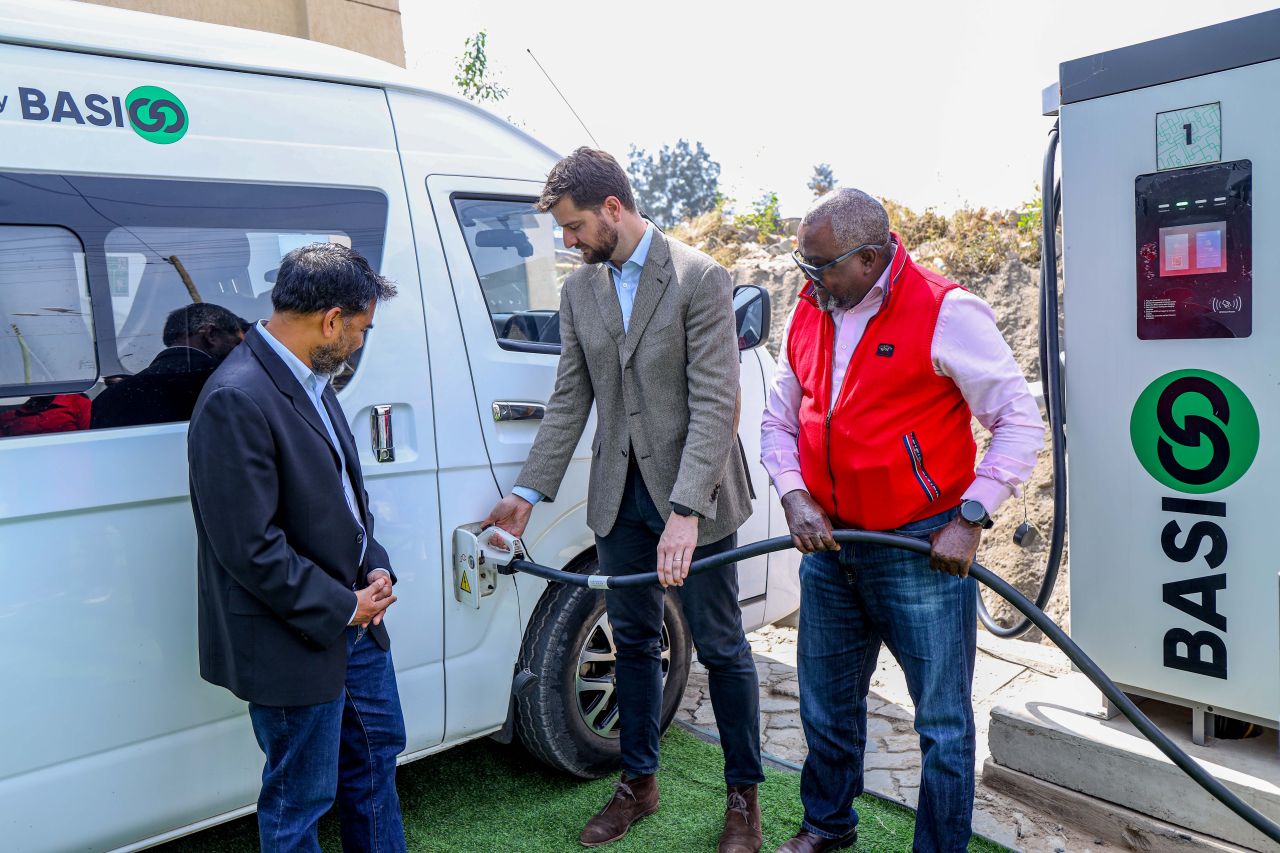
Electric bus company BasiGo and Rubis Energy Kenya have partnered to launch a network of fast-charging stations along Kenya’s major transport corridors, a move expected to strengthen the country’s electric vehicle (EV) infrastructure and support the adoption of electric mobility beyond Nairobi.
The first charging station under the partnership is already operational at the Rubis service station in Sabaki, Athi River, while additional facilities in Meru, Nanyuki and Nyeri are set to open later this month.
The charging stations will be accessible to the public and are designed to serve a broad range of electric vehicles, including buses, vans, trucks and passenger cars, providing greater charging access for both commercial and private EV users travelling on inter-city routes.
The Sabaki station features 100kW DC fast chargers compatible with both CCS2 and GB/T standards, enabling a typical electric bus or van to recharge in less than an hour. Similar charging technology will be installed at the remaining locations, with charging expected to cost approximately KES 48 per kilowatt-hour.


BasiGo Chief Executive Officer and Co-Founder Jit Bhattacharya said the partnership addresses one of the biggest barriers to electric mobility by extending charging infrastructure beyond urban centres.
“Scaling electric mobility requires infrastructure, and that’s exactly what this partnership with Rubis is building. We are creating the infrastructure that will power EV operations beyond Nairobi and connect communities across Kenya,” he said.
BasiGo Kenya Managing Director Moses Nderitu said the focus has moved from assessing demand for electric vehicles to addressing the need for sufficient charging infrastructure to enable large-scale adoption. He said expanding charging networks along key transport corridors would strengthen the case for electric mobility by making inter-city electric transport more practical, reliable and commercially viable.
Rubis Energy Kenya Managing Director Frederic Maupetit said leveraging the company’s retail network for EV charging reflects its commitment to supporting Kenya’s transition to cleaner energy.
Rubis Energy East and Southern Africa Chief Executive Officer Olivier Sabrie reiterated that Kenya is emerging as a key market for the company’s energy transition strategy, adding that the partnership demonstrates Rubis’ evolution from a traditional fuel distributor to a broader energy solutions provider.
Additionally, BasiGo says it currently operates East Africa’s largest network of DC fast chargers for electric vehicles and plans to continue expanding charging infrastructure across strategic transport corridors in Kenya and other regional markets as demand for electric mobility grows.
The expansion comes as Kenya continues to invest in cleaner transport solutions, with charging infrastructure increasingly viewed as a critical requirement for accelerating electric vehicle adoption and reducing range anxiety among operators.
Download the free Kaspersky SMB Cybersecurity Guide here to learn how businesses can move beyond traditional antivirus and build a more resilient approach to cybersecurity.


