
Airtel Money deepens its banking push through Pesalink's interconnected payment network

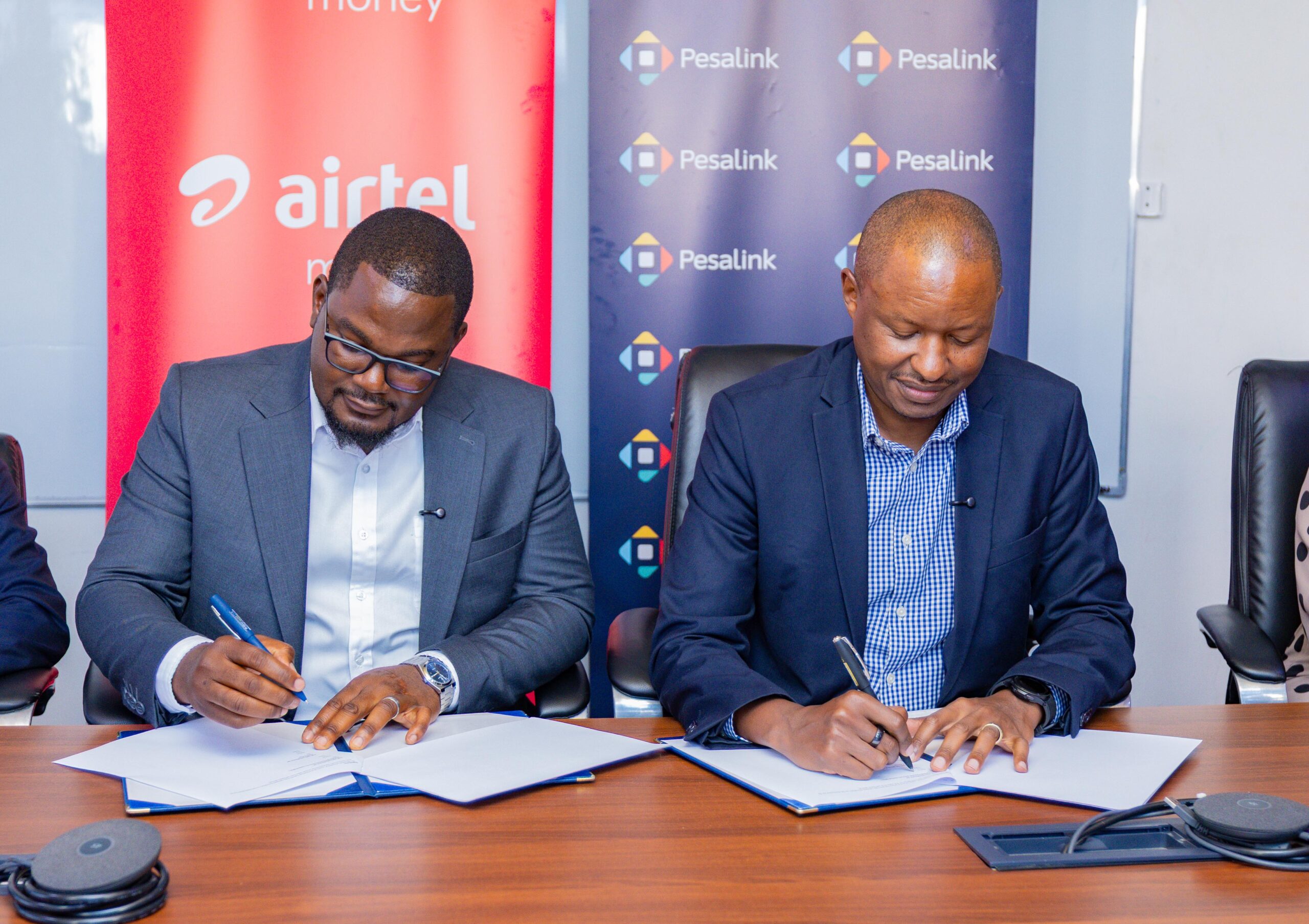
Airtel Money’s access to Kenya’s banking system is expanding through a payment network that already connects financial institutions across the country. Its latest integration with Pesalink gives customers access to 30 banks, SACCOs and microfinance institutions, extending the destinations available for transfers from mobile money wallets.
The Airtel Money Pesalink integration allows customers to move funds directly into participating bank and financial institution accounts without relying on separate bilateral connections between Airtel Money and each institution. Integrated Payment Services Limited (IPSL), which operates Pesalink on behalf of the Kenya Bankers Association, provides the shared infrastructure supporting these transactions.
The arrangement gives Airtel Money another route into the banking system as it builds on existing relationships with individual financial institutions. It also demonstrates how shared payment networks can extend the reach of mobile money services without requiring every provider to establish independent technical connections with every bank.
Pesalink becomes a shared route into Kenya’s financial institutions
The significance of the arrangement lies partly in the infrastructure behind it. Pesalink allows participating institutions to exchange payments through a common network, reducing the need for separate bilateral integrations and agreements. Airtel Money can therefore connect to multiple financial institutions through one payment infrastructure rather than maintaining individual technical arrangements for each destination.



IPSL describes Pesalink as an open and interoperable account-to-account payment network supporting transactions across banks, telecommunications companies, fintechs and SACCOs. The company says its network has more than 190 connected institutions, while the partnership announcement describes its reach as extending to more than 200 banks, telcos, fintechs and SACCOs.
The 30 institutions accessible through Airtel Money represent the coverage available to its customers through this particular integration, rather than the entire Pesalink network.
The partnership also follows another expansion of Pesalink’s role in Kenya’s financial infrastructure. On November 4, 2026, TechTrendsKE reported that Postbank had opened more than 600 agent locations to customers of other financial institutions through Pesalink. That arrangement extends interoperability into physical banking access, allowing participating institutions to use an existing agent network rather than build separate distribution arrangements.
The Airtel Money agreement applies the same shared-infrastructure principle to digital transfers. One connection provides access to multiple financial institutions, giving the mobile money operator a wider destination network for customer transactions.
For customers, the service is available through the MyAirtel App and USSD. App users select the Pay Bill option, choose their preferred bank, enter the account number and transaction amount, then complete the transfer. Customers using feature phones can access the service by dialling *334#.
The integration also includes account verification, allowing customers to confirm the recipient’s bank name and account details before completing a transaction. This adds a verification step to the transfer process, although the announcement does not specify the applicable transaction charges or transfer limits.
Airtel Money builds on its existing banking partnerships
The Pesalink connection extends an approach Airtel Money has been pursuing through relationships with individual banks and financial service providers.
In June 2026, Airtel Money partnered with KCB Group to give its customers access to more than 22,000 KCB agents for cash deposits and withdrawals. The arrangement expanded Airtel Money’s physical distribution by allowing customers to use an established banking network.
Airtel also partnered with I&M Bank in December 2025 to enable direct merchant payments, adding another route through which its wallet could support transactions outside its own customer network. Its existing relationships with banks, including Absa and KCB, have also contributed to its bank-to-wallet and wallet-to-bank services.
The Pesalink arrangement differs because it uses shared payment infrastructure to connect multiple participating institutions. Instead of relying exclusively on individual banking partnerships, Airtel Money can extend its coverage through a network whose participants are already connected.
This expansion comes as Airtel Money works to increase its position in Kenya’s mobile money market. TechTrendsKE reported in September 2026 that Airtel Money’s market share had increased from 10.9% to 11.1% between the third and fourth quarters of the 2025/26 financial year. The same reporting placed Kenya’s mobile money subscriptions at 54 million by June 2026.
A separate interview published by TechTrendsKE on September 28 quoted Acting Managing Director Michael Bonke explaining how interoperability had influenced Airtel Money’s growth strategy. He said customers could maintain multiple mobile money wallets and move funds between networks without abandoning their primary provider.
Bonke also described the company’s expansion of its agent network from fewer than 20,000 outlets to approximately 270,000. He identified customer access and the ability to transact across networks as important considerations in attracting users.
The Pesalink integration extends that strategy beyond mobile money networks into a wider selection of bank and financial institution accounts.
Banks and mobile money operators compete for digital transactions
The expansion of wallet-to-bank connectivity is taking place alongside efforts by banks to make their own account-to-account payment services more attractive.
TechTrendsKE reported in July 2026 that 19 banks and microfinance banks had adopted a simplified Pesalink pricing structure. Under the arrangement, transfers of up to KSh1,000 were free, while transactions above KSh1,000 and up to KSh999,999 attracted a flat KSh20 charge.
The pricing changes addressed one of the factors influencing the use of bank transfers: the cost of moving money between institutions. Lower charges make direct account-to-account transactions more accessible to customers who might otherwise use mobile money as an intermediary.
Airtel Money’s integration addresses a different part of the same customer requirement. Rather than requiring customers to move funds through another mobile money account or rely on individual bank integrations, the service provides a direct route from an Airtel wallet to participating financial institution accounts.
The two developments point to a payment market in which banks and mobile money operators are extending their services into one another’s traditional areas of activity. Banks are making digital transfers more accessible, while mobile money providers are expanding the number of financial institutions their customers can reach.
SACCO participation is particularly relevant to this expansion. TechTrendsKE’s September 2026 coverage of Kenya’s SACCO sector reported that regulated SACCOs held KSh1.21 trillion in assets in 2025. Their growing importance in the country’s financial system makes connections to interoperable payment networks relevant beyond conventional commercial banking.
For Airtel Money, access to SACCOs and microfinance institutions expands the potential usefulness of its wallet among customers whose financial relationships extend beyond the largest commercial banks.
Agent and merchant services remain the next expansion
The agreement also provides a framework for additional services, although these have not been introduced as part of the current launch.
Airtel Money and IPSL plan to progressively extend the partnership to cash-in and cash-out transactions through Airtel’s agent network, alongside person-to-merchant (P2M) payments.
The proposed agent functionality would extend the use of shared infrastructure beyond digital transfers, potentially allowing customers of participating institutions to access additional cash services through Airtel’s distribution network. Merchant payments would take the partnership into another segment of everyday transactions.
These plans align with Airtel Money’s broader efforts to increase the number of activities customers can complete through its wallet. Its Bizna Wallet product, introduced in 2026, targets small businesses with tools for receiving payments, managing business transactions and separating business finances from personal funds.
The wider commercial strategy also extends to online payments and financial services. TechTrendsKE’s September 2026 reporting on Airtel Money’s proposed London listing described the company’s ambition to grow its digital payments business beyond traditional cash deposits and withdrawals, encompassing transfers, bill payments, goods and services and other financial products.
Michael Bonke said the Pesalink partnership would extend Airtel Money’s reach into the wider financial ecosystem and make it easier for customers to move funds between mobile wallets and bank accounts.
IPSL CEO Gituku Kirika said the integration connects banking payment rails with mobile money ecosystems, giving customers more choice in how they make everyday payments.
The immediate service covers transfers to 30 financial institutions. Its planned extensions into agent transactions and merchant payments could give the partnership a wider role in how customers and businesses access financial services across Kenya.
Go to TECHTRENDSKE.co.ke for more tech and business news from the African continent and across the world.
Follow us on WhatsApp, Telegram, Twitter, and Facebook, or subscribe to our weekly newsletter to ensure you don’t miss out on any future updates. Send tips to editorial@techtrendsmedia.co.ke

