
Foreign investors strengthen their grip on Kenya's supermarket industry as Quickmart IPO reshapes ownership

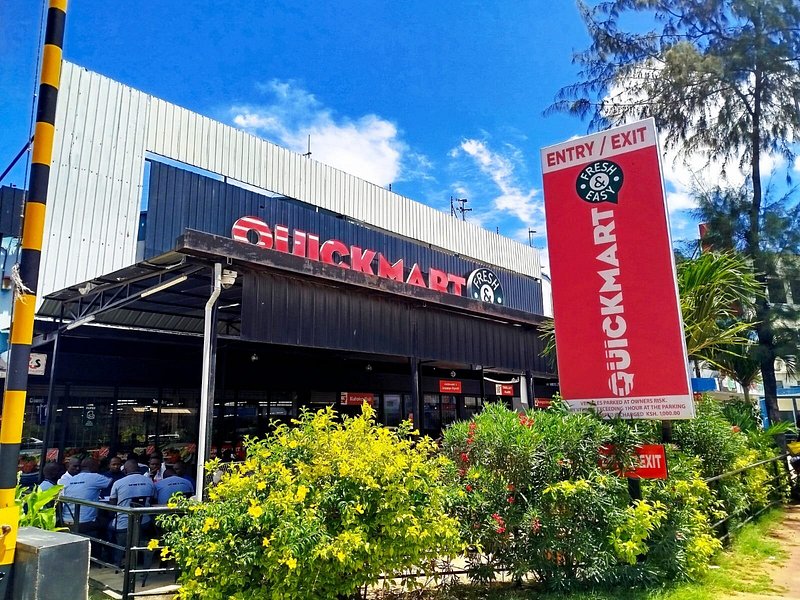
The final allocation figures show that foreign ownership rose from 50.8% before the offer to 52.9% afterwards. Founders and local investors collectively hold the remaining 47.1%, down from 49.2%. The change reflects the composition of the shares sold and the allocation of the offer, rather than a new capital injection into Quickmart.
Adenia Partners and its associates retained 25.4% of the supermarket after selling half of their original stake. The private equity firm had acquired a majority interest in Quickmart in 2019, following its earlier investment in Tumaini in 2018. The two businesses were subsequently brought together under the Quickmart brand.
The IPO therefore changes the distribution of ownership without removing Adenia from the shareholder register. Its retained holding remains a significant part of the foreign-owned share base, alongside the stakes taken by the four cornerstone investors and other international shareholders.
International institutions secure sizeable positions
Four cornerstone investors acquired a combined 21.6% stake in Quickmart. The International Finance Corporation (IFC) received 258 million shares, equivalent to 6.45% of the retailer, against an initial commitment of KSh1.94 billion. US-based 337 Frontier received 259.7 million shares, representing 6.5%, while UK fund manager RWC LLC secured 173.15 million shares, or 4.32%, against its KSh1.3 billion commitment.


The UK government-backed MOBILIST programme received 173.33 million shares, equivalent to 4.33%. Its final allocation was lower than the initial commitment of KSh1.94 billion, with the programme reducing its subscription to accommodate demand from local investors. The four institutions now hold positions that give international institutional capital a substantial presence in the supermarket’s shareholder base.
Other foreign investors received 236 million shares, representing 5.9% of Quickmart. They had applied for 476.8 million shares, meaning their final allocation covered less than half of the demand. Taken together with Adenia’s retained stake and the cornerstone holdings, these investors account for the 52.9% foreign ownership recorded after the IPO.
The allocation also left local retail and institutional investors with a smaller proportion of the offer than initially envisaged. Their pool was reduced from 1.34 billion shares, equivalent to 67% of the IPO stock, to 880 million shares, or 44%. The final ownership figures therefore show how the offer brought in new international shareholders while reducing the relative position of local investors.
Foreign capital already has a significant presence in the sector
Quickmart’s new ownership structure sits within a supermarket market where two of its largest competitors also have substantial foreign shareholding. Naivas, which held an estimated 31% of the market in 2025, is 51% owned by a consortium led by Mauritius-based IBL Group. The family of its late founder, Peter Mukuha, holds the remaining 49%.
IBL’s exposure to Naivas also runs through Mambo Retail, in which it has an indirect 37.33% interest alongside French development finance institution Proparco and Germany’s DEG. Naivas reported revenue of KSh123.66 billion for the financial year ended June 2026, an 11% increase from KSh111.34 billion. Its net profit rose 41.7% to KSh3.37 billion from KSh2.38 billion in the previous financial year.
Carrefour Kenya is wholly controlled by UAE-based Majid Al Futtaim, which entered the market in 2016. The retailer recorded revenue growth of 13.7% to AED1.386 billion, from AED1.219 billion in 2024. Its estimated market share stood at 14% in 2025, placing it close to Quickmart’s 15%, while Naivas remained the largest operator.
The three retailers accounted for an estimated 60% of Kenya’s supermarket revenue in 2025. Magunas held 6%, while Foodplus accounted for 4%. The figures place the country’s three largest chains in a market where foreign investors have interests across the leading operators, although their ownership arrangements differ.
Quickmart’s scale gives investors exposure to an expanding retailer
Quickmart had 72 outlets across 16 counties and more than 8,000 employees by August 2026. Its revenue reached KSh50.43 billion in 2025, up 9.3%, while statutory net profit increased 33% to KSh1.51 billion. The retailer also reported adjusted profit after tax of KSh1.7 billion for the year, a separate measure from its statutory net profit.
The company has expanded in a market reshaped by the collapse or contraction of several established chains. Nakumatt and Tuskys collapsed, Uchumi scaled back its operations, while international retailers Shoprite and Choppies exited Kenya. Naivas, Quickmart and Carrefour have continued expanding as the market consolidated around a smaller group of large operators.
However, the IPO does not provide Quickmart with fresh funds to finance that expansion. The offer involved existing shareholders selling half of their four billion shares, with the proceeds going to the selling shareholders rather than into the retailer’s balance sheet. The transaction has therefore widened the shareholder base and changed the balance of ownership without directly increasing the company’s expansion capital.
Quickmart’s position in the market will continue to depend on its ability to grow its store network and compete with Naivas and Carrefour. Its IPO has brought more international institutional investors into the business, but the final ownership figures also show that foreign shareholders now collectively hold the larger stake in one of Kenya’s biggest supermarket chains.
Go to TECHTRENDSKE.co.ke for more tech and business news from the African continent and across the world.
Follow us on WhatsApp, Telegram, Twitter, and Facebook, or subscribe to our weekly newsletter to ensure you don’t miss out on any future updates. Send tips to editorial@techtrendsmedia.co.ke

