
Interview: Liquid bets on AI as next growth frontier for Africa’s fibre network

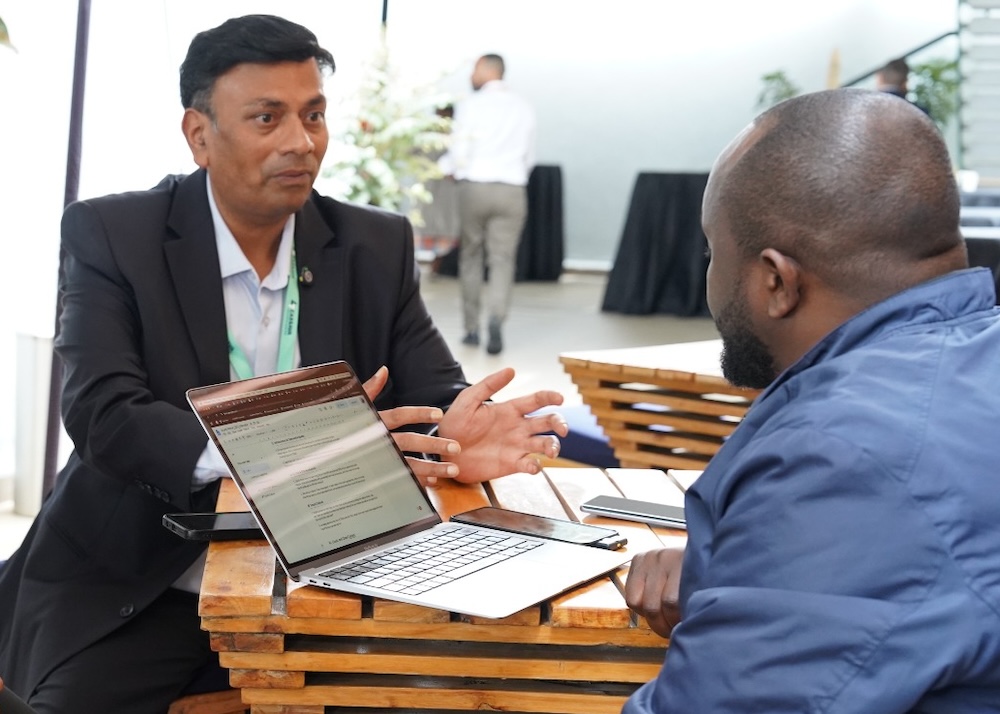
Liquid Intelligent Technologies Kenya is repositioning itself beyond its legacy as a connectivity provider, pushing to layer AI, cloud and cybersecurity services onto its fibre backbone as the next phase of growth for the Cassava Technologies-owned operator.
Liquid Kenya Vice President and CEO Neeraj Pradhan, who has led the company for nearly a year after almost nine years at Liquid, told TechTrends Media, on the sidelines of ITW Africa 2026 in Nairobi, that the shift reflects a deliberate strategy to build on the firm’s connectivity foundation.
“Connectivity becomes the foundation of the digital infrastructure. Going forward, that is going to be the base,” Pradhan said. “If you have a foundation, you should build a good house on it, and that’s what we are trying to do.”
He pointed to Liquid’s AI factory in Cape Town, its first, and a fresh announcement covering Egypt, as evidence of the company’s push into artificial intelligence infrastructure across the continent.


Pradhan said the loudest conversation among telecom leaders at this year’s ITW Africa centred on data centre investment, with Africa accounting for just 0.6 percent of the world’s data centre capacity, a gap he said dominated discussions at the event’s ministerial breakfast. Cross-border connectivity was the other recurring theme, he said.
On why building and maintaining fibre infrastructure across Africa remains financially complex, Pradhan pointed to the sheer scale and diversity of the continent, spanning deserts, savannahs, coastlines, forests and mountains, each presenting different construction and regulatory challenges.

“We as a continent are blessed with many things. Cultures are different, terrain is different… laying a fibre changes based on the conditions,” he said, adding that aligning regulation across 40 to 50 nations remains a persistent hurdle. “Even today, the EU is not on the same page, which is the longest union kind of thing.”
Liquid’s East African footprint now covers Kenya, Tanzania, Rwanda, Uganda and South Sudan, connected through the company’s own metro and national long-distance fibre networks. Pradhan said further investment decisions are now driven strictly by usage patterns rather than speculative build-out.
“Gone are those days where you will build in anticipation,” he said, referencing Liquid’s 116,000km fibre network stretching from Cape Town to the East Coast. He said AI-driven consumption, alongside cloud, would define the next wave of network demand.
On whether Africa’s existing connectivity infrastructure can support the bandwidth and low-latency demands of localised AI, Pradhan argued that routing AI workloads through regional data hubs, rather than shipping data to other continents via submarine cable, would ease pressure on subsea capacity and keep terrestrial fibre upgrades, which he described as easier and cheaper than undersea repairs, ahead of demand.
Liquid recently launched GPU-as-a-service in partnership with Nvidia, a move Pradhan said is aimed at reducing latency and improving user experience for local businesses and start-ups.
“The closer we bring [infrastructure], the better user experience it is. And it allows a lot of start-ups also to be very competitive,” he said, noting that latency issues during funding pitches or product demos can cost young companies critical opportunities.
Pradhan cited a past East Coast submarine cable cut that knocked seven to eight countries offline for extended periods as a key argument for keeping African data processed and stored on local infrastructure.
“People could not access their own data,” he said of the outage, recalling repeated system checks during the disruption. He said localised, regionally governed data hubs would not eliminate outages entirely but would significantly cut recovery times compared with repairing undersea cable faults, which have historically taken a week to twenty days to fix.
To improve resilience, Liquid has added a third route between Mombasa and the Uganda border, supplementing its previous two-route redundancy setup as traffic volumes grow. The Mombasa corridor serves connectivity to an estimated 400 to 500 million people across the region, including landlocked countries.
Asked about public-private partnerships as a tool for closing Africa’s digital divide, Pradhan said no single model can be replicated across the continent given how sharply demand varies by location. He said the common thread behind successful partnerships is that they must be mutually beneficial and address genuine, rather than superficial, challenges.
Looking toward 2027, Pradhan named AI as Liquid’s primary focus, but flagged data quality, not connectivity, as the technology’s biggest underlying obstacle. He said return on investment from AI remains difficult to measure without clearly defined, business-specific use cases, an approach Liquid has spent nearly two years testing internally before taking to market.
Real ESG impact doesn’t happen in panels alone, it happens in the rooms where financiers, operators, and policymakers actually align. Our GreenShift Forum 2026 cuts the noise, bringing together the people rewiring Africa’s sustainability and energy frameworks for one focused day in Nairobi. Secure your seat.
Go to TECHTRENDSKE.co.ke for more tech and business news from the African continent and across the world.
Follow us on WhatsApp, Telegram, Twitter, and Facebook, or subscribe to our weekly newsletter to ensure you don’t miss out on any future updates. Send tips to editorial@techtrendsmedia.co.ke


