Uber's departure puts Moove's original Nigerian business under fresh pressure

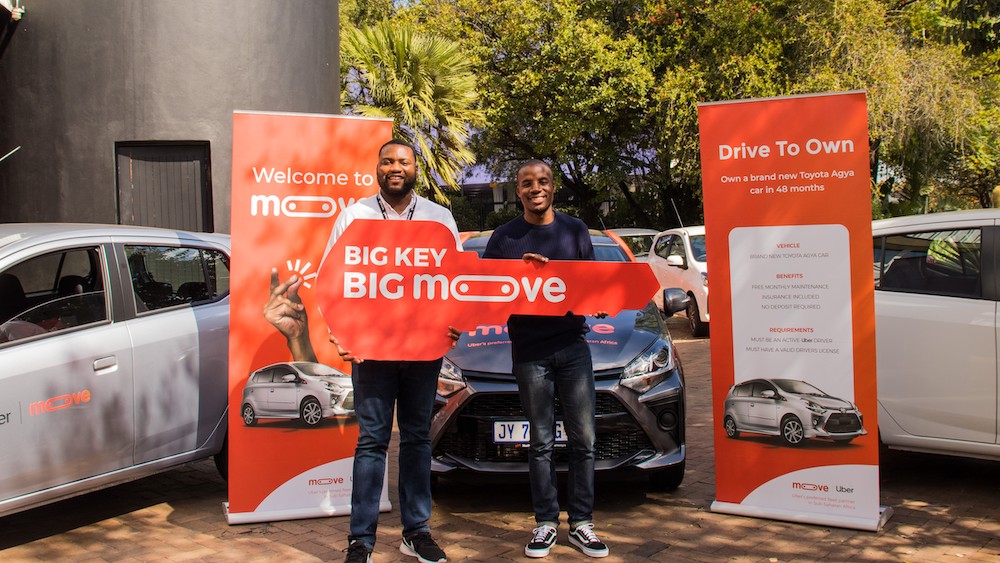
Moove is considering a Nigeria exit after Uber ended its operations in the country, a move that puts fresh pressure on the vehicle-financing model with which the Nigerian-founded company built its business.
Moove began financing cars for ride-hailing drivers in Lagos, with repayments linked to their earnings, making access to a functioning ride-hailing marketplace central to the economics of the arrangement. A person familiar with the plans said Uber’s departure has made Moove’s Nigerian business untenable, although Moove has not publicly confirmed that it will leave.
Uber ended its Nigerian operations on September 2 after 12 years, creating an immediate problem for drivers who had financed vehicles specifically to work on the platform. The withdrawal also leaves questions about how existing vehicle-financing arrangements will work when one of the major sources of driver income disappears.
For Moove, the consequences reach beyond the loss of one platform. Its original business connected vehicle finance to the income generated through ride-hailing, so a major change in the marketplace can affect the ability of drivers to meet their repayment obligations and, in turn, the economics of Moove’s financing portfolio.

Nigeria was where Moove’s model was tested
Moove was founded in Nigeria in 2020 with a straightforward proposition: give drivers access to new vehicles when conventional financing was difficult to obtain, then structure repayment around the income generated from mobility work. The company initially deployed vehicles in Lagos before expanding the model into other African and international markets. Moove now describes its business as mobility infrastructure, but vehicle financing for gig-economy drivers remains part of its operations.
Uber became deeply connected to that model. The two companies developed a commercial relationship in which Moove-financed vehicles were deployed by Uber drivers, and Uber later became one of Moove’s investors. The arrangement tied financing, vehicles and ride-hailing demand together in a way that worked while drivers could generate sufficient income through the platform.
That relationship had its own complications. Moove drivers in Lagos protested over their financing arrangements in 2023, highlighting the pressure that can arise when vehicle repayments are tied to the uncertain income of ride-hailing work. The dispute does not establish that Moove’s Nigerian business was failing, but it provides useful context for understanding how exposed the model could be to changes in driver economics.
The current problem is more direct. Drivers who obtained vehicles through financing arrangements connected to Uber now have to consider how they will generate enough income to continue making payments. The departure of a major platform can therefore affect both new financing activity and the performance of vehicles already financed.
Moove has already built a business beyond Nigeria
The potential withdrawal comes at an unusual point in Moove’s development. The company has spent much of its life expanding the vehicle-financing model beyond Lagos, entering markets including India, the United Kingdom, the United Arab Emirates and South Africa, while also developing services around electric vehicles and charging infrastructure.
Its geographic expansion matters because it means Nigeria no longer represents the whole company. Moove now operates a large international fleet business and has built operations across multiple markets, giving it revenue and growth opportunities outside its original home market.
The company has also moved into autonomous mobility. Its partnership with Waymo has placed Moove in the business of managing autonomous vehicle fleets, while its latest plans include specialised facilities where autonomous vehicles can be charged, serviced, maintained and prepared for continuous operation.
That makes the Nigerian situation more complicated than a simple retreat from a core market. Moove is now pursuing a business that has a very different capital requirement and growth profile from the vehicle-financing operation it started with.
A $2.1 billion valuation changes the picture
Moove raised $250 million in a Series C round in August, valuing the company at $2.1 billion. The funding gives the company substantial capital to expand its autonomous-mobility business and the infrastructure required to support it.
The new funding is aimed largely at scaling autonomous mobility, including vehicle ownership and the infrastructure required to operate autonomous fleets. Moove’s autonomous operations with Waymo are already live or announced in several US and UK markets.
That makes the timing of a possible Nigeria exit striking. Moove could be preparing to leave the market where its original vehicle-financing model was built just as investors are placing a $2.1 billion valuation on a company whose ambitions now extend well beyond conventional ride-hailing.
There is also a practical reason for that change in emphasis. Financing cars for human drivers requires a reliable stream of driver earnings and a healthy ride-hailing marketplace. Managing autonomous fleets presents a different proposition: the company can provide vehicles, depots, charging, maintenance and fleet operations to mobility platforms without relying on individual drivers to finance and operate each car.
Moove’s future therefore depends less on reproducing the exact model that made it known in Lagos and more on turning its experience with vehicles and fleet operations into infrastructure that can serve a global autonomous-mobility market.
Uber’s exit exposes the dependency underneath the model
The immediate question for Moove is what happens to its existing Nigerian portfolio.
If vehicles financed for Uber drivers were structured around income from that platform, those drivers need another source of ride-hailing revenue. Nigeria still has other mobility platforms, but replacing Uber’s demand is not simply a matter of moving drivers from one application to another. Vehicle utilisation, driver earnings, platform commissions and repayment schedules all affect whether a financing arrangement remains viable.
That makes the reported Moove exit a potentially significant development for the drivers themselves. A company can decide that a market no longer fits its strategy, but its existing financing contracts do not necessarily disappear when the strategic calculation changes.
The outcome will depend partly on what happens to those financed vehicles and the drivers using them. Moove has not publicly detailed how it would handle its Nigerian portfolio if it does withdraw, and that should remain an open question rather than an assumption.
The Nigerian exit would close one part of Moove’s story
Moove’s possible departure from Nigeria would carry an obvious irony. The company began by addressing a very local problem in Lagos: drivers needed vehicles, traditional lenders were reluctant to finance them, and ride-hailing platforms needed more cars on the road.
That model gave Moove a foundation it could take elsewhere. The company expanded across markets, attracted global investors and built relationships with major mobility companies before moving into electric vehicles and autonomous fleet management.
Now, after reaching a $2.1 billion valuation, the company may be preparing to leave the market where that original model was born.
The more important question is what the episode says about mobility financing in Nigeria. A financing business tied closely to ride-hailing depends on the health of the platform ecosystem around it. When a major platform exits, the effects can reach lenders, vehicle owners and drivers even when those businesses are not formally part of the same company.
For Moove, the Nigerian market may ultimately become a smaller part of its history rather than its future. The company has built enough international operations and autonomous-mobility infrastructure to continue growing without the market that gave it its start. But if it does leave, the experience will underline a basic fact about mobility finance: the vehicle may be the asset being financed, but the repayment depends on the economic activity happening around it.
Real ESG impact doesn’t happen in panels alone, it happens in the rooms where financiers, operators, and policymakers actually align. Our GreenShift Forum 2026 cuts the noise, bringing together the people rewiring Africa’s sustainability and energy frameworks for one focused day in Nairobi. Secure your seat.
Go to TECHTRENDSKE.co.ke for more tech and business news from the African continent and across the world.
Follow us on WhatsApp, Telegram, Twitter, and Facebook, or subscribe to our weekly newsletter to ensure you don’t miss out on any future updates. Send tips to editorial@techtrendsmedia.co.ke