
Kenya Airways’ strategic investor search expands as aircraft-for-equity offer emerges

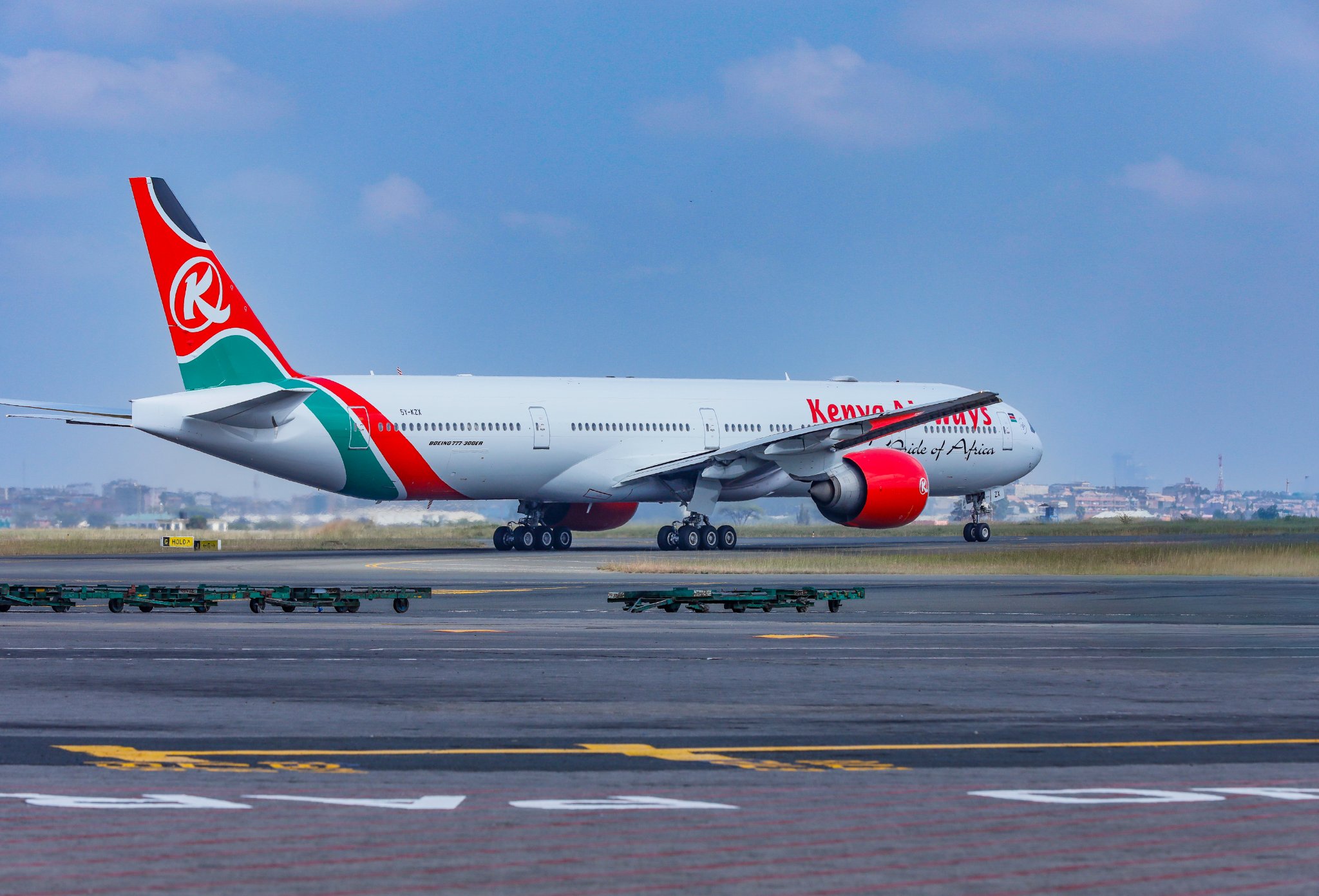
Kenya Airways’ search for fresh capital has moved beyond the conventional question of who will write the biggest cheque.
At least four potential investors are now interested in the national carrier, with proposals ranging from loans and cash equity to an unusual offer to contribute aircraft in exchange for a stake in the airline. The development comes as KQ works through a difficult first half of 2026. Revenue rose 9% to KSh81.3 billion despite a 9% reduction in capacity, but higher fuel, maintenance and operating costs pushed the airline’s net loss to KSh16.1 billion, making the structure and quality of any new investment as important as the amount raised.
KQ’s Investor Search Has Changed
The investor search has evolved considerably from where it started earlier in the year. Acting Group Managing Director and CEO George Kamal said the airline initially had one prospective investor, with management at the time expecting the process to involve a single party. After March, however, more potential investors began approaching KQ, eventually taking the number of interested parties to at least four.
The proposals are also different in nature. Kamal said one potential investor has offered to provide a loan, another wants an equity position, while another has indicated that it has aircraft that could be contributed to Kenya Airways in exchange for equity.
“The ones who are approaching us, to be honest, are all of those,” Kamal said, describing the range of proposals.
KQ has not identified the prospective investors, saying disclosure could prejudice negotiations. The airline has, however, said it has attracted interest from the United States, China, South Africa and Singapore.

The broader process is being formalised through an Investor Memorandum prepared with KPMG. Management has said interested parties will be assessed against defined criteria, rather than KQ simply selecting the first investor willing to provide funding.
That matters because the airline is trying to solve several problems at the same time: its balance sheet needs repair, its fleet needs investment and its operations need enough capacity to take advantage of demand that is already present.
An Aircraft-for-Equity Deal Could Address KQ’s Capacity Problem
The proposal to contribute aircraft in exchange for equity stands out because it directly addresses one of KQ’s biggest operational problems.
The airline has demand for its network, but a significant portion of its fleet is unavailable because of maintenance delays and shortages of spare parts. KQ has 34 aircraft in its own fleet but was operating only about 25 at the time of the interview, leaving at least nine grounded.
That constraint has already affected the network. KQ suspended flights to Douala and reduced Abidjan frequencies from six weekly services to three earlier this year because of limited aircraft availability.
An investor bringing aircraft into the airline would therefore be contributing something that KQ urgently needs rather than simply adding cash to its balance sheet.
The precise structure would still have to be negotiated. An aircraft contribution could potentially reduce the amount of cash KQ needs to spend on fleet acquisition or leasing, while giving the investor an ownership interest. The valuation of the aircraft, the size of the equity stake and the terms under which KQ operates the aircraft would all determine whether such a transaction is genuinely beneficial to the airline.
The proposal would also be an unusual structure in the aviation industry. Aviation analysts have argued that an aircraft lessor or major airline would be among the parties most capable of making such an offer, while aircraft-for-equity transactions remain uncommon.
KQ Wants More Aircraft by 2030
KQ’s interest in aircraft contributions becomes clearer when placed against its fleet ambitions.
George Kamal wants the airline to add up to 15 aircraft by 2030, with the focus largely on widebody aircraft such as the Boeing 787 and 777 and Airbus A350s. The additional capacity would allow KQ to restore frequencies on established routes and pursue new opportunities in both passenger and cargo markets.
Routes including Lagos, Johannesburg, Dubai and London are among those KQ considers strong performers where additional capacity could be deployed. The airline’s challenge has been that demand on some of these routes exists, but the aircraft required to serve it are not always available.
That was also evident in the first-half financial results. KQ generated KSh81.3 billion in revenue despite operating with 9% less capacity than the same period last year. Cabin factor improved to 76.3%, suggesting the airline was able to fill a greater proportion of the seats it had available.
The aircraft shortage therefore represents both a constraint and an opportunity. If KQ can restore grounded aircraft and add more capacity without creating an unsustainable cost burden, it has a larger pool of demand to monetise.
Fresh Capital Must Also Address the Balance Sheet
KQ’s financial position makes the investor negotiations more complicated.
The airline’s negative equity stood at approximately KSh147.9 billion at the end of June. Its first-half net loss widened to KSh16.1 billion from KSh12.2 billion a year earlier, while operating costs increased faster than revenue. Fuel was a particularly heavy burden, with the airline reporting a 32% increase in fuel costs during the period.
That is why management has been reluctant to approach the market while the airline is severely undercapitalised. The concern is that an investor could put money into KQ at a valuation that does not adequately reflect the value of the underlying business.
Bridge financing is intended to give the airline some breathing room while the longer strategic-investor process continues. The objective is to stabilise the business and improve its negotiating position rather than accept an unfavourable deal simply because cash is urgently required.
This also means the eventual transaction does not necessarily have to involve one investor providing all the money. KQ has discussed a structure in which different investors could provide different forms of capital, depending on what each party brings to the table.
For KQ, the distinction between raising capital and raising the right capital is therefore important. A large cash injection would provide immediate liquidity, but an investor that also brings aircraft, operational expertise, network access or other strategic value could potentially do more to address the airline’s underlying constraints.
Debt Restructuring Will Shape the Investor Deal
Fresh investment is only one side of KQ’s recapitalisation.
The airline is also working on its existing debt burden, including debt owed to the Government of Kenya and a consortium of local banks. The restructuring discussions include the possibility of converting some principal debt into equity as KQ works towards a more sustainable capital structure.
The objective is to give a new investor a healthier balance sheet to work with. KQ’s management has been concerned that approaching the market while the airline remains severely undercapitalised could force it to accept an investment at a valuation that does not adequately reflect the underlying business.
That is where bridge financing becomes important. Short-term funding can help stabilise the airline while the longer investor and balance-sheet restructuring processes continue, giving management more time to negotiate the terms of a permanent transaction.
The eventual solution could therefore involve several investors and different forms of capital rather than one company writing a single large cheque.
KQ has also indicated that an incoming investor does not necessarily need to become the majority shareholder. The airline could create new shares for a strategic investor, diluting existing shareholders, or transfer some shares from current shareholders.
The final ownership structure will depend on how the debt restructuring, capital raising and investor negotiations come together.
KQ Has a Precedent for Strategic Airline Investment
There is a precedent for strategic airline investment in Kenya Airways.
KLM entered KQ’s ownership structure in 1996, investing US$26 million in exchange for a 26% stake during an earlier recapitalisation. KLM later increased its holding before its stake was diluted through subsequent changes in KQ’s ownership structure; it currently holds a much smaller interest.
The current process is different, particularly because KQ is considering multiple forms of investment and potentially several investors. But the history shows that strategic airline participation in KQ is not without precedent.
The question now is what a new investor would bring beyond ownership capital.
A major airline could provide aircraft, network access, operational expertise, training or commercial partnerships. A financial investor could provide capital without necessarily taking an operational role. An aircraft provider could address KQ’s capacity shortage directly.
The strongest proposal may therefore not be the one offering the largest cash amount, but the one that addresses several of KQ’s constraints at once.
The Quality of New Capital Matters as Much as the Amount
KQ’s first-half results provide the backdrop to the investor negotiations.
Revenue increased 9% despite lower capacity, and cargo revenue rose 18%, reinforcing management’s argument that demand remains strong. But operating costs rose 14%, fuel prices created a major shock and the airline ended the period with a KSh16.1 billion net loss.
That leaves KQ with a narrow path to recovery. It needs more aircraft to capture demand, but it cannot simply add capacity without considering fuel, maintenance, crew and financing costs. It needs fresh capital, but bringing in an investor at a heavily discounted valuation could dilute existing shareholders without adequately solving the underlying problem.
The investor search is therefore becoming a test of KQ’s ability to turn its operational potential into an investable proposition.
The aircraft-for-equity proposal is particularly revealing because it addresses the central contradiction in the turnaround: KQ needs capital to get more aircraft flying, but it also needs more aircraft to generate the revenue that will make the capital worthwhile.
If the airline can structure an investment that brings in aircraft, strengthens the balance sheet and supports network growth without creating another heavy cost burden, the current investor interest could become a meaningful part of its recovery.
For now, KQ is keeping the negotiations private, but management expects to disclose more about the potential investors and the structure of a deal within weeks.
The next announcement will reveal whether the growing investor interest translates into a transaction capable of giving Kenya Airways what it needs most: more usable aircraft, a stronger balance sheet and enough financial room to turn demand into sustainable returns.
Real ESG impact doesn’t happen in panels alone, it happens in the rooms where financiers, operators, and policymakers actually align. Our GreenShift Forum 2026 cuts the noise, bringing together the people rewiring Africa’s sustainability and energy frameworks for one focused day in Nairobi. Secure your seat.
Go to TECHTRENDSKE.co.ke for more tech and business news from the African continent and across the world.
Follow us on WhatsApp, Telegram, Twitter, and Facebook, or subscribe to our weekly newsletter to ensure you don’t miss out on any future updates. Send tips to editorial@techtrendsmedia.co.ke


