Kenya Airways posts stronger H1 revenue as returning aircraft offer a path to recovery, but costs remain high

Kenya Airways delivered a stronger first half on the commercial side, generating KSh81.3 billion in revenue in the six months to June 2026 despite operating with 9% less capacity than a year earlier.
Passenger demand remained firm, cabin factor improved by nearly four percentage points and cargo revenue also grew. Yet the airline’s financial position remains difficult, with higher fuel and maintenance costs pushing the net loss to KSh16.1 billion. The results therefore present a mixed picture: KQ is finding customers for its network, but converting that demand into sustainable profit remains difficult.
Revenue Growth Shows Where Kenya Airways Is Strong
The KSh81.3 billion revenue figure represents a 9% increase from KSh74.5 billion in the first half of 2025. More importantly, KQ achieved the growth while available seat kilometres fell 9%, meaning the airline generated more revenue from a smaller amount of passenger capacity.
Cabin factor rose from 72.4% to 76.3%, while passenger numbers reached about 2.2 million. George Kamal, Kenya Airways’ Acting Group Managing Director and CEO, described the performance as the airline’s second-highest first-half revenue result after 2024. He also pointed to load factors above 90% on some US and European routes during parts of the period.
-
 Kenya Airways gets Sh45.4 billion in state loans as losses mountOctober 12, 2026
 -
How Kenya Airways is using AI to make sense of changing airfaresSeptember 29, 2026
That combination gives KQ an important foundation. The airline is not struggling to convince passengers to use its network. The bigger question is whether it can consistently provide enough aircraft, at an acceptable cost, to serve that demand profitably.
The reduction in capacity was also not entirely a deliberate commercial choice. Global supply-chain problems affected the availability of aircraft, engines and spare parts, forcing KQ to operate with fewer aircraft than it would have preferred. That makes the revenue performance more notable, while also highlighting the opportunity sitting inside the airline’s fleet once more aircraft return to service.

Fuel and Maintenance Costs Deepened the Loss
The problem is that stronger revenue arrived alongside a much heavier cost burden.
Operating costs increased from KSh80.7 billion in the first half of 2025 to KSh91.9 billion in the same period of 2026, a rise of roughly 14%. Fuel costs alone increased by 32%, with fuel accounting for about 32% of total operating expenses and more than half of direct operating costs.
George Kamal said jet fuel reached about US$213 a barrel around March and April, creating a cost shock that KQ had not budgeted for. The airline used fuel surcharges to recover part of the increase, but management said there was a limit to how much could be passed on to passengers without affecting demand.
Maintenance added another layer of pressure. Several aircraft reached major maintenance milestones during the period, including heavy structural checks that are substantially more expensive than routine maintenance. KQ has also been expanding its own MRO capabilities, which should help over time, but the immediate effect is a higher cost base.
The result was a widening operating loss, from KSh6.2 billion to KSh10.6 billion. The net loss rose from KSh12.2 billion to KSh16.1 billion.
Mary Mwenga, KQ’s Acting Chief Finance Officer, nevertheless pointed to the airline’s positive EBDAR position as evidence that the underlying operation remains viable before the effects of financing, depreciation, aircraft rentals and other costs are taken into account. That distinction helps explain why management remains focused on restoring capacity and securing fresh capital rather than simply shrinking the airline.
Returning Aircraft Could Change the Second-Half Picture
KQ entered the second half with more capacity becoming available.
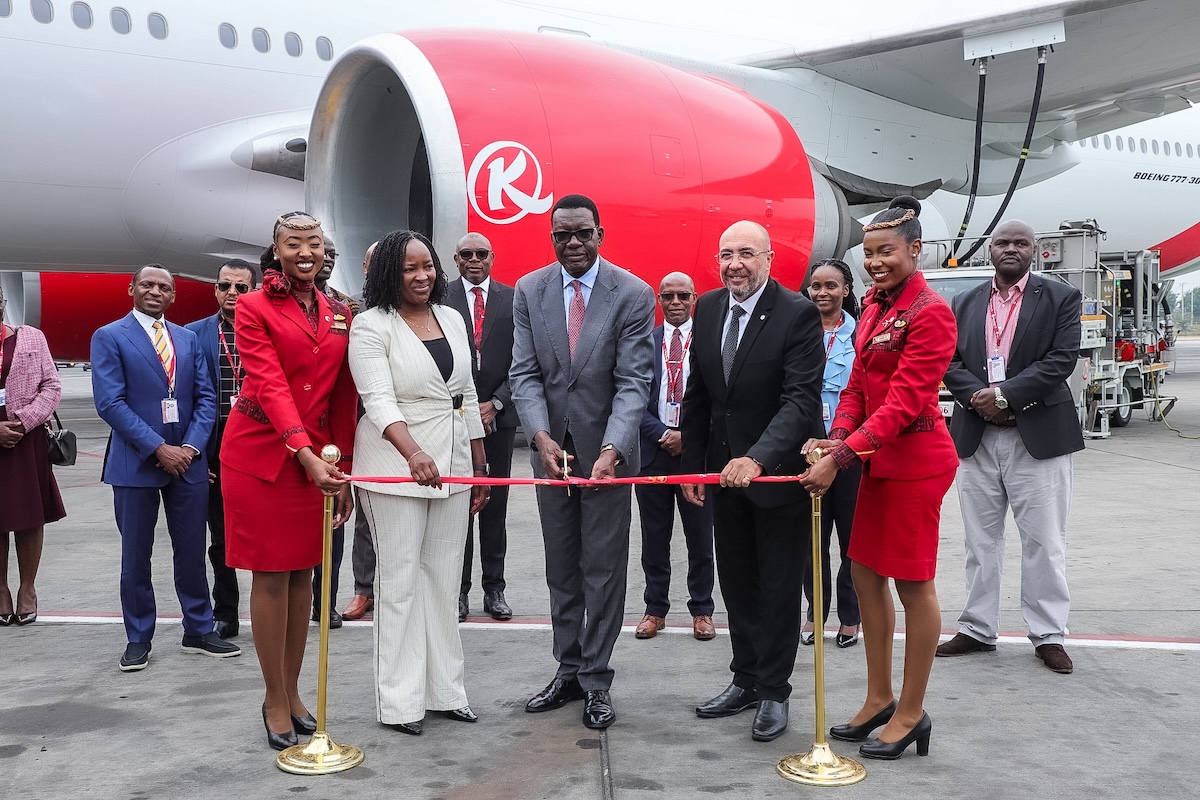
A Boeing 787-8 returned to service in July, followed by the redelivery of a Boeing 777-300ER that had spent about a decade on lease to Turkish Airlines. The return of the 777 is particularly significant because its roughly 400-seat configuration provides considerably more passenger capacity than KQ’s 787-8.
The aircraft also gives KQ additional belly-hold cargo capacity, allowing the airline to pursue both passenger and freight revenue from its long-haul network.
Management’s challenge will be making sure the additional seats generate sufficient returns. George has been clear that KQ does not want to lease aircraft simply for the sake of having more aircraft. Lease costs have to make sense against fuel prices, expected demand and the revenue that each aircraft can generate.
That makes the second half a useful test of KQ’s commercial model. If the returning aircraft can be filled at strong yields, the airline has an opportunity to grow revenue without relying solely on fare increases.
KQ’s “Subscale” Problem Is Driving Its Growth Plans
Mary offered perhaps the clearest explanation of the airline’s deeper structural problem during the earnings discussion, describing KQ as “subscale.”
A relatively small fleet makes fixed costs harder to spread across the operation. When several aircraft are grounded because of engine or component shortages, the effect on a smaller airline is proportionally larger. Employee costs also make up a substantial share of KQ’s overheads, limiting how quickly the company can reduce its cost base.
This explains why KQ’s long-term strategy involves growing rather than simply cutting its way to recovery.
The airline has previously outlined plans to expand its fleet from 32 aircraft to 67 by 2030 and 100 by 2035, with annual passenger numbers targeted to rise from about 5.2 million to 9 million.
That ambition comes with a difficult financial question. More aircraft can help KQ spread its fixed costs across a larger operation, but acquiring and operating those aircraft requires capital, while fuel, maintenance, crews and other costs rise with capacity.
The success of the strategy therefore depends on whether KQ can grow faster than its costs.
Capital Raising and Debt Restructuring Are Central to the Plan
This is where the airline’s balance sheet becomes impossible to ignore.
At the end of June, KQ had total liabilities of about KSh328.2 billion against total assets of roughly KSh180.3 billion. Total equity was negative by approximately KSh147.9 billion, while current liabilities stood at about KSh140.6 billion compared with current assets of around KSh44 billion.
The company therefore needs more than improved passenger revenue.
Mary said around 90% of KQ’s debt is owed to its largest shareholder, the Government of Kenya, and that discussions are underway around debt restructuring and changes to the shareholding structure alongside the capital-raising process.
George also made clear that KQ does not want to bring in an investor from a position of extreme financial weakness and accept a heavily discounted valuation. The company is looking at ways of stabilising its position before completing a larger investment transaction, with the possibility of capital arriving in stages.
The capital raise should therefore be understood as part of a broader restructuring exercise. KQ needs to strengthen its balance sheet, address its debt burden and create room for the fleet and operational investments required to reach greater scale.
Cargo Is Becoming a Bigger Part of the Strategy
Passenger aviation remains KQ’s core business, but cargo is becoming more important to the airline’s plans.
Cargo revenue increased 18% in the first half to about KSh8.8 billion. KQ is also considering additional freighter capacity, while its partnership with FedEx gives its cargo-handling business a stronger role at Jomo Kenyatta International Airport.
Management has previously discussed increasing cargo’s contribution to revenue from around 11% toward 20% over the next few years.
That ambition fits Nairobi’s role as a regional aviation and logistics hub. Cargo also gives KQ another way to monetise its network and aircraft, particularly on long-haul routes where passenger flights already provide the necessary belly-hold capacity.
MRO offers another potential revenue stream. KQ has expanded its maintenance capabilities and is seeking more work from other African airlines. The approach could help address one of the airline’s operational weaknesses, aircraft availability, while also turning technical expertise into an external business.
Technology Is Part of the Commercial Recovery
There is a technology layer to KQ’s strategy that is easy to miss when looking only at the financial statements.
The airline has deployed Jupiter 5.0, an AI-powered pricing and revenue-management platform from FlyNava Technologies. The system is designed to help KQ process market information, test pricing scenarios and make fare decisions faster.
That matters when capacity is constrained. With fewer seats available, KQ has greater incentive to ensure that the available inventory is priced according to demand rather than relying mainly on passenger volume.
The airline is also preparing for a much larger technology investment in passenger connectivity. George said KQ estimates that installing onboard Wi-Fi across its current fleet would cost about US$20 million to US$22 million, excluding recurring costs.
The planned rollout is targeted to begin in the second quarter of 2027, starting with long-haul aircraft serving destinations including London, Paris, New York, China and Amsterdam before extending to shorter-haul aircraft.
George said he would prefer the Wi-Fi to be free for passengers, with advertising potentially helping to support the economics of the service. That would turn connectivity into more than a passenger amenity, giving KQ another digital platform through which to generate commercial value.
Partnerships Extend KQ’s Reach
KQ’s partnerships are another way the airline is trying to expand its effective network without having to operate an aircraft on every route.
Through SkyTeam and other partnerships, KQ can offer customers access to more than 1,000 destinations around the world, including markets it does not serve with its own aircraft. George said some routes receive around 20% or more of their passengers through SkyTeam, depending on the market.
These relationships also provide access to training, operational expertise and knowledge transfer. For a relatively small airline, partnerships can therefore provide some of the benefits of scale without requiring KQ to build an enormous fleet immediately.
The strategy also fits with the wider ambition to strengthen Nairobi as an aviation hub. KQ’s fortunes are tied not only to how many aircraft it operates, but also to how effectively it can connect traffic between Africa and major international markets through Nairobi.
What the H1 Results Mean for KQ’s Turnaround
The combined picture is more encouraging commercially than the headline loss suggests, but the financial problems remain substantial.
KQ generated more revenue with less capacity, improved its cabin factor, increased cargo revenue and continued to attract strong demand on important international routes. Aircraft are returning to service, the airline is expanding its MRO capabilities, and management is pursuing new revenue through cargo, partnerships, technology and a broader network.
At the same time, operating costs grew faster than revenue, fuel prices created a major shock, maintenance costs rose and the net loss widened to KSh16.1 billion. The negative equity position remains severe, while the capital-raising and debt-restructuring process is still central to the airline’s ability to execute its longer-term plans.
That leaves KQ with a very specific challenge for the remainder of 2026. It needs to turn restored aircraft capacity into profitable revenue while keeping fuel, maintenance and other operating costs under control. It also needs to make progress on the balance sheet, because expanding a financially constrained airline requires considerably more discipline than simply adding seats.
George Kamal’s assessment captures the issue well: KQ’s problem is not a shortage of demand, but securing the right equipment at the right cost.
The H1 results provide evidence that customers are there. The next stage of the turnaround will determine whether Kenya Airways can build an operation capable of serving them at a cost that finally allows the revenue growth to show up in the bottom line.
Download the FREE Kaspersky Next Enterprise Security Guide here to explore the complete framework for simplifying security operations and building cyber resilience.
Go to TECHTRENDSKE.co.ke for more tech and business news from the African continent and across the world.
Follow us on WhatsApp, Telegram, Twitter, and Facebook, or subscribe to our weekly newsletter to ensure you don’t miss out on any future updates. Send tips to editorial@techtrendsmedia.co.ke