Mariam Cassim's move to Safaricom's board marks the next chapter in Vodacom's majority ownership

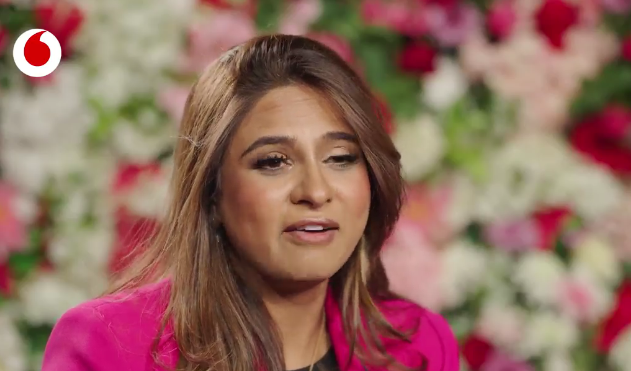
Safaricom’s board changes answer a question that has lingered since Vodacom became the telecom giant’s majority shareholder in June: when would the new ownership structure begin reshaping the boardroom?
The appointments of Mariam Cassim and Matimba Mbungela as non-executive directors mark another step in that process, placing two current Vodacom Group executives on Safaricom’s board after the South African operator raised its effective stake to 55%.
The announcement does not change Safaricom’s executive leadership, which remains under chief executive Peter Ndegwa. It does bring Vodacom’s finance and people leadership closer to the board decisions that will influence Ethiopia investments, M-PESA’s next phase and the company’s long-term direction.
The board appointments complete a months-long governance transition
Taken in isolation, two board appointments might look routine. Viewed against the events of the past few months, they fit into a much larger sequence.

The turning point came when the Government of Kenya sold a 15% stake in Safaricom to Vodafone Kenya in June for about KSh204.3 billion, while Vodacom acquired Vodafone Group’s remaining direct interest in Vodafone Kenya. That transaction lifted Vodacom’s effective stake to roughly 55%, reduced the Treasury’s holding to 20% and left public investors with the remaining quarter of the company.
Ownership changed first, but governance did not change overnight. During Safaricom’s July annual general meeting, shareholders approved 14 special resolutions that updated the company’s constitutional framework to reflect the new shareholding structure. Those resolutions gave Vodafone Kenya greater rights over board nominations and the ability to nominate Safaricom’s chief executive for as long as it holds more than half the company.

The latest appointments complete a board redesign that Vodacom had already outlined to investors. Its representation rises to five directors after inheriting one seat previously associated with the Kenyan government through John Kipngetich Mosonik’s departure and another that had been held by Vodafone Group’s James Ludlow.
The revised structure leaves five Vodacom directors, two government directors, four independent directors and Chief Executive Peter Ndegwa, giving Vodacom the board presence it negotiated when it became Safaricom’s controlling shareholder.
Ludlow’s exit also marks the end of Vodafone Group’s direct board presence after selling its remaining stake, leaving Vodacom as the company’s sole shareholder representative at that level.
Why Mariam Cassim’s appointment stands out
Of the two appointments, Mariam Cassim carries the broader strategic significance.
She leads Vodacom Group’s financial services business after building her career across corporate finance, mergers and acquisitions, debt structuring and executive leadership. That background aligns with two of Safaricom’s biggest priorities: managing large-scale capital investments and expanding digital financial services.
The timing is notable because Safaricom is overseeing one of Africa’s largest telecom investment programmes through its Ethiopia business, where cumulative spending has climbed to nearly KSh160 billion. The operation continues pursuing profitability while adding millions of subscribers, making capital allocation a board-level issue rather than simply a finance department responsibility.
Her financial services experience also connects directly to M-PESA, which has evolved beyond mobile payments into the foundation for developer platforms, merchant services and financial products that underpin much of Safaricom’s future growth.
The reshaped board arrives during major capital decisions
Matimba Mbungela’s appointment complements that picture from another angle.
As Vodacom Group’s Chief Human Resources Officer, he has spent more than a decade overseeing talent strategy across several African markets and previously held regional leadership roles within Vodafone. His experience becomes more relevant as Safaricom builds a business that stretches beyond Kenya and requires stronger leadership coordination across multiple markets.
The board refresh also comes during a period of wider leadership changes inside Safaricom. Former Chief Financial Services Officer Esther Waititu recently left the company, with Boniface Mungania serving in the role on an interim basis, adding another layer to a period that has already brought significant governance and leadership changes.
What Safaricom’s new board structure says about its future
The clearest takeaway is that Safaricom’s board now reflects the company’s new ownership reality more closely than it did before June.
The shareholder agreement goes beyond board seats. It requires Safaricom’s board to appoint the chief executive from nominees submitted by Vodafone Kenya, while also preserving commitments that the chairman should be Kenyan and that the National Treasury retains a role in that appointment process. Those provisions show how ownership, governance and leadership succession are now connected under the revised framework.
The past few months have established a clear sequence. June changed the ownership structure, July rewrote the governance framework through shareholder approval, and August has brought senior Vodacom executives into Safaricom’s boardroom. Together, those milestones show how majority ownership is now translating into boardroom influence through governance mechanisms that were negotiated before the latest appointments were announced.
Download the FREE Kaspersky Next Enterprise Security Guide here to explore the complete framework for simplifying security operations and building cyber resilience.
Go to TECHTRENDSKE.co.ke for more tech and business news from the African continent and across the world.
Follow us on WhatsApp, Telegram, Twitter, and Facebook, or subscribe to our weekly newsletter to ensure you don’t miss out on any future updates. Send tips to editorial@techtrendsmedia.co.ke