Samsung's Galaxy A57 leads the lineup, but the Galaxy A37 offers the best value for most Kenyan buyers

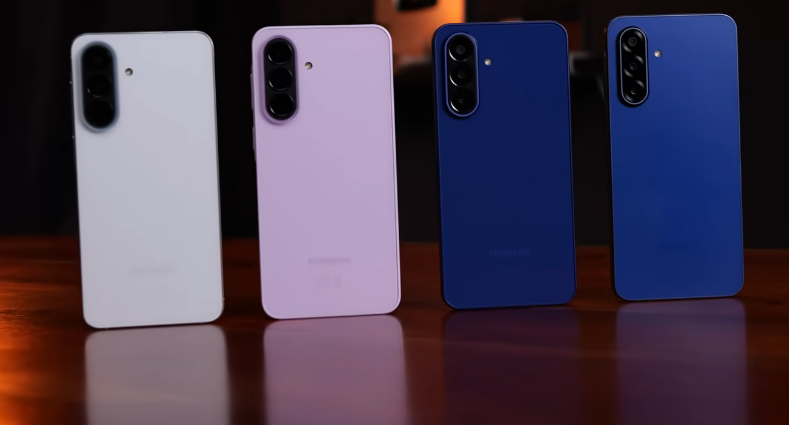
Samsung’s latest Galaxy A lineup looks straightforward at first glance. The Galaxy A17, A27, A37 and A57 all share Samsung’s familiar design language, large AMOLED displays and long software support, but a closer look reveals meaningful differences that aren’t obvious from a specification sheet.
That makes the Samsung Galaxy A57 vs A37 vs A27 vs A17 comparison in Kenya more relevant than ever, especially now that Kenyan buyers can choose between Samsung Kenya’s recommended retail prices, the Samsung Brand Store and authorised retailers such as PhonePlace Kenya.
After comparing the four phones across design, displays, cameras, performance, battery life and software, one model clearly stands out as the best overall, another delivers the strongest value for money, while one struggles to justify its place in the lineup.
For many shoppers, the buying decision no longer comes down to simply choosing the newest or most expensive model. Current retail pricing has narrowed the gap between devices, making it possible to step into Samsung’s higher-end Galaxy A range for much less than the official launch prices suggested. That changes the conversation from “Which phone costs less?” to “Which upgrade is actually worth paying for?”

The Galaxy A lineup looks similar, but the buying experience isn’t
Samsung has done a good job of giving the entire Galaxy A family a consistent identity. Place the four phones side by side and the resemblance is obvious. They all feature the company’s minimalist rear camera layout and flat-sided design, but the similarities begin to fade once you start using them.
The Galaxy A57 feels the most premium thanks to its aluminium frame, while the other three rely on plastic construction. Samsung has also reserved its better durability features for the upper end of the lineup. Both the A37 and A57 carry an IP68 rating for water and dust resistance and use under-display fingerprint scanners, giving them a more refined experience. The Galaxy A17 remains limited to IP54 splash resistance, while the Galaxy A27 makes an unexpected move backwards by dropping from last year’s IP67 protection to IP64. For buyers who keep their phones for several years, that downgrade is difficult to ignore.

Display quality follows a similar pattern. Every model uses Samsung’s AMOLED technology, but they are not equal. The A37 and A57 deliver brighter panels with full HDR10+ support, making streaming and outdoor visibility noticeably better. The A17 remains capped at a 90Hz refresh rate, while both the A17 and A27 miss out on proper HDR support, leaving them a step behind when watching high-quality video content. The A57 also trims its bezels further, giving it a cleaner and more premium appearance, although the A27 does deserve credit for replacing the older teardrop notch with a modern punch-hole camera.
How the Galaxy A57 compares with the A37, A27 and A17
The camera system tells a more interesting story than Samsung’s marketing materials suggest.
All four phones carry a 50-megapixel main camera, but they do not use the same sensor. The standout decision is Samsung giving the Galaxy A37 the same primary camera hardware as the flagship A57. In everyday photography, that narrows the gap between the two far more than their prices would suggest. Images from both phones deliver strong detail and vibrant colours, although it should be noted that the A57 occasionally applies heavier sharpening during image processing.
The Galaxy A27, on the other hand, is harder to defend. Samsung reduced its ultrawide camera to the same 5-megapixel sensor found on the cheaper A17, while the A37 uses an 8-megapixel ultrawide and the A57 upgrades to 12 megapixels. The A27 consistently produced the weakest ultrawide images, and washed-out skin tones and inconsistent processing that may be improved through future software updates.
Video recording exposes another compromise. The A57, A37 and A27 can all capture 4K video using their main cameras, but only the A57 offers 4K recording on its ultrawide camera. More importantly, the A27 lacks image stabilisation when shooting in 4K, forcing users to step down to 1080p if they want smoother footage. Selfie performance also raises concerns in that the A27 is the weakest performer because of blurry output and software-related image quality issues, despite using hardware similar to its siblings.
Photography is only part of the experience, however, and Samsung’s latest Galaxy A phones spend most of their lives handling everyday tasks such as social media, navigation, messaging and streaming. That is where performance begins to separate the lineup.
The Galaxy A57 comfortably leads the pack, delivering the fastest benchmark scores, smoother gaming performance and the quickest results in demanding creative workloads such as 4K video exports. The A37 follows remarkably closely. In one CapCut export it finished only seconds behind the A57, making it difficult to justify paying significantly more if your workload consists of occasional editing rather than professional content creation.
The Galaxy A27 produces a more mixed result. Its Snapdragon chipset performs well in certain productivity tasks and even edges ahead of the A37 during one Lightroom export, but those isolated wins are overshadowed by broader software issues that affect day-to-day usability. The A17, meanwhile, lands exactly where most buyers would expect. It comfortably handles messaging, browsing, streaming and light gaming, but begins to struggle once heavier multitasking enters the picture because the base configuration includes only 4GB of RAM.
Why the Galaxy A37 offers the strongest value
If there is one phone that consistently punches above its price, it is the Galaxy A37.
On paper, the differences between it and the A57 appear substantial. In practice, they are much smaller. Samsung has equipped the A37 with the same primary camera sensor as the flagship model, a bright HDR-capable AMOLED display, stereo speakers, IP68 protection and performance that stays surprisingly close to the A57 in everyday use. It also delivers one of the quickest charging times despite sharing the same battery capacity as the rest of the lineup.
That makes the Kenyan pricing particularly important. PhonePlace Kenya lists the Galaxy A37 5G from KSh38,500, while the Galaxy A57 starts from KSh46,000. Samsung Kenya’s official launch prices are considerably higher at KSh49,100 and KSh60,900 respectively, meaning today’s retail market has narrowed the gap between the two devices.
For buyers, that creates an interesting dilemma. Spending an extra KSh7,500 on the A57 delivers better battery life, a faster processor and a stronger ultrawide camera, but the A37 already covers the features most people use every day. Unless you regularly edit videos, play demanding games or simply want Samsung’s best Galaxy A experience, the A37 leaves very little on the table for substantially less money.
The Galaxy A27 has good hardware but one major drawback
The Galaxy A27 is arguably the most difficult phone in Samsung’s current lineup to recommend with complete confidence. Looking only at its specifications, it appears to occupy a comfortable middle ground. It offers 5G connectivity, an AMOLED display with a 120Hz refresh rate, UFS 3.1 storage and a Snapdragon processor that performs well in several benchmark and productivity tests. At PhonePlace Kenya, the 6GB/128GB model starts at KSh31,000, placing it within reach of buyers who want more than an entry-level phone without stretching to the A37.
The problem is that the real-world experience doesn’t always match the hardware. It encountered random app freezes that required the phone to be restarted before applications would work again. Camera processing also proved inconsistent, producing weak ultrawide images, pale skin tones and disappointing selfies despite respectable hardware on paper. Future software updates could resolve many of these issues, but in its current state the A27 feels unfinished.
That doesn’t necessarily make it a poor purchase. At around KSh31,000, it is considerably cheaper than Samsung Kenya’s recommended retail pricing at launch, and buyers who are comfortable waiting for software improvements may still find good value. The challenge is that the Galaxy A37 sits only about KSh7,500 higher at current street prices while offering a noticeably more polished experience. Once that price gap narrows, the A27 becomes harder to justify unless budget is the deciding factor.
Who should buy the Galaxy A17?
The Galaxy A17 has a more clearly defined audience. It is designed for buyers who want a dependable Samsung smartphone for everyday communication rather than intensive workloads. Messaging, web browsing, video streaming, online banking and social media all fall comfortably within its capabilities, and its starting price of KSh22,000 for the 4G model makes it one of the most affordable ways into Samsung’s ecosystem.
Its biggest limitation is responsiveness. With 4GB of RAM on the base model, the phone feels slower from the moment it is set up, particularly when switching between multiple applications. Battery life also trails the rest of the lineup despite all four devices using the same battery capacity, largely because its processor has to work harder to complete the same tasks. Even so, the A17 remains a sensible choice for casual users and should not be dismissed simply because it sits at the bottom of the range.
Software support remains one of Samsung’s biggest strengths
One area where Samsung deserves credit across the entire lineup is software support. Every device ships with One UI 8.5, and Samsung has committed to providing six years of software updates regardless of which Galaxy A model buyers choose. That gives even the most affordable device a much longer support window than many competing Android phones in the same price brackets.
Here’s a practical tip for buyers choosing the 8GB model, disable the Samsung’s RAM Plus feature because it could introduce stutters on higher-memory variants, whereas the A17 benefits from leaving it enabled to reduce app reloads.
How Kenyan pricing changes the value equation
Perhaps the biggest takeaway for Kenyan buyers is that launch prices no longer tell the whole story.
Samsung Kenya introduced the Galaxy A57 5G with a recommended retail price of KSh60,900 for the 8GB/128GB variant, while the Galaxy A37 started at KSh49,100. Today, authorised retailers are selling those same models from KSh46,000 and KSh38,500 respectively. The difference of more than KSh10,000 transforms the value proposition because buyers can now reach Samsung’s premium mid-range devices without paying launch prices.
Samsung has also expanded the ways customers can buy its smartphones. Alongside Samsung Experience Stores and authorised retail partners, the company now operates the Samsung Brand Store in Kenya through its partnership with Housewives Paradise. The online store gives shoppers another official channel for comparing prices, colours and promotions before making a purchase, making it easier to shop around while retaining official warranty support.
For consumers, that means recommended retail prices should be treated as a reference point rather than the final word. Comparing prices across authorised sellers can result in substantial savings without sacrificing after-sales service or authenticity.
Which Galaxy A phone should you buy?
If performance alone determined the rankings, the Galaxy A57 would comfortably finish first. It has the fastest processor, the strongest battery life, the best ultrawide camera and the most premium construction in Samsung’s Galaxy A family. It is the most complete device of the four.
Value, however, tells a slightly different story.
The Galaxy A37 stands out because it delivers much of what makes the A57 attractive while costing noticeably less at current Kenyan retail prices. Its flagship-grade main camera, bright display, dependable performance and premium build make it the model most buyers are likely to appreciate every day without feeling they settled for less.
The Galaxy A27 remains the wildcard. It has enough hardware to compete strongly in its price segment, but the software issues documented during testing are difficult to overlook until Samsung addresses them through updates. The Galaxy A17, meanwhile, continues to serve buyers whose priorities are affordability, reliability and access to Samsung’s long-term software support rather than raw performance.
For anyone shopping today, the answer is straightforward. Buy the Galaxy A57 if you want Samsung’s best A-series experience and the budget allows it. Choose the Galaxy A37 if you want the strongest balance between price and performance. Consider the Galaxy A17 if your needs are modest, and approach the Galaxy A27 with caution until software refinements bring its day-to-day experience in line with its otherwise capable hardware.
Go to TECHTRENDSKE.co.ke for more tech and business news from the African continent and across the world.
Follow us on WhatsApp, Telegram, Twitter, and Facebook, or subscribe to our weekly newsletter to ensure you don’t miss out on any future updates. Send tips to editorial@techtrendsmedia.co.ke