
Samsung's Latest TV Bet Starts With Mini LED and Ends With Better Football Nights

Walk into almost any electronics showroom and the conversation usually starts with screen size.
Samsung wants it to begin somewhere else.
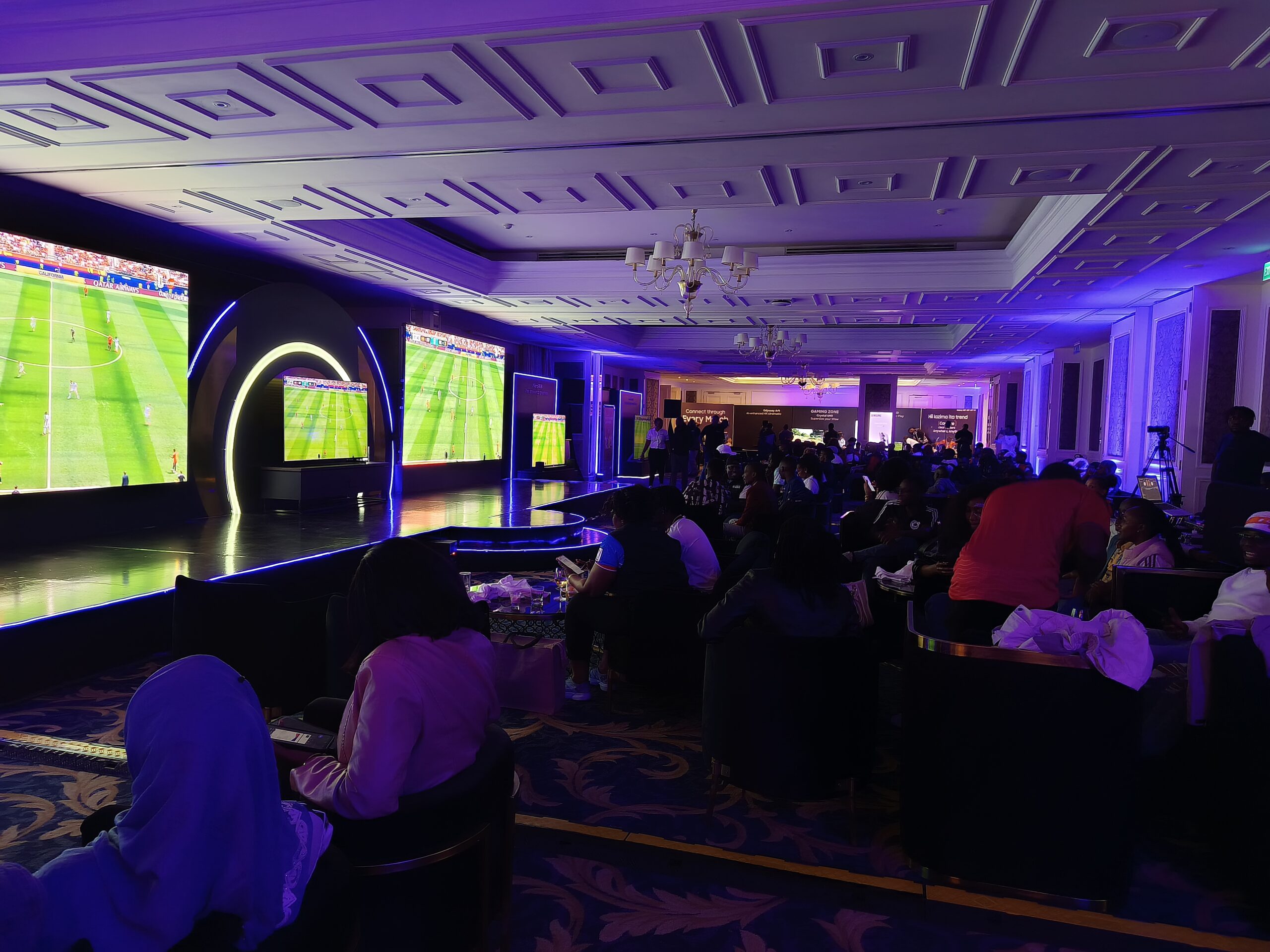
During the unveiling of its 2026 television lineup in Nairobi, the company spent surprisingly little time talking about inches. Instead, it built nearly every demonstration around one question: What happens when you watch football on a television that understands what’s happening on screen?
That question explains why Mini LED sat at the centre of Samsung’s latest product strategy.

Rather than relying on static demonstrations, the company repeatedly played live football footage to show how its latest televisions process movement, lighting and sound under some of the most demanding viewing conditions.
Football places unique demands on a television.

The camera constantly pans across the pitch. Players sprint across bright green grass. Stadium floodlights create extreme differences between bright and dark areas of the picture, while fast-moving passes expose weaknesses in motion processing.
Samsung used those conditions to demonstrate what Vision AI is designed to do.
AI Soccer Mode automatically adjusts picture settings during matches. Motion Accelerator reduces blur as play moves rapidly across the screen, while AI analyses every scene to maintain consistent brightness and colour.
Instead of asking viewers to switch between preset modes, the television continuously optimises the picture as the match unfolds.
Much of Samsung’s presentation focused on something viewers never actually see: the backlight.
Traditional LED televisions use relatively large lighting zones behind the panel.
Mini LED replaces those with thousands of much smaller LEDs.
Shrinking each light source allows the television to control brightness across many more zones independently, producing stronger contrast between bright highlights and darker areas.
That control becomes especially noticeable during football broadcasts.
A white jersey under stadium lights remains bright without causing surrounding parts of the picture to appear washed out. Shadow detail remains visible while maintaining overall contrast across the field.
Samsung demonstrated these improvements through side-by-side comparisons between conventional LED televisions and Mini LED models, highlighting richer colours, improved black levels and better preservation of detail in HDR scenes.
According to George Kebaso, Mobile Product & Marketing Manager, Mini LED now sits between Crystal UHD and OLED in Samsung’s television portfolio, giving consumers a premium viewing experience without immediately moving into the highest price category.
Display hardware tells only part of the story.
Behind the panel sits Samsung’s NQ4 AI Gen2 Processor, which continuously analyses every frame before it reaches the screen.
During the demonstrations, Samsung showed how artificial intelligence enhances colour accuracy through AI Color Booster while dynamically adjusting brightness according to each scene.
The processor also performs AI upscaling, helping lower-resolution broadcasts appear sharper on large 4K displays.
For live sport, the television analyses movement frame by frame, reducing judder and maintaining smoother motion during fast attacks, long passes and quick camera transitions.
Samsung also introduced Vision AI Companion, capable of recognising players during live matches and presenting contextual information without interrupting the broadcast.
Samsung argues that picture quality alone no longer defines a premium television.
The company devoted a significant portion of its presentation to audio.
Its AI Sound Controller separates different sound layers in real time.
Instead of blending everything together, the system identifies commentator voices and isolates them from stadium ambience, allowing speech to remain clear while preserving crowd atmosphere.
Samsung also demonstrated Object Tracking Sound, where audio follows movement across the screen.
As the ball travels from one end of the pitch to the other, the soundstage shifts with the action, creating a stronger sense of direction and immersion.
The effect is subtle, but it helps matches feel more natural by aligning sound with what viewers are watching.
Throughout the launch, football appeared far more often than movies or nature documentaries.
That choice was deliberate.
According to Samuel Odhiambo, Head of Consumer Electronics Business at Samsung Kenya, Samsung’s goal is to keep improving the viewing experience rather than simply producing larger displays.
Football provided the ideal demonstration because it combines nearly every challenge a television faces into one broadcast.
Fast movement tests motion processing. Changing stadium lighting exposes weaknesses in brightness control. Crowd noise pushes audio systems. Large green playing surfaces reveal colour accuracy.
For Samsung, those conditions make football the clearest way to demonstrate why technologies such as Mini LED, Vision AI, AI Soccer Mode and AI-powered sound matter.
The company’s latest televisions are designed around those real-world viewing moments, where processing power, lighting precision and intelligent software work together long before viewers notice the technology itself.
Download the free Kaspersky SMB Cybersecurity Guide here to learn how businesses can move beyond traditional antivirus and build a more resilient approach to cybersecurity.


