
Stablecoin wallets become a new distribution channel for Tala’s digital lending business

Tala is extending its credit assessment and lending infrastructure into third-party financial platforms, using cryptocurrency wallets to reach borrowers without requiring them to access loans through its own application.
The company’s partnerships with El Dorado and Airtm introduce USDT and USDC-denominated lending in Latin American markets, adding another distribution channel to its international digital lending business.
The arrangements give Tala responsibility for supplying lending capital and underwriting technology, while the wallet providers handle customer access. El Dorado will initially offer the service in Bolivia, where customers can obtain loans directly through its application. The loans will be disbursed and repaid in Tether (USDT) through the Tempo blockchain, according to the announcement.
A separate integration with Airtm will provide loans denominated in USD Coin (USDC), with Guatemala identified as the first market. The service is scheduled to launch in December 2026. Airtm will use customer verification information and behavioural signals to generate credit offers in real time, without relying exclusively on conventional credit bureau scores.

The two arrangements give Tala access to established wallet ecosystems while allowing its partners to add lending without independently developing the capital, underwriting and credit assessment systems required to operate a lending business.
Tala is building a distribution model around third-party platforms
The partnerships follow a broader organisational direction that Tala had already outlined earlier in 2026. In June, the company restructured parts of its Kenyan workforce as part of a global reorganisation associated with its expansion into embedded financial services. Tala said the changes would not affect its Kenyan lending operations.
That restructuring provided an indication of how the company intended to develop its business beyond the standalone application model. Rather than depending entirely on its own customer acquisition channels, Tala was positioning its lending capabilities for integration into external platforms.
The El Dorado and Airtm arrangements provide practical examples of that approach. A wallet operator can maintain its existing customer relationship while Tala supplies the financial and technological infrastructure behind the credit product.
For Tala, the arrangement offers access to borrowers who already use partner applications for digital financial services. It also allows the company to distribute loans without having to build a separate customer-facing platform in every market.
El Dorado’s customers use its wallet to buy, send and manage USDT across Latin America. Integrating Tala’s underwriting capabilities into that environment places borrowing alongside services customers already access through the application. Airtm provides a similar distribution opportunity through its digital financial platform.
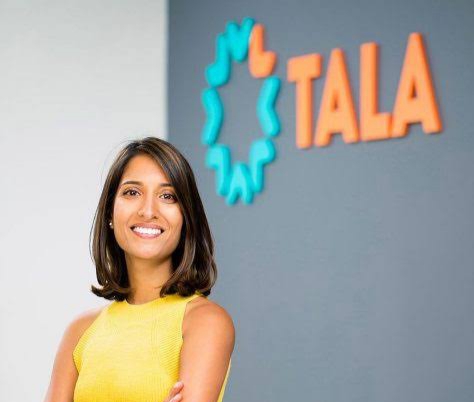
Tala founder and chief executive Shivani Siroya said the model would make credit available through platforms customers already trust.
“Access shouldn’t be something people have to seek out. It should come through the platforms they already trust,” Siroya said.
She added that wallet providers could introduce lending services without having to independently develop the infrastructure and underwriting capabilities required to assess borrowers.
The commercial arrangement also gives Tala a potential route to expand its lending footprint through partnerships rather than relying solely on establishing its own operations in each market. However, neither the announcement nor the available reporting provides projected loan volumes, customer acquisition targets or expected revenue from the integrations.
Stablecoin lending brings a different repayment arrangement
The choice of USDT and USDC places the partnerships within a segment of digital finance that is developing beyond cryptocurrency trading.
Both assets are designed to maintain a value pegged to the US dollar, although their issuers and underlying arrangements differ. In Tala’s partnerships, they serve as the currencies in which loans are disbursed and repaid.
The El Dorado arrangement has an additional technical component. Transactions will use the Tempo blockchain, which will support the movement of USDT between the lending service and customers’ wallets. The Airtm announcement identifies USDC as its lending currency but does not specify an equivalent blockchain arrangement.
This introduces a different set of considerations from conventional digital loans disbursed into bank or mobile money accounts.
Borrowers who earn their income in local currencies may have to acquire dollar-pegged tokens to meet repayment obligations. If the value of their domestic currency falls against the US dollar, the local-currency cost of servicing a stablecoin-denominated loan could rise even when the amount owed in USDT or USDC remains unchanged.
The stablecoins themselves are also exposed to risks involving wallet security, liquidity, redemption arrangements and the ability to maintain their intended dollar peg. Regulatory requirements governing their issuance and use can differ between countries.
The announcement does not detail how borrowers will convert local currency into stablecoins, whether the wallet providers will facilitate those transactions or what conversion charges may apply. These arrangements will influence the practical cost of borrowing, particularly for customers whose income is not denominated in dollars.
Alternative credit assessment remains central to Tala’s model
The wallet integrations also extend Tala’s approach to evaluating borrowers who may not have sufficient conventional credit histories.
The company has spent more than a decade developing alternative credit assessment systems that use artificial intelligence, behavioural information and other financial signals to assess creditworthiness. Its model is intended to serve customers who may not qualify under traditional lending criteria.
Airtm’s integration draws on customer verification information and behavioural data to generate offers in real time. This means credit assessment can take place within the wallet environment rather than requiring customers to navigate a separate lender application.
The distinction between identity verification and credit assessment is important. Verification establishes who the customer is and helps satisfy customer due diligence requirements, while behavioural and financial information can contribute to an assessment of their ability or likelihood to repay.
Tala has also been adjusting its verification processes in Kenya. In April 2026, TechTrendsKE reported that the company had tightened customer identification requirements, including the use of valid national identification and selfie verification.
Kenya’s digital lending framework provides another reference point for the technology behind these services. The Central Bank of Kenya’s Non-Deposit Taking Credit Providers Regulations, 2026, covered in TechTrendsKE’s November 7 reporting, introduced requirements concerning automated credit decisions, explainability, human oversight and the treatment of bias in AI-driven lending models.
Those provisions are relevant to understanding the obligations facing digital lenders in Kenya, although they should not be treated as automatically applicable to Tala’s operations in Bolivia and Guatemala.
The use of alternative information also creates questions around how customers are assessed, how behavioural data is collected and whether borrowers can understand the basis on which credit offers are generated. For wallet-based lending, these issues extend across the relationship between the lender and the platform supplying customer information.
Stablecoin infrastructure is developing beyond payments
Tala’s arrangements add a credit application to a wider set of stablecoin developments covered by TechTrendsKE during 2026.
In May, the publication reported on discussions at the Kenya Blockchain and Crypto Conference, where fintech operators examined stablecoins as instruments for cross-border payments and settlement. Participants included representatives from T-Kash, PawaPay and Kotani Pay.
A September report on DCSPay and Kotani Pay provided a more concrete example of the infrastructure being developed around these assets. The partnership was designed to connect stablecoin transactions with local payment networks, initially targeting Nigeria before planned expansion into markets including Kenya, Ghana, Egypt, South Africa and Tanzania.
The two models serve different purposes. DCSPay and Kotani Pay focus on connecting stablecoin-based payments with local currency settlement, while Tala is using stablecoins as the denomination and repayment mechanism for credit.
Kenya’s cryptocurrency market also provides a measure of the activity surrounding digital assets. TechTrendsKE reported, citing Chainalysis, that the country recorded KSh740 billion in cryptocurrency transactions during the year to June 2026, up from KSh505 billion in the preceding period. The reported increase was 38%.
That figure covers cryptocurrency transaction activity across the market and should not be interpreted as the value of stablecoin lending or payments alone.
Kenya’s regulatory framework presents a separate consideration
The expansion of stablecoin-based financial services is taking place as Kenya develops a more formal framework for virtual asset businesses.
On November 15, TechTrendsKE reported that the Central Bank of Kenya and the Capital Markets Authority had confirmed the gazettement of the Virtual Asset Service Providers Regulations, 2026. The regulators instructed virtual asset service providers operating or intending to operate in the country to apply for licences from the relevant authority.
The framework introduces licensing and supervisory requirements for businesses within its scope. Its implementation provides a regulatory reference for companies seeking to operate virtual asset services in Kenya, although the obligations applicable to a particular business depend on the activities it undertakes.
A separate development reported by TechTrendsKE on November 12 concerned the International Monetary Fund’s recommendations on Kenya’s stablecoin regulatory framework. The IMF called for reconsideration of requirements governing foreign stablecoin reserves and fixed capital requirements for digital asset businesses.
These developments concern Kenya’s regulatory environment and do not establish the licensing position of El Dorado, Airtm or Tala in their Latin American markets.
For Tala, the international partnerships demonstrate how its lending technology can be deployed through existing financial platforms in markets where stablecoin wallets already serve customers. The model places its underwriting capabilities alongside infrastructure owned by other financial businesses, giving the company another way to distribute credit without making its own application the primary point of access.
Go to TECHTRENDSKE.co.ke for more tech and business news from the African continent and across the world.
Follow us on WhatsApp, Telegram, Twitter, and Facebook, or subscribe to our weekly newsletter to ensure you don’t miss out on any future updates. Send tips to editorial@techtrendsmedia.co.ke

