Treasury faces mounting spending demands as Kenya prepares November supplementary budget

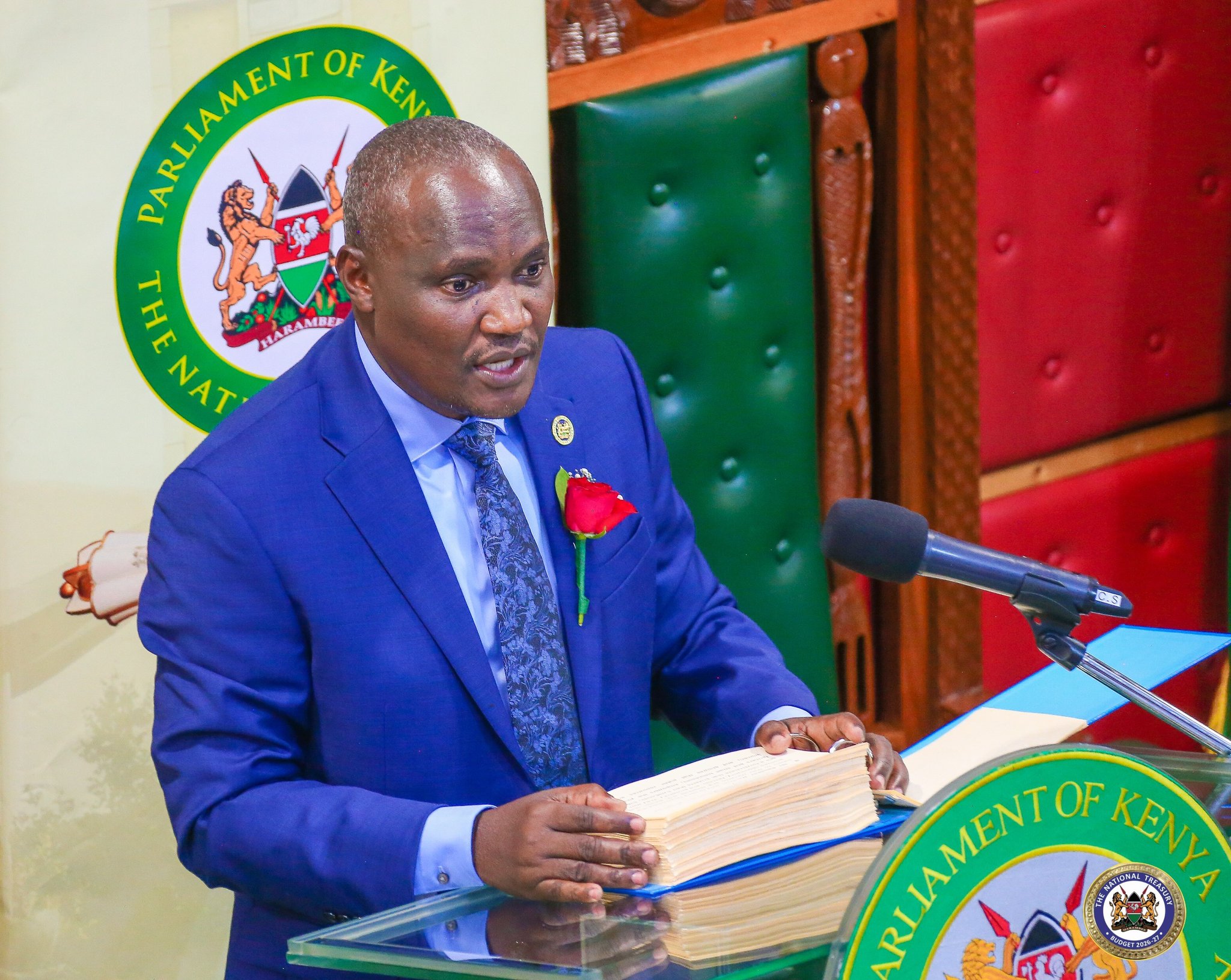
Kenya’s supplementary budget for the 2026/27 financial year will have to accommodate new government spending commitments as revenue collections fall short of targets, putting additional pressure on the National Treasury’s efforts to manage the fiscal deficit and public debt.
National Treasury Cabinet Secretary John Mbadi is expected to present the first supplementary estimates for the financial year in November, with the proposed adjustments set to factor in Cabinet-approved expenditure, including the settlement of pending bills worth Sh50 million and below and additional financing for national carrier Kenya Airways.
The supplementary budget comes as the government faces competing funding demands from ministries, departments and agencies (MDAs), even as tax collections struggle to match the targets set at the beginning of the financial year.
“We are hoping that in the supplementary budget coming in the next three weeks, we will be making submissions on how to clear most of the pending bills,” National Treasury Principal Secretary Chris Kiptoo told the National Assembly’s Finance and National Planning Committee on Tuesday.
Kiptoo said the Treasury was considering different financing arrangements for settling the arrears, including securitisation or payments through the national budget.
Kenya’s supplementary budget faces competing spending demands
The proposed supplementary estimates come against a fiscal framework that already requires substantial government borrowing to finance expenditure.
Kenya’s 2026/27 budget projected expenditure of approximately Sh4.8 trillion against revenue and grants of about Sh3.64 trillion, with a deficit of approximately Sh1.15 trillion. The Treasury had also projected net domestic borrowing of Sh1.03 trillion to support the government’s financing requirements.
The current fiscal projections put total expenditure at Sh4.81 trillion against expected revenues of Sh3.63 trillion. The budget deficit is projected at 5.5 percent of gross domestic product (GDP), equivalent to Sh1.14 trillion, for the financial year ending June 2027.
The government also projects the deficit to rise to 5.9 percent of GDP in FY2027/28, pointing to continued pressure on public finances beyond the current budget cycle.
The National Treasury has acknowledged that spending requests from government ministries and State departments are exceeding the resources available from revenue collection.
“The problem right now is that spending pressures are very high. I am getting requests every now and then from MDAs asking for more money, but we are unable to raise corresponding revenues,” Kiptoo said.
The pressure comes as Kenya’s public debt surpassed Sh13 trillion as of August 2026, adding to the government’s financing obligations as it prepares to revise spending allocations and revenue expectations.
KRA misses first-quarter revenue target despite growth in collections
The revenue challenge is evident in the Kenya Revenue Authority’s (KRA) first-quarter performance, with ordinary revenue collections falling Sh58.2 billion below the Treasury’s target for the period.
KRA collected Sh655.8 billion in ordinary revenue between July and September 2026, compared with Sh573.5 billion during the corresponding period in 2025. This represented year-on-year growth of 14.4 percent, although the increase was insufficient to meet the government’s collection target.
The National Treasury attributed the overall revenue shortfall to weaker-than-targeted ordinary revenue collections, partly offset by stronger ministerial appropriations in aid (A-i-A).
“By the end of September 2026, revenue collection was below target by Sh40.4 billion mainly on account of shortfalls in ordinary revenues of Sh58.2 billion while ministerial appropriations in aid (A-i-A) surpassed the target by Sh17.8 billion,” the Treasury said in an earlier presentation.
Ordinary revenue comprises tax and non-tax receipts collected by the government, primarily through KRA. The A-i-A category covers revenues collected by ministries and government departments from their respective services and activities.
The Treasury expects total revenue to reach Sh3.63 trillion by June 2027, comprising Sh2.985 trillion in ordinary revenue and Sh644.8 billion in ministerial A-i-A.
The latest collection figures come as KRA pursues digital compliance measures to improve tax administration and broaden visibility into business transactions.
TechTrendsKE reported on October 29 that KRA was discussing an arrangement with Safaricom to facilitate electronic tax invoicing for merchants using M-Pesa tills and paybills. The proposed arrangement would also use transaction information associated with merchant tills and Pochi la Biashara accounts to improve visibility into business income.
The initiative forms part of the authority’s efforts to strengthen electronic invoicing and tax compliance, particularly among businesses operating through mobile money payment channels.
Treasury weighs options for clearing pending bills
The settlement of pending bills is among the major expenditure items expected to feature in the November supplementary budget after the Cabinet approved payments for outstanding government obligations valued at Sh50 million and below.
The initiative is intended to prioritise micro, small and medium-sized enterprises (MSMEs), which often depend on timely payments from government contracts to maintain working capital, pay employees and meet their own supplier obligations.
For businesses that have completed government contracts but are awaiting payment, clearing these arrears could release funds that have remained tied up in outstanding invoices.
The Treasury has already used securitisation to settle pending bills in the roads sector, clearing approximately Sh80 billion through an arrangement backed by the Road Maintenance Levy Fund.
The fund receives revenue through a Sh25 charge on every litre of petrol and diesel sold at the pump, providing a financing stream that the government has used to address outstanding obligations in the sector.
Kiptoo indicated that the Treasury was considering whether to extend securitisation to the wider pending-bill settlement programme or allocate funds directly through the budget.
The issue also has implications for commercial banks, which finance businesses supplying goods and services to government entities.
In October, TechTrendsKE reported on Moody’s assessment of Kenyan banks’ exposure to government securities, noting that their holdings of sovereign debt stood at 1.7 times their equity at the end of December 2025. The report also linked declining government pending bills to improved loan repayment among contractors, contributing to better asset quality in the banking sector.
Settling outstanding invoices can help contractors repay loans and restore their capacity to finance business operations, making the government’s pending-bill programme relevant to both enterprise liquidity and the banking sector.
Kenya Airways financing adds to government spending commitments
The supplementary budget is also expected to accommodate additional financial commitments to Kenya Airways after the Cabinet approved Sh45.5 billion ($350 million) in shareholder financing for the national carrier.
The funding is intended to help the airline meet urgent financial obligations, including aircraft maintenance and returning grounded planes to service.
The Cabinet also proposed converting Sh122 billion in existing government loans to Kenya Airways into equity, a measure intended to strengthen the airline’s balance sheet and support future capital raising.
The two measures form part of a wider government effort to address the airline’s financial position and support its recovery.
As TechTrendsKE reported in October, the shareholder financing and proposed debt restructuring are linked to Kenya Airways’ efforts to restore its operational capacity and pursue longer-term capital support, including the search for a strategic investor.
The Sh45.5 billion shareholder financing represents an additional funding commitment, while the proposed Sh122 billion conversion concerns existing government loans. The restructuring would change the composition of the government’s financial claims against the airline while supporting its capital position.
The Kenya Airways commitments add to the expenditure decisions the Treasury must accommodate as it prepares the supplementary estimates, alongside pending-bill settlements and funding requests from other government agencies.
Domestic borrowing remains central to budget financing
The supplementary budget comes as the government continues to rely on domestic borrowing to finance a substantial portion of its expenditure requirements.
The original FY2026/27 budget projected net domestic borrowing of approximately Sh1.03 trillion, placing banks and other domestic investors at the centre of the government’s financing strategy.
TechTrendsKE’s reporting on Kenyan banks’ sovereign debt exposure highlighted the close relationship between government borrowing and the financial sector, with commercial banks holding substantial amounts of government securities.
The government’s financing requirements therefore have implications beyond the national budget, particularly for banks, businesses and contractors that depend on access to credit.
For the Treasury, the November supplementary estimates will provide an opportunity to adjust expenditure allocations and revenue expectations as it incorporates approved commitments into the current financial year’s budget.
The revised estimates will also shape how the government manages its financing requirements as it seeks to meet obligations to suppliers, support Kenya Airways and fund government programmes while working within a constrained revenue environment.
Go to TECHTRENDSKE.co.ke for more tech and business news from the African continent and across the world.
Follow us on WhatsApp, Telegram, Twitter, and Facebook, or subscribe to our weekly newsletter to ensure you don’t miss out on any future updates. Send tips to info@techtrendsmedia.co.ke