
Kenyans can now prove M-PESA payments without exposing personal details

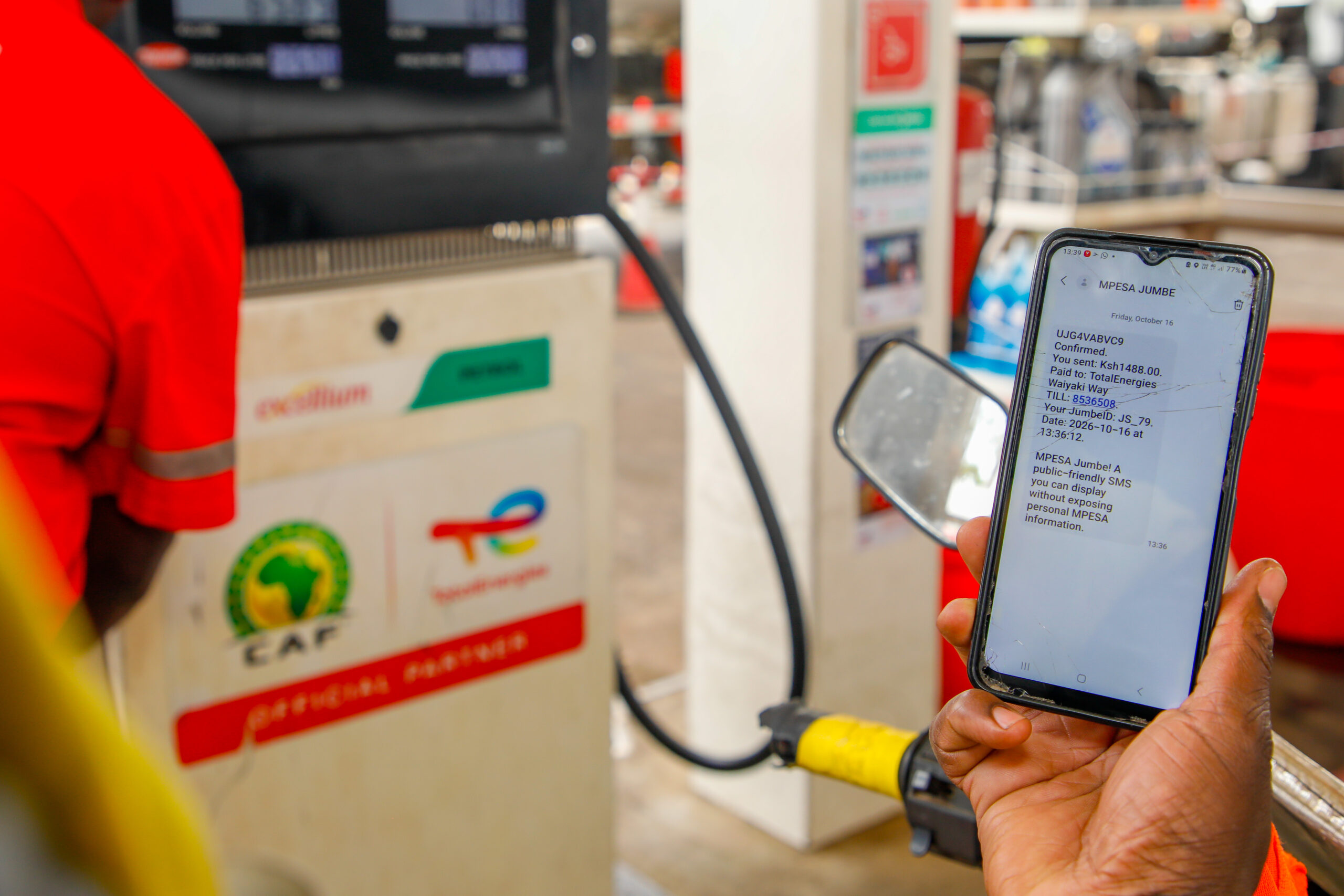
“Nionyeshe message” is a familiar request after paying through M-PESA. At a petrol station, restaurant or local shop, customers are often asked to display their transaction confirmation before an attendant completes a sale. Safaricom’s M-PESA Jumbe addresses this routine interaction by allowing customers to share proof of payment with less exposure of their personal information, while enabling merchants to send payment notifications directly to authorised staff.
TechTrendsKE first reported on Jumbe’s privacy benefits on October 4. With the service now live, attention turns to how it works in everyday transactions, including its potential to reduce delays at businesses where several employees serve customers but payment notifications traditionally arrive on a single device.
How M-PESA Jumbe changes payment confirmation
M-PESA Jumbe is a split-notification feature that allows eligible Lipa na M-PESA and Pochi la Biashara merchants to nominate additional phone numbers to receive payment alerts. Speaking about the service, Boniface Mungania, Acting Chief Financial Services Officer at Safaricom PLC, explained how the arrangement addresses a common problem at businesses with multiple service points.
“If you have more than one service point then it becomes very difficult for people who are serving customers to identify or to get notification whether payments are done,” Mungania said.

Without direct notifications, employees may have to call a business owner to confirm a transaction or ask customers to show their M-PESA messages. The latter can expose personal information that is unnecessary for verifying a purchase, while the former can delay service when the person responsible for the payment device is elsewhere.
Mungania said the feature gives merchants the ability to let employees receive payment notifications directly, reducing the need for staff to request customers’ messages. For businesses handling several transactions at once, this provides a way to delegate payment confirmation without giving every employee access to the owner’s wider M-PESA account.
JumbeID limits the personal details customers reveal
The customer-facing privacy feature centres on JumbeID, an alias that replaces the customer’s full name and phone number in the Jumbe proof-of-payment message. It combines the first letters of the customer’s first and last names with the final two digits of their phone number. For example, Nancy Kamau, whose number ends in 74, would appear as NK_74.
The message retains transaction information needed to identify the payment, including the transaction reference, amount, business name, Till number, date and time. Customers can therefore show evidence of a transaction without displaying their full phone number or M-PESA balance as they might when opening their ordinary confirmation message.
JumbeID reduces the amount of personal information exposed during payment confirmation, although it does not make a transaction completely anonymous. Initials and the final two digits of a phone number may still help someone recognise a customer in certain circumstances. The transaction reference remains important for distinguishing individual payments, including transactions involving customers with similar JumbeIDs.
For customers, the benefit is practical. Someone settling a restaurant bill or paying for fuel can present the dedicated Jumbe message when asked to confirm a purchase, rather than exposing additional account information to people nearby.
TotalEnergies dealer explains the difference for attendants
The operational benefit is particularly relevant at fuel stations, where multiple attendants may serve customers at different pumps while payments are processed throughout the day.
Edwin Kimani, a dealer at TotalEnergies, said his station previously relied on a single device to receive M-PESA payment notifications. Under the Jumbe arrangement, fuel attendants and cashiers can receive alerts on their own phones, reducing their dependence on that central device.
“M-PESA Jumbe has been very easy for us because before we only had one device in the station and we used to get feedback of customer payment in that one device,” Kimani said. “Right now, every fuel attendant or cashier has a Jumbe account which they get payment notifications from the customer.”
His account illustrates how the feature can change the payment-confirmation process at a busy service station. Attendants can receive transaction alerts directly instead of waiting for a colleague with access to the main device or asking customers to open their personal messages.
Kimani also highlighted the customer privacy benefit, explaining that attendants no longer need to see customers’ identifying details when checking payment notifications.
“The best thing about M-PESA Jumbe is that we are protecting customer data, of which we cannot see a customer’s phone number or even their names, so the customer is safe when it comes to data protection,” he said.
For merchants, this separates the information required to confirm a transaction from broader access to customer details. For customers, it reduces the need to disclose personal information simply to complete a purchase.
How merchants can activate M-PESA Jumbe
Eligible Lipa na M-PESA and Pochi la Biashara merchants can nominate up to 50 additional recipients for payment notifications through the M-PESA Jumbe menu by dialling *234#. A nominated staff member receives an invitation and must accept it before receiving alerts. The service uses SMS and USSD, allowing recipients to use basic phones as well as smartphones.
Receiving notifications does not give nominated staff access to the business owner’s M-PESA balance, PIN, statement or transaction history. Their access is limited to the payment information supplied through the notifications, allowing owners to delegate transaction confirmation while retaining control over their accounts.
The change addresses a small but familiar source of friction in Kenya’s mobile money economy. Customers need to prove that they have paid, and employees need to confirm receipt before completing a transaction. M-PESA Jumbe gives merchants another way to manage that exchange while reducing unnecessary exposure of customer information.
Real ESG impact doesn’t happen in panels alone, it happens in the rooms where financiers, operators, and policymakers actually align. Our GreenShift Forum 2026 cuts the noise, bringing together the people rewiring Africa’s sustainability and energy frameworks for one focused day in Nairobi. Secure your seat.
Go to TECHTRENDSKE.co.ke for more tech and business news from the African continent and across the world.
Follow us on WhatsApp, Telegram, Twitter, and Facebook, or subscribe to our weekly newsletter to ensure you don’t miss out on any future updates. Send tips to editorial@techtrendsmedia.co.ke

