Two Kenyan healthcare innovators reach the final of Africa’s top engineering prize

Two Kenyan healthcare innovators are among four finalists selected for the 2026 Africa Prize for Engineering Innovation, the continent’s largest award dedicated to engineering innovation and entrepreneurship.
Naom Monari, founder of mobile dialysis service Renal Roads, and Dr Alice Muhuhu, developer of portable cardiac monitoring platform MoyoECG, were picked from a shortlist of 16 entrepreneurs alongside South African chemical engineer Dyllon Randall and Nigerien engineer Mamane Kabirou Ousseini.
The four will pitch to a panel of judges at the Africa Prize Final in Johannesburg on 28 October, where the winner will receive £50,000 (about USD 67,000 or KES 8.6 million) and the remaining three finalists £10,000 (about USD 13,400) each.
Run by the UK’s Royal Academy of Engineering and part-funded by the UK Department for Business, Innovation, Science and Trade, the Africa Prize is in its 12th edition and supports its shortlisted cohort through an eight-month programme of training and mentorship aimed at commercialising engineering solutions to local challenges.


“This year’s shortlist is a strong demonstration of the extraordinary depth of engineering talent across the continent,” said Rebecca Enonchong, Chair of the Africa Prize judging panel. “Every entrepreneur has brought something different to the Africa Prize, with innovations spanning across different sectors, countries and societal challenges.”
Enonchong said the finalists’ work showed “what is possible when engineering is shaped by a clear understanding of a given problem in its local context.”

Monari, who began her career as a student nurse in 2017, developed Renal Roads to bring regular dialysis to patients in rural and hard-to-reach communities. The clinic is built inside a repurposed 40-foot shipping container mounted on a trailer and operates from county health facilities on a fixed weekly schedule.
Each unit houses four dialysis machines, a reverse osmosis water treatment system, solar power and backup systems, and an emergency area. It visits an average of three communities a week and can deliver up to 400 dialysis sessions a month, with treatment reimbursed through Kenya’s national health insurance scheme.
Since being shortlisted, Renal Roads has partnered with Japanese dialysis equipment maker Nipro Medical and secured funding from the World Diabetes Foundation to expand mobile dialysis access.
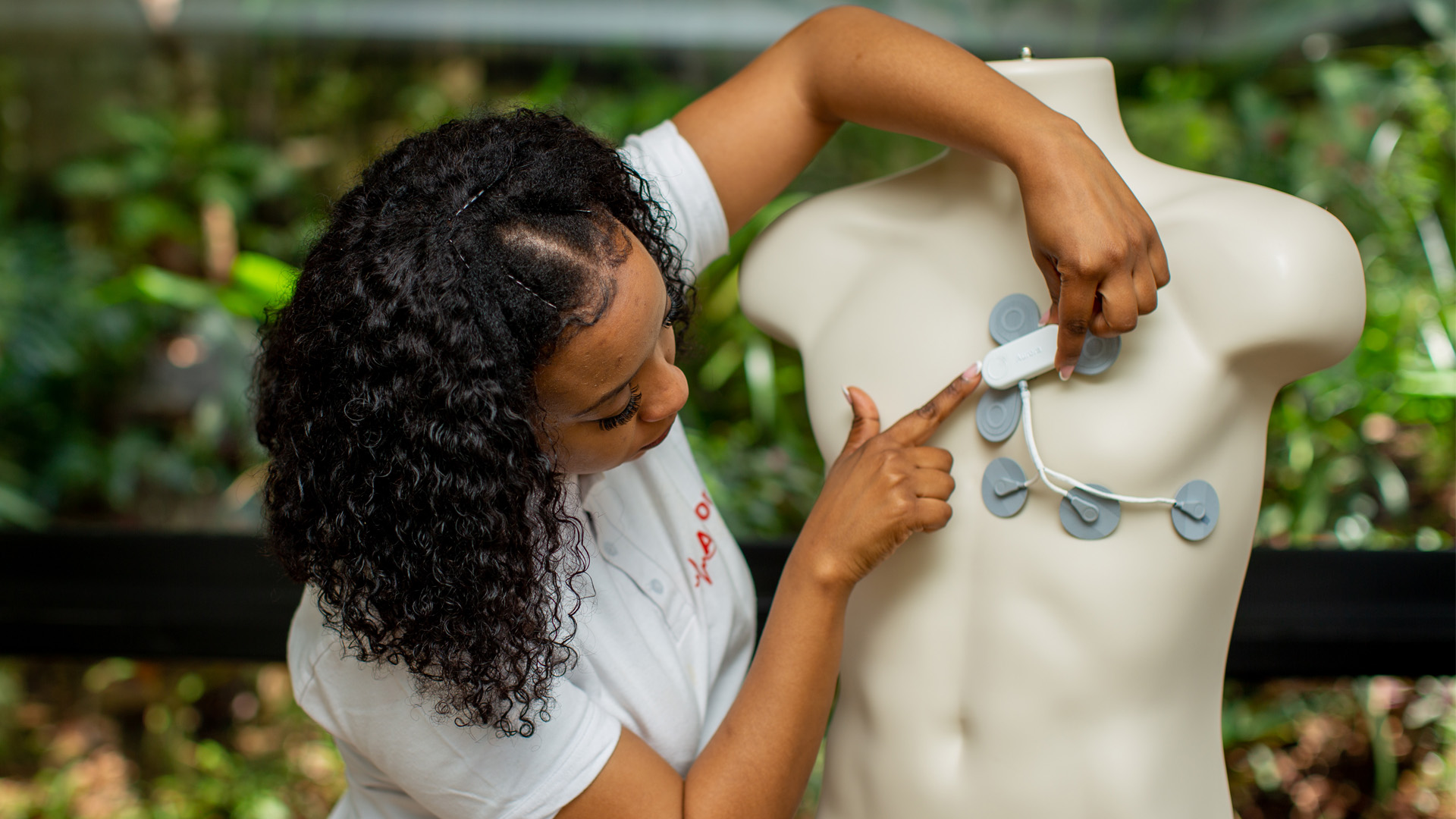
Dr Muhuhu’s MoyoECG combines a wearable, wireless multi-lead electrocardiogram with embedded artificial intelligence to help frontline health workers detect heart conditions and make timely referrals, particularly in clinics without specialist cardiac care.
The platform can recognise patterns linked to more than 50 cardiac conditions, including atrial fibrillation, arrhythmias and signs of cardiac ischaemia, helping flag patients at higher risk of stroke and heart failure. Early pilots cut ECG interpretation time from about 30 minutes to under five, including in areas with unreliable internet.
MoyoECG previously won the Qualcomm Make in Africa programme and has received backing from organisations including the University of Oxford, Novartis, the Global Fund, Standard Chartered and the Kenya Cardiac Society.
South Africa and Niger complete final line-up
Randall’s Pee-Cycling is a modular system that converts urine into nursery-grade liquid fertiliser and reusable water, reducing reliance on imported fertiliser. A full-scale unit can process up to 3,000 litres of urine a day, with every 1,000 litres saving around 2,000 litres of potable water.
The company’s plant at Cape Town Stadium is now fully operational, run with first commercial client Bidvest Prestige and the City of Cape Town. The project collected 3,600 litres of urine during a single South Africa versus New Zealand rugby match and has been included in the city’s three-year stadium tender.
Ousseini, the first engineer from Niger to make the Africa Prize programme, founded Likita Care, a locally manufactured medical monitoring platform for patient, cardiac and prenatal care. Its devices track 12 vital sign indicators across adults, newborns and foetuses, with an AI module interpreting readings in real time and a central dashboard supporting telemedicine and monitoring of up to 20 patients at once.
More than 70 units have been deployed in Niger, with five medical centres actively using the technology. The company is planning a local manufacturing facility and exploring expansion into neighbouring countries.
The final, supported by Anglo American, will be hosted by former Springbok rugby player Bryan Habana at NH Johannesburg Sandton. The remaining 12 shortlisted innovators will compete for the £5,000 One-to-Watch Award, decided by audience vote.
Since its launch in 2014, the Africa Prize has supported more than 180 businesses from 24 countries. According to the Royal Academy of Engineering, 85 per cent of its alumni are generating revenue and have collectively raised more than USD 34 million in grants and equity funding.
Real ESG impact doesn’t happen in panels alone, it happens in the rooms where financiers, operators, and policymakers actually align. Our GreenShift Forum 2026 cuts the noise, bringing together the people rewiring Africa’s sustainability and energy frameworks for one focused day in Nairobi. Secure your seat.
Go to TECHTRENDSKE.co.ke for more tech and business news from the African continent and across the world.
Follow us on WhatsApp, Telegram, Twitter, and Facebook, or subscribe to our weekly newsletter to ensure you don’t miss out on any future updates. Send tips to info@techtrendsmedia.co.ke