
WSO2Con Africa 2026 puts durable workflows at the centre of enterprise AI
WSO2 is showing how persistent workflows and agent-driven execution can handle business processes that may run for days, weeks or months while retaining human oversight

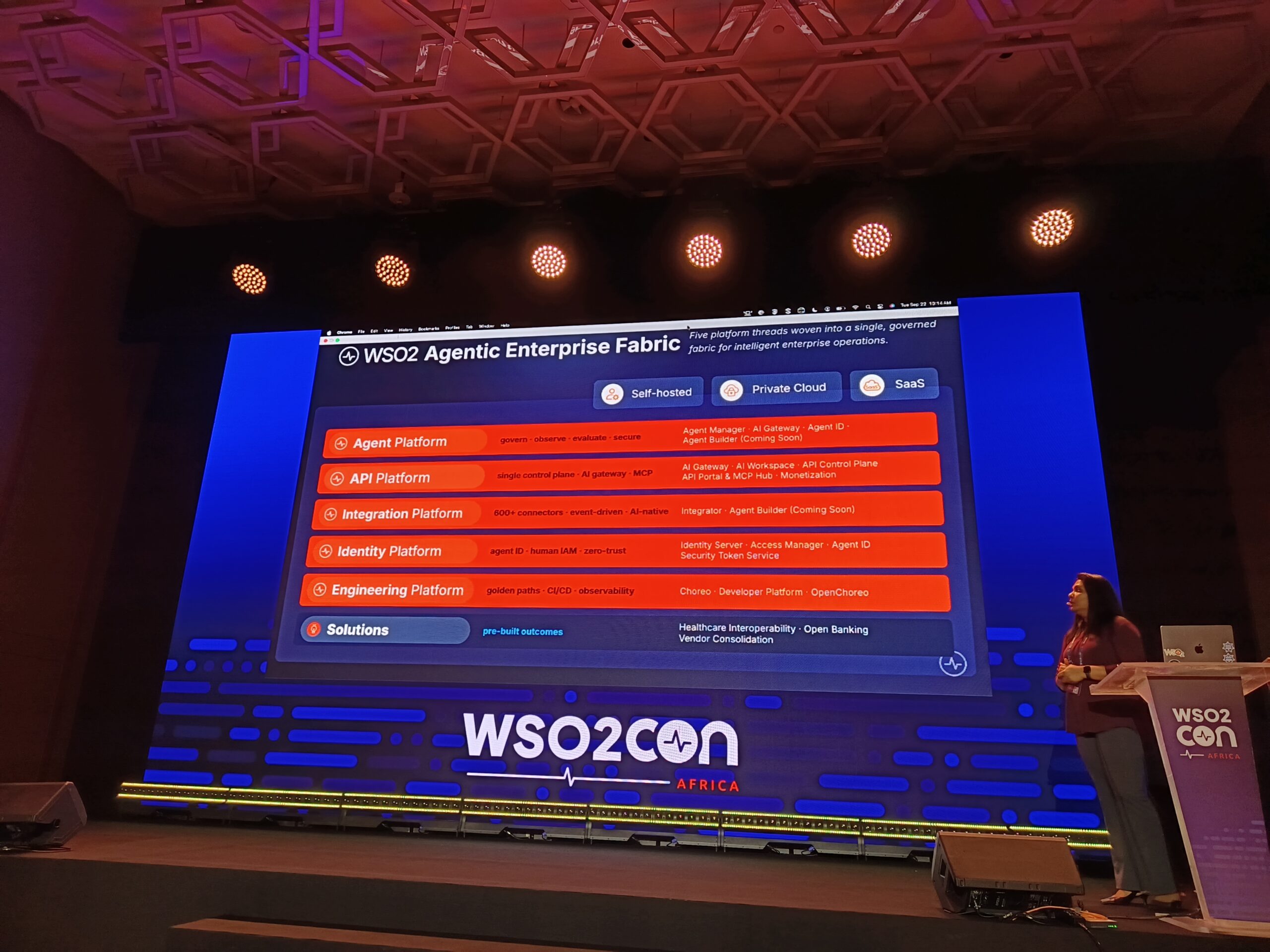
At WSO2Con Africa 2026 in Nairobi, WSO2 is examining a practical problem that becomes more important as enterprises connect AI agents to real business processes: what happens when a task cannot be completed in a single uninterrupted run?
The answer presented during the integration track is a durable workflow model designed to preserve the state of a business process while it waits for an external event, human decision or another system to become available. The session, “Making Existing Systems and Data AI-Agent Accessible,” presented durable workflows and durable agentic workflows as mechanisms for handling processes that can extend from minutes to days, weeks or even months.
That changes the requirements for enterprise automation. A short integration can receive a request, process information and return a result. A long-running business process may need to pause, retain everything it has already completed and continue later without restarting from the beginning.
Enterprise processes do not always run in one sitting
WSO2’s presentation started with a distinction between conventional integrations and long-running workflows. Traditional integration processes can be relatively short, with a request or event triggering data processing before information is sent to another system.

Long-running workflows have a different operating model. They can involve multiple steps, external events and human input, meaning the process may need to remain active while waiting for something that could happen much later. Examples presented during the session included order fulfilment, user onboarding and loan approvals.
Persistence is therefore central to the model. If an external system becomes unavailable or a process is interrupted, the workflow should retain the state of what has already happened and resume when the required condition is available again. The session also highlighted correlation, allowing external events to be associated with the particular workflow instance they belong to, and interruptibility, allowing a workflow to wait without continuously consuming resources.

A simple example presented during the session involved an order moving through payment validation before reaching a human approval step. If the person responsible for the approval is unavailable for three days, the process does not need to be restarted. It waits, retains its state and continues with the remaining steps once the approval is received.
Durable workflows preserve state between steps
The durability concept extends beyond simply keeping a process running. The workflow saves state as it progresses, allowing it to resume from where it stopped.
The presentation described support for activities involving REST, SOAP and SMTP, alongside human tasks and approvals, error handling and retries. WSO2 also demonstrated a workflow management environment where administrators can see running workflows, inspect inputs and outputs, and manage outstanding human tasks.
That management layer becomes particularly relevant when an enterprise process involves people. In the demonstration, a claim submitted above a specified threshold remained pending because it required manager approval. The administrator could see that the workflow was still running, inspect its status and reassign the human task where necessary. Once the approval was completed, the workflow continued through its remaining steps.
The example is deliberately straightforward, but it illustrates an important architectural requirement for enterprise automation. Human intervention does not necessarily terminate an automated process. The workflow can treat the human decision as one step in a larger process and continue once that decision has been recorded.
Where AI agents change the workflow model
The session then moved from deterministic workflows to agent-driven workflows.
In a deterministic workflow, the organisation defines the logic and sequence in advance. If one condition is met, the workflow follows the corresponding path. The steps are explicitly defined and the system executes them according to that logic.
An agent-driven workflow gives the agent more discretion over what happens at runtime. Instead of specifying every individual step, the agent receives instructions, tools and the ability to interact with connected systems. It can then determine the appropriate action based on the state of the process and the information available to it.
That distinction matters because agentic systems introduce a different execution model. The workflow still needs structure, connectivity and controls, but the exact path through that workflow can be determined dynamically.
WSO2’s presentation framed the two approaches as different types of workflows that can use the same underlying capabilities, including activities, state management and human tasks. An agent can therefore operate within a workflow that is capable of pausing for approval or other external conditions rather than treating every action as an isolated AI interaction.
Human approval remains part of the architecture
The demonstration also made clear that agent-driven execution does not remove people from every business decision.
WSO2 showed a workflow in which a claim could proceed automatically when it fell below a defined threshold, while a larger claim required manager approval. The workflow remained active while waiting for that decision, with the control pane providing visibility into its status and allowing an administrator to manage the outstanding task.
This creates a model where automation and human judgement can coexist inside the same process. An agent or workflow can handle the steps that are suitable for automation while routing specific decisions to authorised people.
For enterprise deployments, that separation can be significant. Business processes frequently include approvals, exceptions and decisions that cannot be reduced to a single automated transaction. A durable workflow provides a mechanism for keeping those processes together even when human intervention introduces a delay.
The workflow becomes a persistent business process
The session also demonstrated how these workflows can be triggered. A workflow can respond to a system condition, file or event, or it can be initiated through an HTTP request. In the demonstration, an HTTP request from a web form was used to initiate the workflow.
Once initiated, the workflow becomes a persistent process with defined inputs, outputs and internal business logic. The presentation showed a built-in integration control pane for monitoring these processes and managing their execution.
This is where WSO2 is connecting its traditional integration capabilities with agentic applications. The broader presentation positioned integration as the bridge between existing enterprise applications, APIs and data and the AI agents that need to access them. The company’s argument is that organisations can make existing capabilities available to agents rather than rebuilding every underlying system specifically for AI.
Durable workflows represent one part of that architecture. They address what happens when an agent or automated process needs to execute a business task that does not finish immediately.
From AI responses to business execution
The distinction is important as enterprises move beyond AI systems that primarily generate content or answer questions.
A chatbot can return a response within seconds. A business process may require an API call, a database update, an external event, a compliance check and a human approval before it can be completed. Those steps can occur across different systems and time periods.
The WSO2 session presented durable workflows as a way of structuring that execution. The workflow retains its state, waits when necessary, resumes when conditions change and provides management capabilities around the process. Agent-driven workflows add another layer by allowing an agent to determine actions at runtime based on its instructions, tools and the current state.
That combination is central to the session’s broader argument about making enterprise systems ready for agentic applications. The AI agent is only one part of the architecture. The surrounding integration, workflow, identity, governance and management layers determine how that agent can interact with actual business systems.
At WSO2Con Africa 2026, the discussion is therefore moving from what an AI agent can generate to what it can safely and persistently do inside an enterprise. Durable workflows provide one answer to the operational problem: keeping a business process intact when execution stretches beyond a single interaction, requires human intervention or encounters systems that are temporarily unavailable.
The next part of the integration session turns to the other side of that equation: how existing enterprise systems and data can be made accessible to AI agents in the first place.
Real ESG impact doesn’t happen in panels alone, it happens in the rooms where financiers, operators, and policymakers actually align. Our GreenShift Forum 2026 cuts the noise, bringing together the people rewiring Africa’s sustainability and energy frameworks for one focused day in Nairobi. Secure your seat.
Go to TECHTRENDSKE.co.ke for more tech and business news from the African continent and across the world.
Follow us on WhatsApp, Telegram, Twitter, and Facebook, or subscribe to our weekly newsletter to ensure you don’t miss out on any future updates. Send tips to info@techtrendsmedia.co.ke


