
CBK proposes tougher capital rules for banks whose failure could threaten Kenya’s financial system

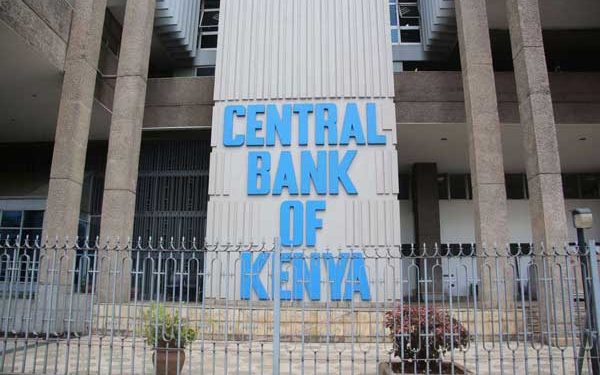
CBK’s proposed framework would subject designated banks to additional capital requirements, closer supervision and formal recovery and resolution planning.
The Central Bank of Kenya (CBK) is proposing a formal framework to identify and supervise domestic systemically important banks whose failure could cause significant disruption to the country’s financial system and wider economy.
The draft framework would require designated banks to hold additional Common Equity Tier 1 (CET1) capital, undergo more intensive supervision and maintain updated recovery and resolution plans. The proposed rules are intended to reduce the likelihood that the failure of a major financial institution would trigger wider instability or require public-sector support.
The framework applies to institutions licensed under the Banking Act and approved non-operating holding companies. CBK defines a domestic systemically important bank as an institution whose disorderly failure could cause significant dislocations in the domestic or regional financial system and adverse economic consequences.

How CBK would identify systemically important banks
The proposed assessment would consider five indicators: size, interconnectedness, substitutability, complexity and importance to the domestic economy.
CBK has assigned different weights to each indicator based on its perceived contribution to systemic risk. Size carries the highest weighting at 40 percent, followed by interconnectedness at 30 percent. Substitutability accounts for 15 percent, importance to the domestic economy for 10 percent and complexity for 5 percent.

The size assessment would consider a bank’s leverage ratio exposure, including its total assets and off-balance-sheet exposures, relative to the aggregate exposure of the banking sector.
Interconnectedness would examine deposits and balances due from and due to other local banking institutions. This is intended to capture the extent to which a bank’s difficulties could affect other lenders through financial linkages.
Substitutability would assess the difficulty of replacing a bank’s services, using household loans, trade and small and medium-sized enterprise loans, and payments cleared or settled through the Real-Time Gross Settlement System. These components carry weightings of 30 percent, 30 percent and 40 percent respectively within the substitutability category.
The complexity indicator would consider financial securities, derivative assets and derivative liabilities. Importance to the domestic economy would be measured through customer deposits and the value of a bank’s total assets relative to Kenya’s gross domestic product.
CBK would calculate a total systemic importance score using the following formula:
0.4 size + 0.3 interconnectedness + 0.15 substitutability + 0.05 complexity + 0.1 importance to the domestic economy
The framework proposes a total score above 0.25 and/or a category score above 0.05 as thresholds indicating systemic importance. CBK would also retain supervisory judgment when determining whether an institution should be designated.
Three capital buffers proposed
Banks identified as systemically important would be placed into one of three buckets, with each category attracting an additional CET1 capital requirement.
| D-SIB bucket | Total score | Additional CET1 requirement |
|---|---|---|
| Bucket 1 | Above 0.05 to 0.15 | 0.5% of risk-weighted assets |
| Bucket 2 | Above 0.15 to 0.25 | 1.5% of risk-weighted assets |
| Bucket 3 | Above 0.25 | 2.5% of risk-weighted assets |
The additional loss-absorbency requirement would be applied at both standalone and consolidated levels. CBK proposes implementing the buffer through CET1 capital as an extension of the capital conservation buffer.
CET1 is the highest-quality form of bank capital and is primarily made up of ordinary shareholders’ equity and retained earnings. It provides a cushion against unexpected losses and is central to a bank’s ability to remain solvent during periods of financial stress.
The proposal could therefore affect how designated banks balance capital retention and dividend distributions. Institutions with limited capital headroom may need to retain a larger share of profits, raise additional equity or moderate balance-sheet growth to meet the higher requirements. The framework does not automatically require dividend cuts, however, and the practical effect would depend on each bank’s capital position, profitability, risk-weighted assets and eventual designation by CBK.
Annual assessment and publication
CBK proposes conducting the D-SIB assessment annually as at December 31, using data from banks and mortgage finance institutions.
Institutions designated as D-SIBs would be notified in writing by the end of March, while the list of designated banks would be published by June.
Newly designated banks, as well as institutions moved into a higher systemic-risk bucket, would have up to 12 months from notification to comply with the applicable additional capital requirement. They would also be required to submit a board-approved action plan within three months of notification.
The framework would allow CBK to revise a bank’s designation or capital bucket as its systemic importance changes.
Closer supervision and stress testing
Designated banks would face greater intensity and frequency of on-site and off-site supervision. CBK would monitor their key performance and risk indicators more closely and increase engagement with boards, audit committees and risk committees.
The proposed framework would also require D-SIBs to conduct stress tests every quarter. These exercises would assess their ability to withstand adverse financial and economic conditions.
Banks would be expected to prepare annual Internal Capital Adequacy Assessment Processes and Internal Liquidity Adequacy Assessment Processes. CBK would review these assessments as part of its supervisory work.
The regulator could also require designated institutions to maintain higher liquidity ratios, provide enhanced disclosures or restrict expansion and the introduction of new products where it considers such measures necessary to contain systemic risk.
Recovery and resolution planning
The draft framework also places greater emphasis on preparing for the failure of a systemically important bank.
D-SIBs would be required to update and submit recovery and resolution plans to CBK annually by April 30. These plans are intended to set out how an institution would restore financial viability during severe distress and how its critical functions could be managed or resolved if failure became unavoidable.
The objective is to reduce disorderly failure, protect essential financial services and limit the possibility that problems at one major institution would spread across the banking system.
Capital rules come as banks prepare for the 2032 threshold
The proposed D-SIB framework comes as Kenya’s banking sector prepares for a separate statutory requirement requiring banks to achieve minimum core capital of Sh10 billion by December 31, 2032.
The Business Laws (Amendment) Act 2024 introduced a staggered approach towards the higher minimum, including annual milestones. However, the Finance Act 2026 repealed the annual milestones and retained the December 2032 deadline.
The Sh10 billion requirement is a sector-wide minimum and is separate from the additional capital buffers proposed for banks designated as systemically important. A bank could therefore be subject to the general statutory capital requirement as well as an additional D-SIB buffer if it is designated by CBK.
The two measures reflect a broader regulatory focus on ensuring that banks have sufficient capital to absorb losses and continue operating during periods of stress. For smaller institutions, the immediate challenge is meeting the minimum capital threshold. For the largest and most interconnected banks, the proposed D-SIB framework could introduce additional requirements linked to their potential impact on the wider economy.
What the proposal could mean for major banks
The framework is likely to be most relevant to Kenya’s largest and most interconnected lenders, including institutions such as Equity Group, KCB Group and Co-operative Bank. CBK has not yet published a final list of designated D-SIBs, so the proposal should not be read as a confirmation that particular banks will fall into a specific capital bucket.
For investors, one potential implication is the balance between dividend payments and capital accumulation. Banks that generate strong profits and maintain substantial capital surpluses may be able to meet additional requirements without materially changing their dividend policies. Institutions with narrower capital buffers, faster asset growth or weaker earnings may have to retain more profits or consider other capital-raising measures.
Kenya’s listed banks have become important sources of dividend income for investors. Their ability to continue increasing distributions will depend on earnings growth, capital adequacy, lending expansion, regulatory requirements and the amount of profit retained on their balance sheets.
The proposed framework is therefore relevant beyond prudential supervision. It could also influence banks’ capital-allocation decisions, including how much they lend, how much capital they retain and how much they return to shareholders.
Public consultation remains open
The D-SIB framework is still a draft and has not yet taken effect. CBK has invited members of the public and industry stakeholders to submit comments by November 7, 2026.
The final framework, including the designation methodology, supervisory requirements and implementation arrangements, may change after the consultation process. Its eventual effect on individual banks will depend on the final rules, CBK’s annual assessment and the capital position of each designated institution.
Real ESG impact doesn’t happen in panels alone, it happens in the rooms where financiers, operators, and policymakers actually align. Our GreenShift Forum 2026 cuts the noise, bringing together the people rewiring Africa’s sustainability and energy frameworks for one focused day in Nairobi. Secure your seat.
Go to TECHTRENDSKE.co.ke for more tech and business news from the African continent and across the world.
Follow us on WhatsApp, Telegram, Twitter, and Facebook, or subscribe to our weekly newsletter to ensure you don’t miss out on any future updates. Send tips to editorial@techtrendsmedia.co.ke


