Why the Galaxy S26 FE looks very different from Samsung's original FE formula

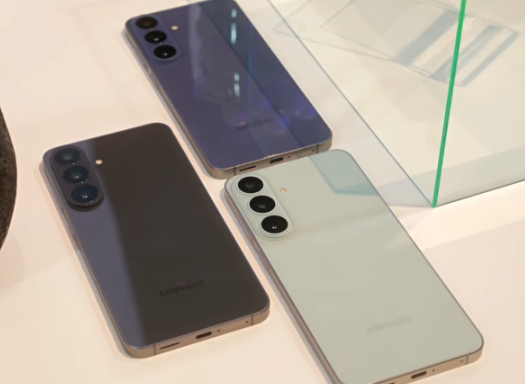
Samsung’s Galaxy S26 FE arrives at a point where the Fan Edition formula has become very different from what Samsung established with the Galaxy S20 FE.
The first FE was built around a simple proposition: take the hardware that made the flagship Galaxy S20 desirable, keep the features that mattered most, and remove some of the expensive extras. Six generations later, Samsung is placing more emphasis on the overall Galaxy experience, particularly AI, camera software, long-term support and a large display, while continuing to reserve some of its newest hardware for the flagship S series.
That makes the Galaxy S26 FE useful as a measure of how Samsung’s approach to the FE range has changed. Its 6.7-inch 120Hz AMOLED display, Exynos 2500 processor, 4,900mAh battery, 45W charging, IP68 protection and triple-camera system give it a strong specification sheet, but its position within Samsung’s wider portfolio matters just as much.
The S26 FE is therefore best understood alongside the phones that came before it. The S20 FE established the original formula, the S21 FE exposed the importance of launch timing, and the S23 FE made Samsung’s hardware compromises more apparent. The S24 FE and S25 FE then moved the series towards the large-screen, software-heavy experience that the S26 FE now continues.

The question is how much that evolution has changed what “Fan Edition” means for a Samsung buyer in Kenya.
The S20 FE set the original standard
The Galaxy S20 FE remains the clearest expression of what Samsung originally meant by Fan Edition.

The phone carried the Snapdragon 865 in markets where Samsung used Qualcomm’s chip, along with a 120Hz display, IP68 water and dust resistance, stereo speakers, wireless charging and reverse wireless charging. Its 4,500mAh battery also delivered strong endurance, with the phone recording around 110 hours at 120Hz and 118 hours at 60Hz in battery testing.
Samsung made more visible compromises elsewhere. The display was 1080p rather than the higher-resolution panel used on the S20, while the camera system used a 12MP main sensor, 12MP ultrawide and 8MP 3x telephoto rather than matching every camera specification of the flagship.
That combination worked because the compromises were relatively easy to understand. The S20 FE retained many of the features that mattered during everyday use while trimming some of the expensive extras.
The result was a phone that could be compared directly with the flagship Galaxy S20 range without requiring buyers to explain why they had chosen the cheaper model.
The S21 FE showed how timing could hurt
The Galaxy S21 FE kept much of that approach. It had a 6.4-inch 120Hz AMOLED display, Snapdragon 888 in some markets, a 4,500mAh battery, IP68 protection, wireless charging and a triple-camera setup.
Its biggest problem was timing.
The S21 FE arrived in January 2022 after months of delays, when the regular Galaxy S21 had already been on the market for most of a year and the Galaxy S22 was approaching.
In Kenya, the S21 FE started at around KSh90,000, putting it close to existing Galaxy S21 pricing while the next flagship generation was approaching.
The hardware itself was still competitive. The problem was that the FE proposition became harder to justify when the product appeared so close to the next flagship generation.
Samsung then skipped the Galaxy S22 FE entirely.
The S23 FE changed the compromises
When Samsung brought back the FE with the Galaxy S23 FE in 2023, the hardware strategy had changed.
The S23 FE used the Snapdragon 8 Gen 1 or Exynos 2200 depending on the market, while the regular S23 used the newer Snapdragon 8 Gen 2 for Galaxy. The FE therefore arrived with an older flagship platform rather than the current generation of Samsung’s top-end silicon.
The difference showed up in efficiency as well as specifications. The regular S23 recorded longer active-use battery life despite having a smaller 3,900mAh battery, while the S23 FE had a larger 4,500mAh cell.
The cameras followed the same pattern. Both phones had 50MP main cameras and 3x telephoto systems, but the S23 used a 10MP telephoto while the FE used an 8MP unit.
The S23 FE was still a premium-looking phone. It had a glass back, an aluminium frame, Gorilla Glass 5 and IP68 protection, and its 6.4-inch AMOLED display ran at 120Hz. But its thicker bezels and heavier body made the differences from the flagship more visible.
Samsung launched the S23 FE in Kenya at KSh99,999.
The S23 FE therefore marked an important change in the FE proposition. Buyers were still getting several recognisable Galaxy S features, but the distance between FE and flagship hardware had become much easier to see.
The S24 FE made the experience larger
Samsung took another step with the Galaxy S24 FE.
The screen grew to 6.7 inches, giving the FE a larger display than the regular S24. The battery increased to 4,700mAh, while Samsung added Galaxy AI capabilities, DeX and a much longer software-support commitment.
The processor was the Exynos 2400e rather than the Snapdragon 8 Gen 3 for Galaxy used by the S24 in many markets. The display remained a 1080p 120Hz panel without LTPO technology, and the camera system retained the familiar 50MP main, 12MP ultrawide and 8MP 3x telephoto arrangement.
The trade-off was becoming more deliberate.
Samsung was giving FE buyers a large display, Galaxy AI, DeX, IP68 protection, wireless charging and long-term software support while reserving some of the hardware advantages for the flagship S range.
In Kenya, the S24 FE started at KSh91,000.
The S25 FE refined the formula
The Galaxy S25 FE pushed this strategy further without dramatically changing the basic hardware package.
It became thinner and lighter, measuring 7.4mm and weighing about 190g, while Samsung used an Armor Aluminum frame and Gorilla Glass Victus+. The battery grew to 4,900mAh and wired charging increased to 45W.
The phone retained the 6.7-inch 120Hz display, IP68 rating, wireless charging, DeX and Galaxy AI. It also moved to Android 16 with One UI 8 and received seven generations of OS upgrades and seven years of security updates.
But Samsung still separated it from the regular S25 through the processor and memory configuration. The S25 FE used Exynos 2400 and 8GB of RAM, while the S25 used a newer Snapdragon 8 Elite for Galaxy platform and offered higher memory configurations.
The S25 FE’s cameras also remained below the flagship level, with a 50MP main, 12MP ultrawide and 8MP 3x telephoto system.
In Kenya, the S25 FE was priced at KSh99,999.
By this point, the FE identity was clear. Samsung was no longer trying to reproduce the flagship specification sheet at a lower price. It was assembling a package of features that made the phone close enough to the S range for a wider group of buyers.
What the Galaxy S26 FE brings
The Galaxy S26 FE continues that approach.
Samsung has equipped it with the 3nm Exynos 2500, a 6.7-inch FHD+ Dynamic AMOLED 2X display running at up to 120Hz, a 4,900mAh battery, 45W wired charging and 15W wireless charging.
The rear camera system consists of a 50MP main camera, 12MP ultrawide and 8MP 3x telephoto, while the front camera is 12MP.
The hardware changes from the S25 FE are relatively restrained. The more significant additions are in Samsung’s software and camera processing.
My FanCam is designed around capturing and editing sports footage, while Super Steady adds Horizon Lock to keep video orientation stable. Samsung has also expanded its AI editing tools through Photo Assist and added context-aware features such as Now Brief and Now Nudge.
The S26 FE is also the first Galaxy S26 device to ship with One UI 9, alongside Android 17.
Samsung is putting particular emphasis on the relationship between the camera and its AI tools. The company describes the phone as a “curated flagship experience” aimed at users who know which features matter most to them.
The software commitment is another major part of the package. Samsung promises seven generations of Android OS upgrades and seven years of security updates, putting the FE much closer to the flagship S series in terms of expected ownership period.
The global starting price is $699 for the 8GB/128GB model, up from the S25 FE’s $649.99 starting price.
Where the S26 FE sits in Kenya
The Kenyan market already has S26 FE units, with 8GB/256GB listings appearing around KSh103,100. Samsung Electronics East Africa has yet to conduct the phone’s official Kenyan launch through its own retail channel, with the Samsung Brand Store currently listing the device as “Coming Soon.”
Samsung’s official launch will establish the local recommended price and the benefits attached to purchases through its authorised channel, including the Care+ and warranty package.
That package matters in a market where the same phone can appear through different retail channels at different prices. Kenya’s current rules require licensed vendors selling phones, tablets and laptops to provide at least a one-year warranty, while Samsung’s African marketing materials have advertised a 24-month warranty for Galaxy phones.
The official Samsung Kenya package for the S26 FE will provide the clearest basis for comparing authorised stock with units already being sold through other channels.
The S26 FE has a difficult comparison inside Samsung’s own range
The FE’s biggest challenge has always been the price of Samsung’s other phones.
That problem becomes particularly relevant when flagship prices begin falling after launch.
Samsung’s Kenyan pricing for the Galaxy S26 starts at KSh120,900 for the 12GB/256GB model, according to local launch pricing published earlier this year. The S25 was listed at KSh109,500 for 12GB/256GB, while the S25 FE launched at KSh99,999.
Those numbers leave the FE sitting in a narrow space.
The S26 FE offers a large 6.7-inch display, 4,900mAh battery, 45W charging, IP68 protection, wireless charging, Galaxy AI and seven years of support. The regular S26 offers newer flagship silicon and 12GB of RAM in the 256GB configuration, while the S25 remains another potential alternative when retailers discount remaining stock.
Samsung also has to account for its A-series.
The company’s upper-midrange phones now carry features that were once strong FE selling points, including high-refresh-rate AMOLED displays, IP ratings, large batteries, long software support and Samsung’s broader AI software suite. The FE still has advantages in processor performance, wireless charging and its closer connection to the flagship S range, but the gap is smaller than it was when the S20 FE launched.
That makes pricing particularly important for the S26 FE.
What six generations of FE phones reveal
The progression from S20 FE to S26 FE is less about Samsung abandoning the original idea than changing what it considers worth preserving.
The S20 FE preserved current flagship silicon and many flagship features while cutting selected hardware luxuries. The S21 FE demonstrated the danger of launching too late. The S23 FE introduced older flagship silicon and made the compromises more visible. The S24 FE expanded the screen and added AI and long-term software support, while the S25 FE refined the physical design and charging.
The S26 FE takes that formula and puts even more weight on software, camera processing and long-term ownership.
The processor history makes the change especially clear. The S20 FE could carry the same Snapdragon 865 generation associated with Samsung’s flagship range. The S23 FE moved to the previous Snapdragon 8 Gen 1 or Exynos 2200 generation, the S24 FE used Exynos 2400e, the S25 FE used Exynos 2400, and the S26 FE uses Exynos 2500 while the regular S26 occupies the newer flagship position.
At the same time, Samsung has protected several features throughout the series: 120Hz AMOLED displays, IP68 protection, stereo speakers and wireless charging. More recently, DeX, Galaxy AI and extended software support have joined that list.
Some features have gone in the opposite direction. The S20 FE had microSD expansion, while later FE models dropped it. QHD+ resolution never became a priority for the series, and adaptive LTPO displays remain largely reserved for higher-end Galaxy S models.
The FE has therefore become a carefully separated tier within Samsung’s portfolio.
The S26 FE’s value will depend on Samsung’s final positioning
The Galaxy S26 FE is a more mature product than some of its predecessors. Its 6.7-inch display, 4,900mAh battery, 45W charging, IP68 protection, wireless charging, Galaxy AI and seven-year software commitment make it a capable long-term phone.
The question for Kenya is how Samsung prices that package when it officially launches.
A market price around KSh103,100 for an 8GB/256GB unit puts the phone close enough to Samsung’s own flagship range that buyers have a reason to compare processor generation, memory and features rather than simply choosing the cheaper Galaxy S.
Samsung’s official Kenyan launch will add another variable through its local pricing, warranty and Care+ package.
That is where the FE concept has arrived after six generations. The S20 FE made its case through flagship hardware at a lower price. The S26 FE makes its case through a large-screen Galaxy experience, selected flagship features, AI software and long support at a lower position in the S-series hierarchy.
Whether that remains compelling in Kenya will depend on the final price Samsung puts next to its own Galaxy S phones.
Real ESG impact doesn’t happen in panels alone, it happens in the rooms where financiers, operators, and policymakers actually align. Our GreenShift Forum 2026 cuts the noise, bringing together the people rewiring Africa’s sustainability and energy frameworks for one focused day in Nairobi. Secure your seat.
Go to TECHTRENDSKE.co.ke for more tech and business news from the African continent and across the world.
Follow us on WhatsApp, Telegram, Twitter, and Facebook, or subscribe to our weekly newsletter to ensure you don’t miss out on any future updates. Send tips to editorial@techtrendsmedia.co.ke