
Safaricom Ethiopia has built the customer base, but turning 15 million users into returns is the next challenge

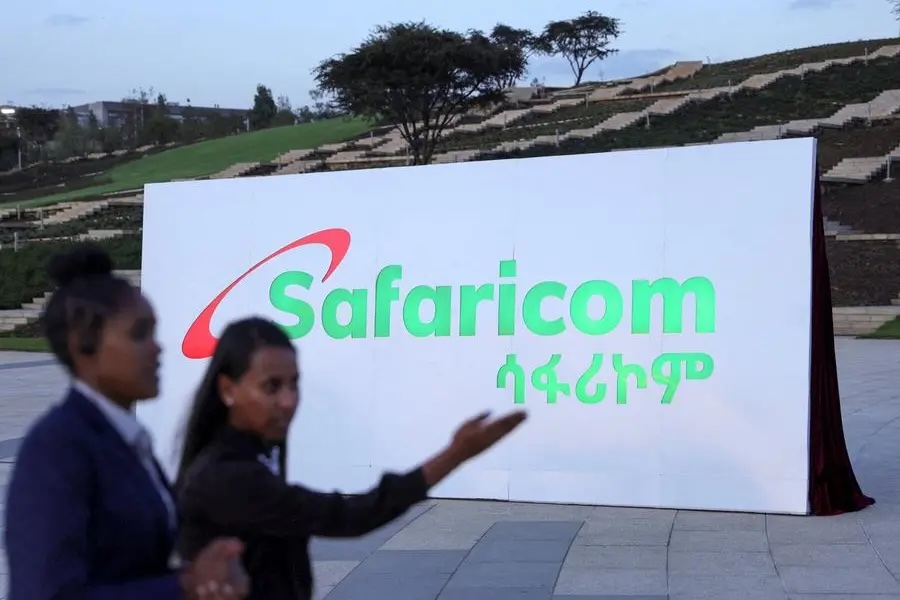
Safaricom Ethiopia’s profitability has become the more important question now that the operator has passed 15 million 90-day active subscribers.
The milestone, reached less than four years after commercial operations began in October 2022, confirms that the company has been able to build a sizeable customer base in one of Africa’s largest and most difficult telecom markets. But customer growth alone does not settle the economics of the Ethiopian operation; Safaricom now has to convert network coverage, data usage and mobile-money adoption into a business capable of sustaining itself.
The pace of the expansion has been remarkable. Safaricom Ethiopia had just over 10 million customers a year earlier, reached 13.63 million by March 2026 and 14.7 million by June, before crossing the 15 million mark. More than 3,500 network sites are now in operation, giving the company coverage of roughly 60 percent of Ethiopia’s population. The infrastructure has therefore moved well beyond the early greenfield phase in which the priority was simply getting a new network into the market.
That matters because the composition of the customer base is beginning to tell a more useful story than the headline number. By June, Safaricom Ethiopia had 12.03 million voice customers and 11.52 million active data users, while FY2026 service revenue reached KSh14.08 billion. Data contributed KSh9.56 billion of that total, compared with KSh3.01 billion from voice, putting data firmly at the centre of the operation’s commercial model.
-
 Safaricom Ethiopia crosses 15m subscribers at five-year markSeptember 7, 2026
 -
The network is becoming a data business
Safaricom entered Ethiopia with the challenge of building a telecommunications network almost from scratch, but the business is now reaching the stage where utilisation matters as much as coverage. More customers using mobile data can raise revenue without requiring the same scale of physical expansion needed during the initial rollout, particularly as smartphone adoption and digital services deepen.
The improvement in revenue has already been substantial. Safaricom Ethiopia’s service revenue more than doubled during the first half of FY2026, reaching KSh6.2 billion by September 2025, with data revenue rising to KSh4.1 billion and voice revenue to KSh1.4 billion. The gains came even as the operation remained loss-making, illustrating the distinction between building a revenue-generating telecom business and reaching a level of revenue that can absorb the cost of operating and financing it.
Pricing has also become an important part of that equation. Safaricom Ethiopia raised mobile data tariffs sharply at the end of 2025, with average increases of about 44 percent, citing the impact of birr depreciation and foreign-currency costs. The move demonstrated the pressure on an operator whose infrastructure and equipment costs are heavily exposed to foreign currency while its customers pay in Ethiopian birr.
M-Pesa has scale, but monetisation remains difficult
The more complicated part of the story is M-Pesa. Safaricom has built a sizeable mobile-money customer base in Ethiopia, with 5.69 million active M-Pesa customers recorded by June 2026, but the service’s contribution to revenue remains small compared with its importance in Kenya.
M-Pesa Ethiopia generated about KSh100 million in FY2026, despite having millions of active users. Earlier reporting showed that the service generated only KSh12.2 million in the nine months to December 2025, equivalent to roughly KSh0.50 in monthly transaction-fee revenue per active customer. Safaricom has also said that 99 percent of small-value payments in Ethiopia were still being conducted in cash, a fundamental difference from the Kenyan market in which mobile money became deeply embedded in everyday transactions.
That distinction is important when assessing Safaricom’s wider Ethiopian strategy. The company cannot simply transplant the Kenyan M-Pesa model into a market with different financial habits, payment infrastructure and competitive dynamics. Instead, it has been building connections into the existing financial system, including integration with EthSwitch and links to banks and other wallets, while adding practical services such as prepaid electricity payments through the M-Pesa Super App.
Those developments could eventually give M-Pesa a larger role, but the current numbers suggest that mobile money remains a long-term monetisation opportunity rather than the financial engine of the Ethiopian operation. For now, the telecom business, particularly data, is carrying much more of the revenue burden.
Reaching this point has required substantial capital
The scale of that challenge becomes clearer when the investment behind the subscriber growth is considered. Safaricom Ethiopia’s total funding had reached about KSh345.7 billion by June 2026, including KSh159.6 billion contributed directly by Safaricom. The funding has supported the telecom licence, network construction, technology, distribution and other costs associated with establishing a national operator.
The financial trajectory is improving, however. Safaricom Ethiopia reported a KSh21.2 billion loss for FY2026, less than half the previous year’s level, as higher customer activity, pricing changes and improved efficiency helped narrow the deficit. The parent company has also said the Ethiopian operation is targeting EBITDA breakeven in the financial year ending March 2027.
That target changes the way the 15 million subscriber milestone should be read. The first phase was about proving that Safaricom could attract customers and establish a competitive network in a market that had only recently opened to private telecom investment. The next phase is about whether the revenue generated by those customers can support the cost base created to serve them.
Breakeven will matter more than the next subscriber milestone
Safaricom Ethiopia has already demonstrated that there is demand for another national telecom network. Its customer base has expanded rapidly, data has become the dominant source of service revenue, and the company has built thousands of sites across a country of more than 100 million people.
The harder question is what happens after scale has been achieved. Customer additions still matter because they expand the addressable base for voice, data, enterprise services and mobile money, but the quality of those customers will matter more as the business approaches breakeven. Higher data consumption, better monetisation, greater M-Pesa usage and tighter operating costs all need to move together if the Ethiopian operation is to produce sustainable returns.
That makes March 2027 a more consequential milestone than 20 million subscribers would necessarily be. Safaricom has spent heavily to establish itself in Ethiopia and has now built enough scale to test whether that investment can generate an economically viable operation. The 15 million mark proves the market can support Safaricom’s growth ambitions; breakeven will provide the stronger evidence that those ambitions can translate into returns.
Real ESG impact doesn’t happen in panels alone, it happens in the rooms where financiers, operators, and policymakers actually align. Our GreenShift Forum 2026 cuts the noise, bringing together the people rewiring Africa’s sustainability and energy frameworks for one focused day in Nairobi. Secure your seat.
Go to TECHTRENDSKE.co.ke for more tech and business news from the African continent and across the world.
Follow us on WhatsApp, Telegram, Twitter, and Facebook, or subscribe to our weekly newsletter to ensure you don’t miss out on any future updates. Send tips to editorial@techtrendsmedia.co.ke


