
John Ternus inherits Apple’s biggest hardware pipeline yet, but the first big test is already here


The first major test of John Ternus’s tenure at Apple arrives with an unusually crowded hardware pipeline. The company is preparing to unveil its latest iPhones and Apple Watches on September 9, just days after Ternus formally became CEO, while a much broader collection of products is expected to follow across 2027 and beyond.
That makes the coming launch more significant than a conventional iPhone refresh. Bloomberg has described the pipeline as Apple’s biggest-ever slate of new products, with new form factors and product areas expected to emerge over several years. But the more interesting question is whether Apple can turn years of development into products that can be manufactured at scale, make sense in an increasingly AI-driven market and preserve the operational discipline that defined the Tim Cook years.
The Ternus era, in other words, begins with a product pipeline that was largely built before he became CEO. Its success will depend on what happens after the keynote.
Apple has been building this pipeline for years
Ternus did not arrive at the CEO’s office with an empty product roadmap. Much of the hardware now approaching the market was conceived and developed while Tim Cook was still CEO, with Ternus and Apple’s hardware organisation deeply involved in the engineering work.

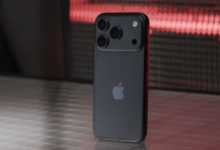
That distinction matters because the transition is less about a sudden change in what Apple has been building and more about who now has to explain, defend and execute that strategy. Bloomberg’s reporting on Ternus portrays him as an engineer deeply involved in product development, hardware-software integration and several of Apple’s emerging product categories.
Cook, meanwhile, leaves behind an Apple whose strength extends well beyond individual devices. Supply-chain discipline, services, silicon and an enormous installed base have become just as important to the company’s position as the products themselves.

That creates an interesting succession test. Apple has spent years strengthening its silicon, operating systems, services ecosystem and artificial intelligence infrastructure while many of its most visible consumer products followed familiar formats. The apparent lack of dramatic new hardware therefore risks obscuring how much of the underlying platform was changing.
Now that accumulated work is beginning to surface in physical products.
The foldable iPhone is the first serious test
Nothing illustrates the opportunity, or the risk, better than Apple’s expected foldable iPhone.
Apple is arriving late to a category that Samsung, Huawei, Honor, Xiaomi, Oppo and Vivo have already spent years developing. Samsung, in particular, has had time to iterate its hinges, displays, dimensions, multitasking software and overall foldable experience.
Apple therefore cannot simply introduce a foldable and expect the Apple logo to do all the work.
Reports point to a book-style device with a roughly 5.3-to-5.5-inch outer display and a 7.6-to-7.8-inch internal screen. The bigger question is where Apple will price it.
Several vendor and telecom listings circulating ahead of the September 9 launch have pointed toward a starting price around the $2,000 mark. TrendForce has separately estimated a starting price of about $2,099. One widely circulated Vodafone Egypt listing was subsequently disputed by the company, and PhoneArena said it could not independently verify the listing.
That means the figures should not be presented as confirmed Apple pricing. But the convergence across different market reports is still significant. It suggests the market is increasingly settling around the idea that Apple’s first foldable could sit close to the $2,000 threshold rather than merely being a modest step above the conventional Pro iPhone.
That would make the product an unusually expensive proposition even by Apple standards.
What could the iPhone Ultra cost in Kenya?
The potential price becomes even more interesting when viewed from Kenya.
At the September 7 mid-market exchange rate of about KSh129.40 to the US dollar, a $1,999 starting price translates to roughly KSh258,700, while $2,099 would be about KSh271,600.
Those figures are useful as a reference point, but they should not be mistaken for a prediction of the eventual Kenyan retail price.
The reason is straightforward. US prices generally exclude sales tax, while prices in other markets can incorporate VAT and other local costs. Apple also sets regional prices according to factors including currency movements, purchasing power, distribution costs and local market conditions. Import duties, taxes, distributor margins and retailer costs can further change the final Kenyan price.
The better comparison is therefore the percentage increase within the same market.
If the international reports indicating a roughly 65% to 80% premium over the iPhone 17 Pro prove directionally accurate, applying a similar increase to a $1,199 US starting point produces a price broadly around the $2,000 mark. That does not confirm Apple’s final price, but it helps explain why several independent estimates are converging in that range.
There is also now a useful Kenyan benchmark sitting directly in the market.
Samsung’s official Kenyan Brand Store lists the 256GB Galaxy Fold8 at KSh223,900 and the 256GB Galaxy Z Fold8 Ultra at KSh237,900.
That puts the indicative KSh259,000 to KSh272,000 equivalent for Apple’s foldable roughly KSh21,000 to KSh48,000 above Samsung’s two current premium foldables in Kenya.
Again, this is a comparison, not a prediction of Apple’s eventual local price.
But for Kenyan consumers, it makes the strategic challenge much easier to understand. Apple could potentially be asking buyers to spend substantially more than Samsung’s established foldable range for its first entry into the category.
And that changes the question.
Apple will not merely have to convince customers that its foldable works. It will have to convince them that its version is worth paying more for.
Apple will have to justify arriving late
The pricing matters because Apple is not entering an empty market.
Samsung has already spent years refining its Fold line, while Google, Motorola, Huawei, Honor, Xiaomi, Oppo and Vivo have pushed the category in different directions. Samsung’s Kenyan store already shows how mature the premium end of the category has become locally, with the Fold8 and Fold8 Ultra sitting at clearly defined price points.
That gives consumers something Apple normally enjoys giving competitors: established benchmarks.
Buyers will be able to compare Apple’s device against products that already have experience with hinge durability, crease management, thickness, weight, battery life, cameras, multitasking and large-screen software.
The competitive challenge is therefore bigger than making a phone that folds.
Apple has to make a foldable that feels sufficiently better, easier to use or more deeply integrated into its ecosystem to justify arriving later and potentially charging more.
Its ecosystem gives it a powerful advantage. A foldable iPhone would become part of the same software, services and accessory environment that connects the iPhone, iPad, Mac, Apple Watch and AirPods.
But ecosystem strength cannot completely compensate for a product that feels overpriced or unfinished.
Production problems make the timing more interesting
The pricing question becomes even more important because Apple is reportedly dealing with production challenges before the product has properly reached mass-market scale.
Nikkei Asia reported that production of the first foldable iPhone was running at only a few hundred units per day in late August, with suppliers working to improve output. Apple has reportedly targeted 8 million to 10 million units, a volume that would require a dramatic acceleration.
The reported problems are exactly the sort of issues that can determine whether a new product category succeeds commercially. Screen flatness, hinge performance, folding-cycle durability and extreme-condition testing are reportedly among Apple’s concerns.
Apple’s quality standards may protect the product in the long term, but they also make industrialisation harder.
That creates an unusual tension for the Ternus era. The company wants to demonstrate that it can still introduce genuinely new hardware, but the first major new category is arriving with production constraints and a potentially enormous price tag.
Apple’s reputation means the product cannot merely be technically viable.
It has to feel finished.
The iPhone 18 Pro may tell another part of the story
The foldable is expected to dominate the conversation, but the conventional iPhone 18 Pro models could be just as important to Apple’s strategy.
Reports have suggested that the iPhone 18 Pro and Pro Max will occupy the September launch window while other iPhone 18 models move into a spring 2027 cycle. That would allow Apple to separate its premium and mainstream launches more deliberately rather than forcing the entire iPhone portfolio into one annual September event.
Pricing could reinforce that segmentation.
Current estimates have suggested that the iPhone 18 Pro could see a relatively modest increase compared with the far more dramatic premium attached to the foldable. If that happens, Apple would effectively have a clearer ladder: conventional premium iPhones for the majority of high-end buyers and an ultra-premium foldable aimed at customers willing to pay considerably more for a new form factor.
That would also give Apple room to experiment without making the entire iPhone business dependent on the success of the foldable.
The approach makes strategic sense.
A new category can generate attention and establish a premium ceiling while the conventional iPhone remains the volume engine.
The bigger pipeline goes beyond the iPhone
The foldable iPhone is only the most visible piece of the roadmap.
Bloomberg’s reporting has pointed to a much broader pipeline extending into 2027, 2028, 2029 and beyond, including additional iPhone form factors, augmented-reality glasses, AI-powered home products and other hardware experiments. Bloomberg has also reported that Ternus is overseeing projects involving wearables, home devices and a much broader set of product categories.
TechTrendsKE’s own reporting has been tracking several pieces of this pipeline for months.
The September iPhone event is expected to introduce the iPhone 18 Pro and Pro Max alongside the foldable model, while reports have pointed to a new generation of Apple Watch hardware and AirPods. Other reporting has also raised the prospect of camera-equipped AirPods capable of interacting with Apple’s Visual Intelligence systems.
Meanwhile, Apple has been testing future Mac mini configurations as demand grows for machines capable of running more artificial intelligence workloads locally.
Taken together, these developments suggest that Apple’s hardware strategy is becoming broader rather than simply adding another iPhone form factor.
The company appears to be asking where AI can live inside its device ecosystem: on the phone, in the computer, through headphones and potentially through glasses and other wearables.
AI may be the connective tissue
This is where the Ternus transition becomes more complicated.
Apple Intelligence is being pushed deeper into iOS and the wider software ecosystem, while Siri has become a much larger part of the company’s AI strategy. Apple has also increasingly relied on technology associated with Google’s Gemini work as it develops the foundations for its AI systems.
That matters because AI could determine whether the coming hardware feels genuinely different or simply more expensive.
A foldable iPhone with a larger internal display is useful because it gives users more screen real estate. But the stronger argument for the form factor would be what Apple can do with that space: richer multitasking, more capable contextual assistance, better document and content workflows, and AI features that understand what users are doing across devices.
The same principle applies to future glasses and camera-equipped AirPods. These products become much more interesting when they function as interfaces to an intelligence layer rather than isolated pieces of hardware.
Bloomberg’s reporting has also highlighted Ternus’s role in Apple’s development of AI-powered home devices and camera-equipped wearables, reinforcing the possibility that the company’s next hardware cycle will be as much about new interfaces as new screens.
That is also where Apple faces one of its hardest execution problems.
It has to make AI useful across hundreds of millions of devices without turning the user experience into a collection of disconnected experiments.
Samsung has already done some of the hard work
Apple’s entry into foldables comes with an uncomfortable competitive reality.
Samsung has already had several generations to determine what consumers like and dislike about foldable phones. Its latest devices have become thinner, lighter and more refined, while One UI has developed dedicated multitasking features for large foldable displays.
The Kenyan pricing makes that maturity particularly relevant. Samsung is already selling its Fold8 family locally through a dedicated Brand Store operated by Housewives Paradise, with the Fold8 at KSh223,900 and the Fold8 Ultra at KSh237,900.
That gives Samsung something Apple cannot buy with a launch event: accumulated consumer expectations.
When Apple introduces its foldable, customers will compare it against devices that already exist. They will look at the crease, hinge, thickness, weight, battery life, cameras, multitasking and durability. They will also ask whether Apple’s software makes the larger display meaningfully more useful.
Apple’s advantage is elsewhere. It can connect the device to an enormous installed base of iPhones, Macs, iPads, AirPods and services. That ecosystem can make a new form factor more valuable than its specifications alone suggest.
But ecosystem advantage does not eliminate the need for a compelling product.
Ternus inherits a services-heavy Apple
There is another issue beneath all of this hardware excitement: Apple is no longer simply a product company.
Services have become an important part of its economics, alongside the iPhone, Mac, iPad, wearables and other hardware. That means describing Ternus as a “product guy” only tells part of the story.
His challenge is to lead a company whose identity may increasingly be shaped by new physical products while its financial model depends on an ecosystem that extends well beyond those devices.
That creates a delicate balance.
Ternus has to encourage the sort of ambitious hardware experiments that can produce Apple’s next major category without weakening the discipline that made the existing business so powerful.
Bloomberg’s reporting captures that tension particularly well: Ternus’s background makes him a natural fit if Apple continues leaning heavily into integrated hardware and software products, but the equation becomes more complicated if the company’s future becomes increasingly centred on services, software and cloud infrastructure.
The real Ternus test is execution
The September 9 event will inevitably be presented as the beginning of something new for Apple. In one sense, that is true. It is the first major iPhone launch with Ternus as CEO and the public arrival of products associated closely with the hardware organisation he previously led.
But the more important story will unfold after the keynote.
Apple has spent years building the components of this next product cycle. The foldable iPhone, new iPhone configurations, future wearables, Macs built for local AI and possible augmented-reality products represent different bets on where personal technology is heading.
Some will work. Some may be delayed. Others may never reach consumers.
That is normal for a company experimenting at this scale. The more consequential question is whether Apple can manage those experiments without compromising the economics and operational discipline of its existing business.
Ternus does not need to prove that Apple can still make exciting products. His harder task is proving that a company with an enormous installed base, a powerful services business and rising AI competition can take meaningful hardware risks without sacrificing the execution discipline that made Apple so formidable in the first place.
The first test may simply be whether Apple can make customers look at a roughly $2,000 foldable phone and conclude that the premium is worth paying.
For Kenyan buyers, the question could be even more concrete: whether an iPhone Ultra potentially approaching KSh260,000 to KSh272,000 before local pricing adjustments offers enough over Samsung’s KSh223,900 Fold8 and KSh237,900 Fold8 Ultra to justify the difference.
That is a much harder test than unveiling it
Real ESG impact doesn’t happen in panels alone, it happens in the rooms where financiers, operators, and policymakers actually align. Our GreenShift Forum 2026 cuts the noise, bringing together the people rewiring Africa’s sustainability and energy frameworks for one focused day in Nairobi. Secure your seat.
Go to TECHTRENDSKE.co.ke for more tech and business news from the African continent and across the world.
Follow us on WhatsApp, Telegram, Twitter, and Facebook, or subscribe to our weekly newsletter to ensure you don’t miss out on any future updates. Send tips to editorial@techtrendsmedia.co.ke


